Can You Mix Ceramides and Retinol?
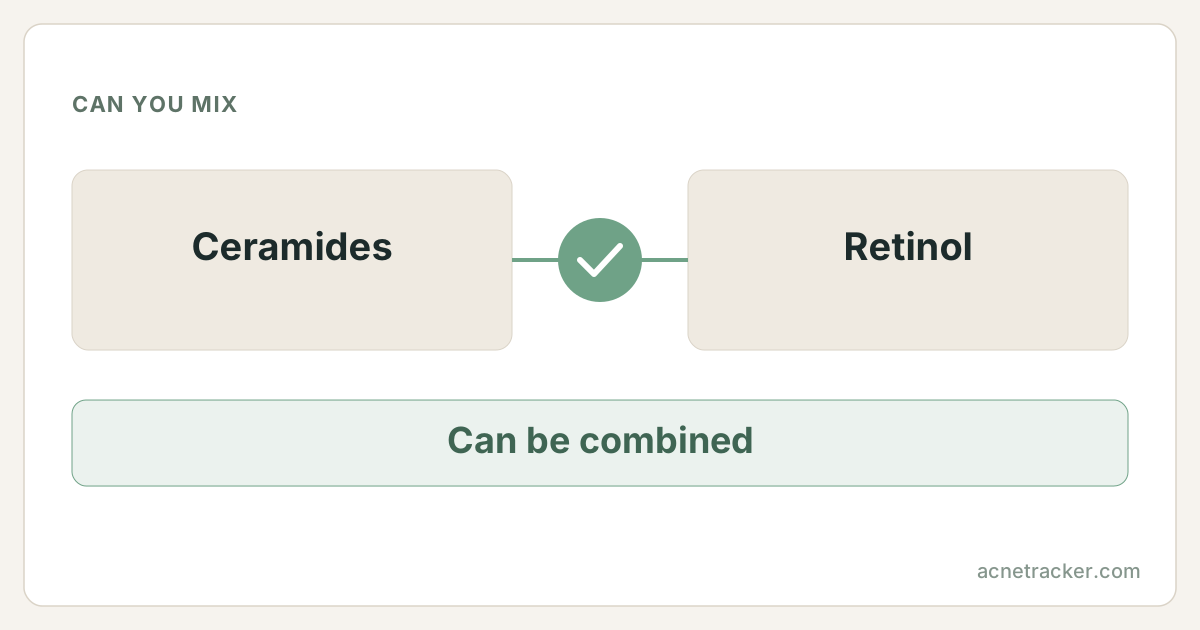
Yes — ceramides are one of the ideal companions for retinol. Ceramides are the barrier lipids your skin uses to hold itself together and keep water in, and retinol temporarily depletes exactly those. Layering a ceramide moisturizer over retinol replaces what it strips, so you get retinol's renewal benefits with far less dryness, flaking and stinging. There is no chemical conflict at all.
How this pairing resolves
The two ingredients, their published numbers, and where they land together.
The numbers beside each ingredient are its published comedogenic rating and effective pH window, taken from its own profile page.
Show the numbers
| Ingredients | Metric | 0–5 |
|---|---|---|
| Ceramides | Comedogenic rating | 0/5 |
| Ceramides | Effective pH | no published pH |
| Retinol | Comedogenic rating | 1/5 |
| Retinol | Effective pH | 5.0–6.0 |
Why
Your skin barrier works like a brick wall, with skin cells as the bricks and a mortar of lipids — roughly half of which are ceramides — sealing the gaps and preventing water loss. Retinol accelerates cell turnover and, in the adjustment phase, disrupts that mortar, reducing ceramide levels and letting moisture escape; this is the direct cause of the dryness and flaking known as retinization. Applying ceramides tops up the barrier's own lipid supply, restoring the seal and reducing trans-epidermal water loss precisely where retinol has weakened it. This is not a case of one active blocking another: ceramides are not acids, have no incompatible pH and do not degrade retinol, they simply repair the collateral damage. The result is a skin barrier that keeps up with the renewal retinol is driving, which usually means less irritation, better consistency and, ultimately, better results because you can keep using the retinol. Many retinol products deliberately include ceramides for exactly this reason.
How to combine them
The simplest and most effective method is to apply retinol to clean, dry skin, then layer a ceramide-rich moisturizer on top to seal and repair. For sensitive or beginner skin, use the sandwich technique: apply your ceramide moisturizer first, then retinol, then a little more of the ceramide cream, so the retinol is buffered on both sides and releases more gently. Ceramides can be used every single day, morning and night, and on retinol recovery nights they do valuable barrier maintenance. Start retinol at two or three nights a week and increase as your skin adjusts, leaning on the ceramide moisturizer throughout. In the morning, a ceramide cream layers nicely under sunscreen; always finish daytime with broad-spectrum SPF 30 or higher, since retinol raises sun sensitivity.
Example routine
| When | Steps |
|---|---|
| Evening (retinol nights) | Cleanser → Retinol → Ceramide moisturizer |
| Sandwich option | Ceramide cream → Retinol → Ceramide cream |
| Recovery + morning | Cleanser → Ceramide moisturizer (+ SPF 30+ in AM) |
Warning signs
Frequently asked questions
Do ceramides reduce how well retinol works?
No. Ceramides only rebuild the barrier; they do not neutralise retinol or block its action. By reducing irritation they usually help you use retinol more consistently, which improves your results.
Should ceramides go before or after retinol?
Usually after, as a moisturizer that seals and repairs on top of retinol. For sensitive skin, the sandwich method — ceramide cream, retinol, more ceramide cream — is even gentler.
Can ceramides stop retinol flaking?
They help significantly, because flaking largely comes from barrier lipid loss and ceramides replace those lipids. Combined with consistent use, they are one of the best ways to minimise retinization.
Are ceramides safe to use in pregnancy?
Yes, ceramides are considered safe in pregnancy. Retinol, however, is generally avoided, so if you are pregnant you can keep the ceramide moisturizer and drop the retinol after checking with your doctor.
Sources & further reading
There is no single study of this exact question. The guidance here is reasoned from the ingredient profiles below, each of which carries its own references:
Show every reference behind this page (5)
- DermNet — Skin barrier functioncited by Ceramides
- PubChem — Ceramide compound summarycited by Ceramides
- European Commission CosIng database — Ceramide NPcited by Ceramides
- Improvement of naturally aged skin with vitamin A (retinol) (PubMed)cited by Retinol
- European Commission SCCS opinion on vitamin A in cosmeticscited by Retinol
Medical disclaimer
Ingredients mentioned on this page
Find your personal acne triggers
Our free Acne Tracker lets you log breakouts, sleep, stress and diet, and shows you which factors correlate with your flare-ups.