Azelaic Acid: Comedogenic Rating & Ingredient Analysis
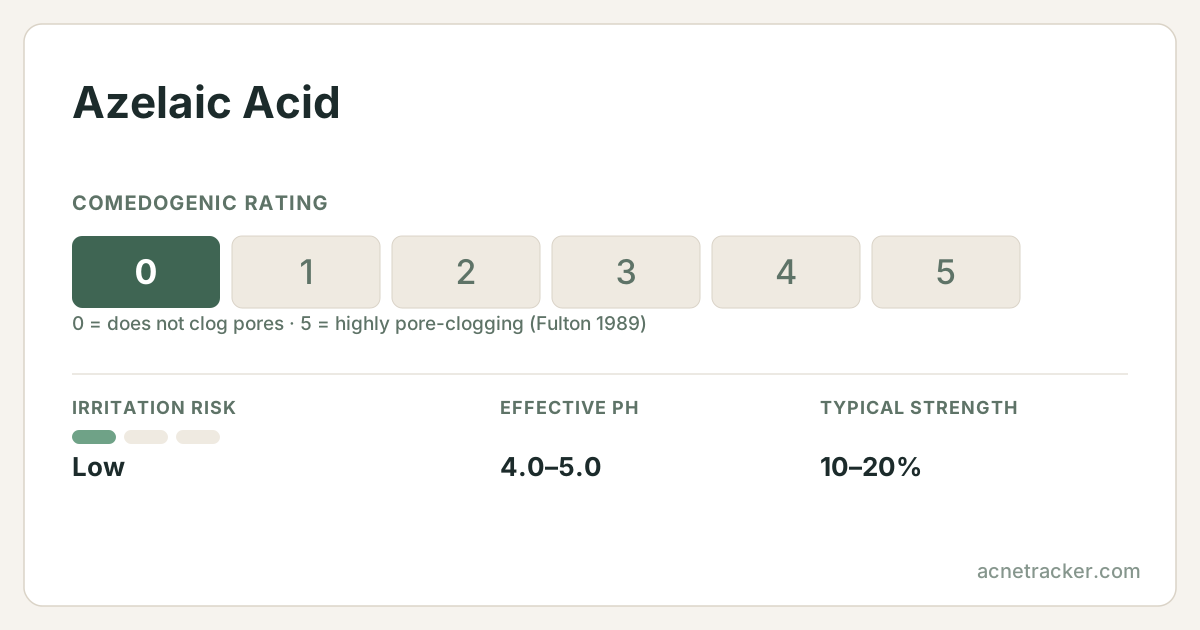
Azelaic acid is a versatile, well-tolerated active that treats several concerns at once: acne, the redness of rosacea, and post-inflammatory pigmentation. A dicarboxylic acid found naturally in grains like wheat and barley, it works through gentler mechanisms than exfoliating AHAs, which makes it unusually kind to sensitive skin while still being effective. It is available over the counter at around 10% and by prescription at higher strengths, and it holds a valuable place in skincare because it is one of the few genuinely effective actives widely regarded as safe to use during pregnancy — a period when retinoids and many other treatments are off the table.
Quick facts
- Comedogenic rating
- our estimate — not measured
- Irritation risk
- Low
- Effective pH
- 4.0–5.0
- Typical strength
- 10–20%
- Pregnancy
- Considered safe
- Suits skin types
- oilycombinationsensitivenormalacne-prone
Where this number comes from
No one has published a comedogenic rating for this ingredient. Fulton's 1989 table tested about 250 raw materials and this was not among them, and we found no later study measuring it. The figure shown is our own reasoning from the ingredient's chemistry and how it is used — treat it as an estimate, not a measurement.
Fulton read his own scale as 0-1 not significant, 2-3 borderline, 4-5 positive. The assay is the rabbit ear at 10% dilution, which the paper itself calls extremely sensitive and not fully predictive of human skin. Ratings describe the raw ingredient; concentration and formulation change real-world behaviour.
Caution profile
The four published fields on this page, on one 0–5 scale. Further from the centre means more care is needed — never that the ingredient is worse.
Derived, not measured: pore-clogging is the published comedogenic rating; irritation maps low/moderate/high to 1/3/5; pregnancy maps safe/caution/avoid to 0/3/5; skin-type limits is how many of the seven skin types this entry does NOT list. Every input is printed in words in the quick-facts card above.
Show the numbers
| Metric | 0–5 | Published field |
|---|---|---|
| Pore-clogging | 0 | 0/5 |
| Irritation | 1 | Low |
| Skin-type limits | 1.4 | 5/7 |
| Pregnancy | 0 | Considered safe |
Working pH and typical strength
Where this ingredient is formulated to sit, and at what concentration.
Both bars come from the fields above: the pH window and the typical strength range published for this ingredient. The tinted column is healthy skin's surface pH (about 4.7–5.75).
Show the numbers
| Metric | 0–5 |
|---|---|
| Working pH | 4.0–5.0 |
| Typical strength | 10–20% |
What is it?
Azelaic acid is a saturated dicarboxylic acid produced by yeast that lives on normal skin, and the cosmetic version is synthesized to match. Despite the name it does not exfoliate like an AHA or BHA. Instead it works several ways: it has antibacterial activity against the bacteria involved in acne, it normalizes the disordered shedding of cells inside pores that leads to clogging, it calms inflammation and redness, and it inhibits tyrosinase, the enzyme that drives excess pigment production — which is why it fades dark post-acne marks and melasma. This combination of anti-acne, anti-redness and brightening effects in one gentle molecule is unusual. Its selectivity toward overactive pigment cells means it tends to fade dark marks without lightening surrounding normal skin.
Benefits
Treats acne on several fronts
Azelaic acid reduces acne-related bacteria and helps keep pores clear, addressing both inflamed pimples and the clogged pores behind them, with studies supporting its use in mild to moderate acne.
Fades post-acne marks and pigmentation
By inhibiting the tyrosinase enzyme, it targets overactive pigment cells and gradually lightens dark post-acne marks and melasma while sparing normal surrounding skin.
Calms redness and rosacea
Its anti-inflammatory action makes it a recognized treatment for the redness and papules of rosacea, soothing reactive, flushing-prone skin rather than aggravating it.
Gentle enough for sensitive skin
Because it works without acidic exfoliation, azelaic acid is generally well tolerated by sensitive and reactive skin and does not increase sun sensitivity the way AHAs do.
How to use
Apply a thin layer to clean, dry skin once or twice daily, following with moisturizer and, in the morning, sunscreen. Over-the-counter formulas around 10% are a sensible starting point; prescription strengths up to 20% (or 15% gels) are managed by a doctor. Begin once a day and increase to twice daily as tolerated. Azelaic acid layers comfortably with most ingredients — niacinamide and hyaluronic acid are natural companions — and unlike AHAs it does not need to be separated from other actives by nights, though introducing one new active at a time is always wise. Results on acne and pigmentation typically take several weeks to a few months of consistent use.
Side effects
Azelaic acid is generally well tolerated, but a temporary tingling, mild burning or itching is common in the first couple of weeks as skin adjusts, and some people notice mild dryness or flaking. These effects usually settle with continued use; starting once daily and building up helps. It does not increase photosensitivity, which is an advantage over exfoliating acids. Significant redness or a rash is uncommon and a reason to reduce frequency or pause. As with any product, patch testing before first use is sensible, particularly for reactive skin.
Who should avoid it
Very few people need to avoid azelaic acid. Those with highly reactive skin should start slowly, once every other day, to let the initial tingling settle. It is one of the standard actives recommended during pregnancy and breastfeeding for acne and pigmentation, though you should always confirm your routine with your doctor. If persistent burning or a rash develops, stop and seek advice, as this may indicate sensitivity to that particular formulation rather than to azelaic acid itself.
Pairs well with
Frequently asked questions
What does azelaic acid do for skin?
It treats acne by reducing acne-related bacteria and keeping pores clear, fades dark post-acne marks and pigmentation by inhibiting excess pigment production, and calms redness, including the redness of rosacea.
Is azelaic acid safe during pregnancy?
Azelaic acid is widely regarded as one of the safer active options during pregnancy and breastfeeding for acne and pigmentation, which is why it is often recommended in place of retinoids. Confirm with your doctor.
Does azelaic acid make skin sensitive to the sun?
No. Unlike AHAs, azelaic acid does not increase sun sensitivity, though daily sunscreen is still recommended to protect against pigmentation and support your results.
Can I use azelaic acid with niacinamide?
Yes. Azelaic acid and niacinamide are a complementary pairing for acne, redness and pigmentation, and both are gentle enough to layer together without the conflicts that come with stacking exfoliating acids.
How long does azelaic acid take to work?
Expect gradual results over several weeks to a few months. Redness may improve first, while acne and pigmentation typically need a couple of months of consistent daily use to show meaningful change.
Where this ingredient shows up here
Counted across this database, not the web — these are the pages on this site that reason about this ingredient.
Combination guides 19
- Alpha-Arbutin
- Bakuchiol
- Benzoyl Peroxide
- Centella Asiatica
- Ceramides
- Glycolic Acid
- Hyaluronic Acid
- Kojic Acid
+11 more on the site
Condition pages 110
- A Spot That Keeps Coming Back in the Same Place by the Mouth
- Acne Around the Mouth
- Acne Between the Eyebrows
- Acne on the Back of the Neck
- Acne on the Chin and Around the Mouth
- Acne on the Neck
+104 more on the site
Buying guides 39
- How to Choose a Body Wash for Dark Spots on the Body
- How to Choose a Chemical Exfoliant for Acne-Prone Skin
- How to Choose a Chemical Exfoliant for Body Acne
- How to Choose a Chemical Exfoliant for Dark Skin Tones
- How to Choose a Chemical Exfoliant for Hyperpigmentation
- How to Choose a Chemical Exfoliant for Rosacea-Prone Skin
+33 more on the site
Sources & further reading
Medical disclaimer
Find your personal acne triggers
Our free Acne Tracker lets you log breakouts, sleep, stress and diet, and shows you which factors correlate with your flare-ups.