Can You Mix Azelaic Acid and Alpha Arbutin?
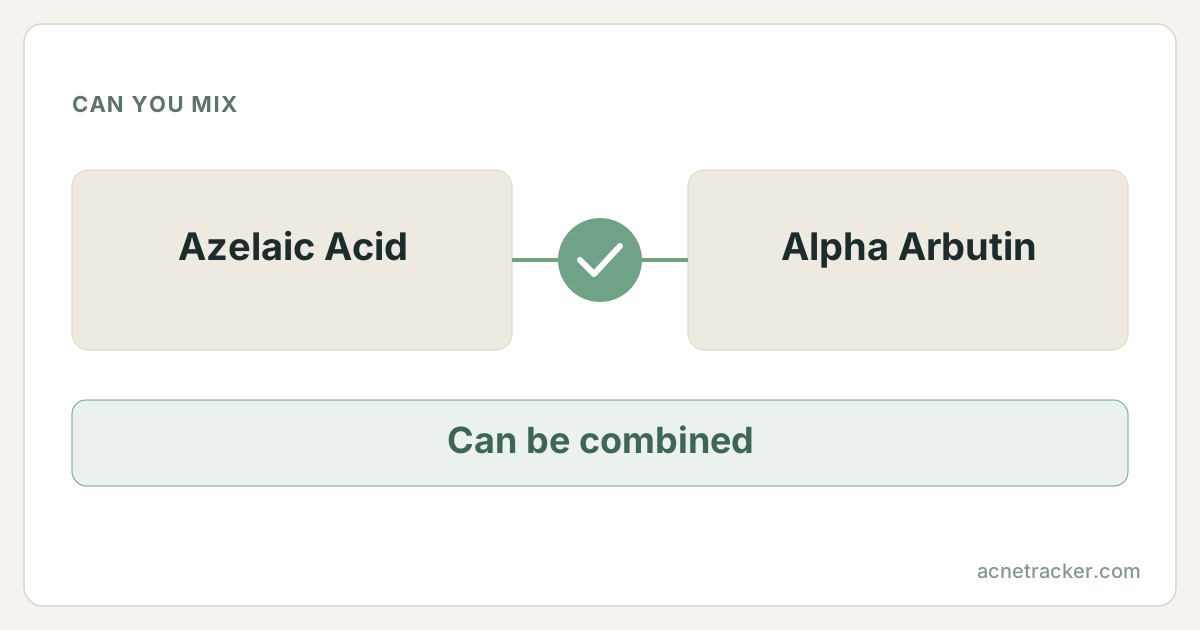
Yes — there is no safety issue and no chemical clash. The honest caveat is different: both are tyrosinase inhibitors, so you are aiming two ingredients at one enzyme. That is not harmful, but it is more likely to be partly redundant than genuinely additive. If you already use azelaic acid, alpha arbutin is a reasonable extra; expect a modest contribution, not a doubling.
How this pairing resolves
The two ingredients, their published numbers, and where they land together.
The numbers beside each ingredient are its published comedogenic rating and effective pH window, taken from its own profile page.
Show the numbers
| Ingredients | Metric | 0–5 |
|---|---|---|
| Azelaic Acid | Comedogenic rating | 0/5 |
| Azelaic Acid | Effective pH | 4.0–5.0 |
| Alpha Arbutin | Comedogenic rating | 0/5 |
| Alpha Arbutin | Effective pH | 4.0–6.0 |
Why
Alpha arbutin is hydroquinone with a glucose molecule attached — specifically the alpha-anomer of hydroquinone-beta-D-glucopyranoside, which is more stable and more potent in vitro than the beta form found in bearberry. That structure is the whole design: the sugar keeps the hydroquinone masked and gentler than free hydroquinone, and the molecule acts on tyrosinase, competing for the active site where tyrosine would normally dock. Azelaic acid inhibits the same enzyme, also competitively. So both are trying to occupy overlapping territory on one target. Two competitive inhibitors of the same enzyme do not add up the way two drugs on separate pathways would — once the enzyme is substantially inhibited, more inhibitor buys progressively less. That is a structural inference from basic enzyme kinetics rather than a measured result for this specific pair, and it is worth labelling as such. What they do not share is everything else: azelaic acid is also anti-inflammatory and mildly comedolytic, which matters if your pigment is post-acne rather than sun-driven, since it treats the spots producing the marks. Alpha arbutin does nothing for acne.
How to combine them
Alpha arbutin is usually a 2% water-based serum and goes on first; azelaic acid, being thick, goes over it, then moisturiser and SPF 30+. Both belong in the morning, because sun protection is the ingredient doing the heavy lifting in any pigment routine — an unprotected afternoon outdoors will generate more pigment than either inhibitor prevents. Alpha arbutin is stable enough at mild pH and does not need an adjustment period. If you are choosing rather than stacking, pick by cause: azelaic acid if your marks come from acne, alpha arbutin as an adjunct if the pigment is settled and inflammation is not the driver. Give it three to four months. If you have used skin-lightening products bought outside regulated channels, be aware that unlicensed creams containing high-strength hydroquinone or mercury circulate widely — alpha arbutin from a mainstream cosmetic brand is not that, but the category attracts them.
Example routine
| When | Steps |
|---|---|
| Morning | Cleanser → Alpha arbutin 2% → Azelaic acid 10% → Moisturiser → SPF 30+ |
| Evening | Cleanser → Moisturiser |
| Acne-driven marks | Prioritise azelaic acid daily; alpha arbutin is the optional extra |
| Review | Judge at 3–4 months, same lighting, same time of day |
Warning signs
Frequently asked questions
Is it pointless to use both if they inhibit the same enzyme?
Not pointless, but temper expectations. Two competitive inhibitors of one enzyme tend towards diminishing returns rather than doubling up. Azelaic acid still brings anti-inflammatory and comedolytic action that alpha arbutin lacks.
Is alpha arbutin just hydroquinone in disguise?
It is hydroquinone with a glucose group attached, which changes how it behaves — it is far gentler and is permitted in cosmetics where free hydroquinone is not. Treating them as the same ingredient overstates the case in both directions.
Do I apply alpha arbutin or azelaic acid first?
Alpha arbutin, as it is normally a thin water-based serum, then azelaic acid over it. Azelaic acid formulas are thick and tend to pill when anything is layered on top of them.
Can I add vitamin C to this as well?
You can, and it is chemically fine with azelaic acid. But you are then stacking a third pigment ingredient — at some point the limiting factor is sunscreen consistency and time, not how many serums are on your shelf.
How long should I give this before deciding it works?
Three to four months of daily use with real sun protection. Pigment fades on the timescale of repeated epidermal turnover. Photograph in consistent light rather than trusting your memory in the bathroom mirror.
Sources & further reading
There is no single study of this exact question. The guidance here is reasoned from the ingredient profiles below, each of which carries its own references:
- Azelaic Acid3 refs
- Alpha-Arbutin3 refs
Show every reference behind this page (5)
- PubChem — Azelaic acid compound summarycited by Azelaic Acid
- DermNet — Azelaic acidcited by Azelaic Acid
- European Commission CosIng database — Azelaic Acidcited by Azelaic Acid, Alpha-Arbutin
- PubChem — Arbutincited by Alpha-Arbutin
- A comprehensive review of the therapeutic potential of α-arbutin (PubMed)cited by Alpha-Arbutin
Medical disclaimer
Ingredients mentioned on this page
Find your personal acne triggers
Our free Acne Tracker lets you log breakouts, sleep, stress and diet, and shows you which factors correlate with your flare-ups.