Can You Mix Azelaic Acid and Kojic Acid?
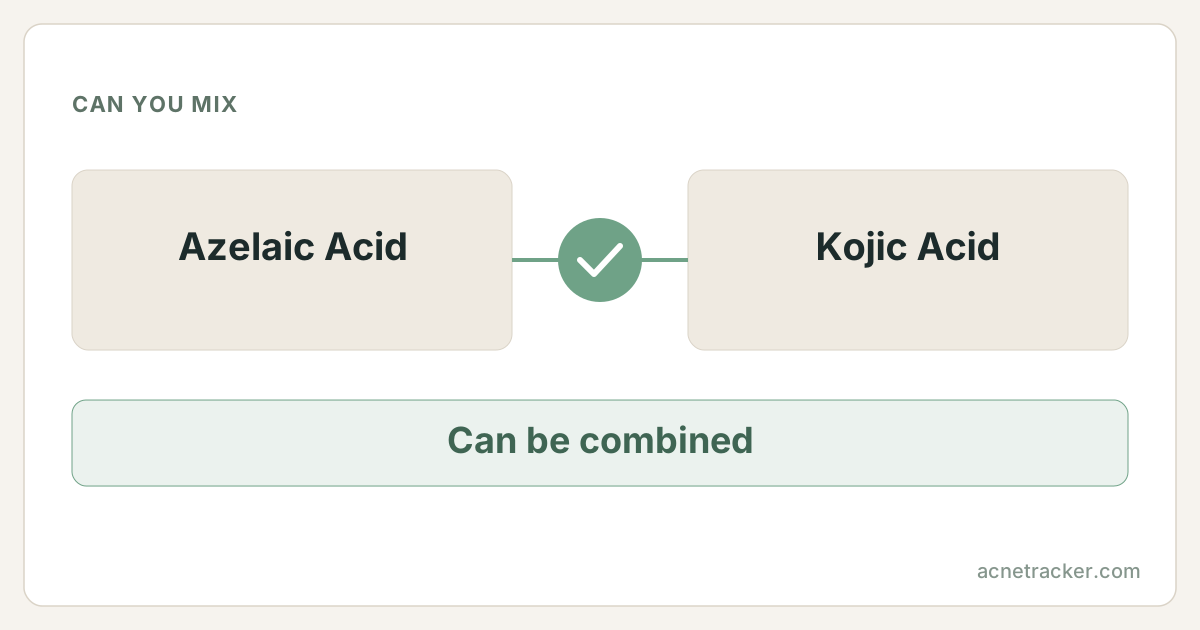
Yes. Both target tyrosinase, but by different routes: kojic acid chelates the copper ions in the enzyme's active site, while azelaic acid competes with the substrate. That makes some additional benefit plausible, unlike stacking two identical mechanisms. Kojic acid is the more sensitising of the two and is capped at 1% in the EU — respect that and this is a straightforward pigment routine.
How this pairing resolves
The two ingredients, their published numbers, and where they land together.
The numbers beside each ingredient are its published comedogenic rating and effective pH window, taken from its own profile page.
Show the numbers
| Ingredients | Metric | 0–5 |
|---|---|---|
| Azelaic Acid | Comedogenic rating | 0/5 |
| Azelaic Acid | Effective pH | 4.0–5.0 |
| Kojic Acid | Comedogenic rating | 0/5 |
| Kojic Acid | Effective pH | 4.0–5.0 |
Why
Kojic acid comes from fungal fermentation — Aspergillus species, and it turns up as a by-product of sake and soy sauce brewing. Its mechanism is neat: tyrosinase is a metalloenzyme that needs two copper ions at its catalytic centre to oxidise tyrosine, and kojic acid chelates copper, effectively pulling the tool out of the enzyme's hand. Azelaic acid instead competes with tyrosine for the site itself. Two different modes of inhibition on one enzyme is a more promising combination than two competitive inhibitors, since they are not fighting for the same seat — though this remains a mechanistic argument rather than a demonstrated clinical result for the pair. Kojic acid has two practical drawbacks azelaic acid does not. First, it is a recognised contact sensitiser: the EU's scientific committee assessed it and its use in cosmetics is restricted to 1% in face and hand products, which is why reputable formulas cluster at or below that number and why 'high-strength kojic' from unregulated sellers is a bad sign rather than a bargain. Second, it is unstable — it oxidises and browns on exposure to air and light, so a kojic serum that has gone amber has lost potency. Azelaic acid, by contrast, is a robust saturated molecule that just sits there and works.
How to combine them
Kojic acid serum first (thin), azelaic acid second (thick), then moisturiser and SPF 30+. Morning is the natural slot. Because kojic acid is the sensitiser, introduce it after azelaic acid is already established and patch test it on the inner forearm or behind the ear for a few days first — that is not fussiness, it is the specific risk this ingredient carries. Two or three applications a week is a reasonable starting frequency for kojic acid; azelaic acid can stay daily. Keep the kojic acid product tightly closed, out of sunlight, and replace it once it darkens. If your skin reacts, it is far more likely to be the kojic acid than the azelaic acid, so remove that one first. As with every pigment routine, sunscreen is not the optional accessory — it is the part that determines whether any of this shows a result at three to four months.
Example routine
| When | Steps |
|---|---|
| Morning | Cleanser → Kojic acid ≤1% → Azelaic acid 10% → Moisturiser → SPF 30+ |
| Evening | Cleanser → Moisturiser |
| Introducing kojic acid | Patch test 3–5 days, then 2–3 mornings a week before going daily |
| Product care | Replace kojic acid serum if it turns brown — that is oxidation, not character |
Warning signs
Frequently asked questions
Is kojic acid stronger than azelaic acid for dark spots?
Neither is reliably 'stronger' — they inhibit the same enzyme differently. Azelaic acid has the broader evidence base and also treats the acne behind post-inflammatory marks, which kojic acid does not.
Why is kojic acid limited to 1%?
Because of sensitisation risk, EU cosmetic rules restrict it to 1% in face and hand products following scientific assessment. Formulas advertising much higher strengths are either mislabelled or not sold under those rules.
My kojic acid serum turned brown — is it still usable?
Browning is oxidation, and an oxidised kojic serum has lost potency. It is not typically dangerous, but you are applying a degraded product. Replace it and store the new one closed, cool and away from light.
Can both of these go on daily?
Azelaic acid, yes, for most people. Kojic acid is better started at two or three days a week given its sensitisation profile, working up only if your skin is clearly untroubled by it.
Which should I drop if my skin reacts?
Kojic acid, almost always. It is a known contact allergen; azelaic acid is not. Stop it, let the skin settle for two weeks on a bland routine, and keep azelaic acid as the base if it was fine before.
Sources & further reading
There is no single study of this exact question. The guidance here is reasoned from the ingredient profiles below, each of which carries its own references:
- Azelaic Acid3 refs
- Kojic Acid3 refs
Show every reference behind this page (6)
- PubChem — Azelaic acid compound summarycited by Azelaic Acid
- DermNet — Azelaic acidcited by Azelaic Acid
- European Commission CosIng database — Azelaic Acidcited by Azelaic Acid
- PubChem — Kojic acid compound summarycited by Kojic Acid
- Zilles JC et al. Biological activities and safety data of kojic acid and its derivatives: A review. Exp Dermatol 2022 Oct (PubMed)cited by Kojic Acid
- DermNet — Hyperpigmentationcited by Kojic Acid
Medical disclaimer
Ingredients mentioned on this page
Find your personal acne triggers
Our free Acne Tracker lets you log breakouts, sleep, stress and diet, and shows you which factors correlate with your flare-ups.