Dipotassium Glycyrrhizate: Comedogenic Rating & Ingredient Analysis
Dipotassium glycyrrhizate is one of the most reliable soothing ingredients in cosmetic chemistry, and if you have ever used a product marketed as calming or anti-redness, there is a good chance it was in the formula. It is a water-soluble salt derived from glycyrrhizic acid, the key active in licorice root, and it is prized for its anti-inflammatory and anti-irritant properties. Unlike whole licorice extract, which is more associated with brightening, this purified compound is chosen specifically to reduce redness and calm reactive, sensitive skin. It is gentle, works at low concentrations and pairs with almost anything.
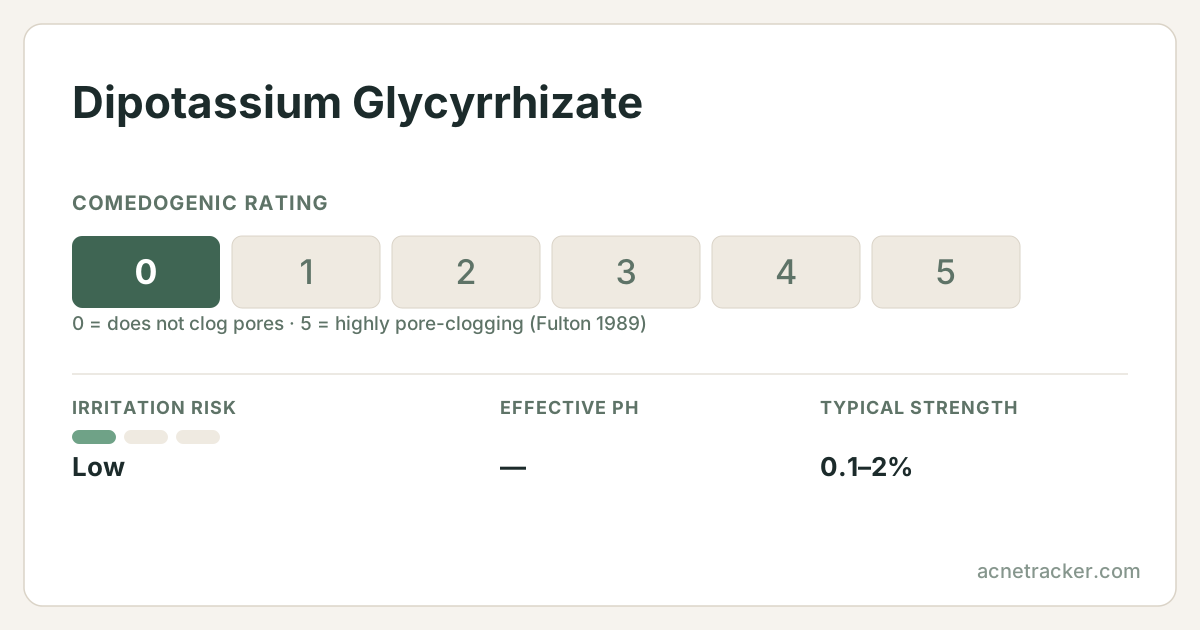
Quick facts
- Comedogenic rating
- our estimate — not measured
- Irritation risk
- Low
- Effective pH
- —
- Typical strength
- 0.1–2%
- Pregnancy
- Considered safe
- Suits skin types
- sensitivedrynormalcombinationoilyacne-prone
Where this number comes from
No one has published a comedogenic rating for this ingredient. Fulton's 1989 table tested about 250 raw materials and this was not among them, and we found no later study measuring it. The figure shown is our own reasoning from the ingredient's chemistry and how it is used — treat it as an estimate, not a measurement.
Fulton read his own scale as 0-1 not significant, 2-3 borderline, 4-5 positive. The assay is the rabbit ear at 10% dilution, which the paper itself calls extremely sensitive and not fully predictive of human skin. Ratings describe the raw ingredient; concentration and formulation change real-world behaviour.
Caution profile
The four published fields on this page, on one 0–5 scale. Further from the centre means more care is needed — never that the ingredient is worse.
Derived, not measured: pore-clogging is the published comedogenic rating; irritation maps low/moderate/high to 1/3/5; pregnancy maps safe/caution/avoid to 0/3/5; skin-type limits is how many of the seven skin types this entry does NOT list. Every input is printed in words in the quick-facts card above.
Show the numbers
| Metric | 0–5 | Published field |
|---|---|---|
| Pore-clogging | 0 | 0/5 |
| Irritation | 1 | Low |
| Skin-type limits | 0.7 | 6/7 |
| Pregnancy | 0 | Considered safe |
Working pH and typical strength
Where this ingredient is formulated to sit, and at what concentration.
Both bars come from the fields above: the pH window and the typical strength range published for this ingredient. The tinted column is healthy skin's surface pH (about 4.7–5.75).
Show the numbers
| Metric | 0–5 |
|---|---|
| Typical strength | 0.1–2% |
What is it?
Dipotassium glycyrrhizate is the dipotassium salt of glycyrrhizic acid, a triterpenoid saponin extracted from the root of the licorice plant. Making it into a potassium salt renders it water-soluble and easy to formulate. In the skin it exerts anti-inflammatory activity, in part by influencing enzymes and mediators involved in the inflammatory response, which translates to visibly calmer, less red skin. It is closely related to glycyrrhetinic acid, another licorice-derived soother used in barrier and eczema-support products. Because it targets inflammation rather than exfoliating or resurfacing, it is very gentle and is often included precisely to offset the irritation potential of stronger actives in the same formula.
Benefits
Calms redness
Dipotassium glycyrrhizate is a recognised soothing, anti-inflammatory agent, widely used to reduce the look of redness and help settle reactive, easily flushed skin.
Soothes sensitive skin
Its gentle anti-irritant action makes it a go-to for sensitive and compromised skin, easing the stinging and discomfort that come with a reactive barrier.
Offsets stronger actives
Formulators add it to buffer the irritation of ingredients like retinoids and acids, so it helps make more demanding routines feel more comfortable.
Gentle and broadly compatible
It works at low concentrations, is non-comedogenic and suits every skin type, layering easily with hydrators, barrier ingredients and most actives.
How to use
You will find dipotassium glycyrrhizate inside soothing serums, moisturisers, masks and after-sun products, so simply use those as directed, once or twice daily. It is especially useful in a routine that also includes potentially irritating actives, where its calming effect balances the formula. It pairs naturally with other soothers like centella asiatica, panthenol and allantoin, and with barrier-supporting hydrators. There are no special timing or pH considerations, and it is compatible with essentially any active, so it slots comfortably into morning or evening routines for reactive skin.
Side effects
Dipotassium glycyrrhizate is very well tolerated, non-comedogenic and low in irritation, which is exactly why it is used as an anti-irritant. Genuine reactions are uncommon. As with any ingredient, someone could react to a specific finished formula, so patch test if your skin is highly reactive, but the compound itself is chosen precisely because it calms rather than provokes.
Who should avoid it
There is essentially no group that needs to avoid topical dipotassium glycyrrhizate; it is one of the gentler ingredients available and suits even very sensitive skin. Anyone with a rare, specifically documented allergy to licorice-derived ingredients should check labels, but such reactions are unusual.
Frequently asked questions
What does dipotassium glycyrrhizate do for skin?
It is a licorice-derived anti-inflammatory that calms redness and soothes sensitive, reactive skin. It is commonly used to reduce irritation and to buffer the harshness of stronger actives.
Is dipotassium glycyrrhizate the same as licorice extract?
They are related but not identical. It is a purified salt of glycyrrhizic acid from licorice, chosen for soothing and anti-redness, whereas whole licorice extract is more associated with brightening.
Is dipotassium glycyrrhizate good for sensitive skin?
Yes, it is one of the best-known soothing ingredients for sensitive skin. It is non-comedogenic, low-irritation and specifically used to calm redness and reduce discomfort.
Can dipotassium glycyrrhizate help with irritation from actives?
Yes. It is often added to buffer the irritation of ingredients like retinoids and acids, helping more demanding routines feel more comfortable on reactive skin.
Is dipotassium glycyrrhizate safe to use daily?
Yes. It is gentle and non-comedogenic, so daily use is fine, and it is frequently included in leave-on products meant for regular, ongoing use on sensitive skin.
Sources & further reading
- PubChem — Glycyrrhizic acid compound summary (CID 14982)
- European Commission CosIng database — Dipotassium Glycyrrhizate
- Final report on the safety assessment of Glycyrrhetinic Acid, Potassium Glycyrrhetinate, Disodium Succinoyl Glycyrrhetinate, Glyceryl Glycyrrhetinate, Glycyrrhetinyl Stearate, Stearyl Glycyrrhetinate, Glycyrrhizic Acid, Ammonium Glycyrrhizate, Dipotassium Glycyrrhizate, Disodium Glycyrrhizate, Trisodium Glycyrrhizate, Methyl Glycyrrhizate, and Potassium Glycyrrhizinate (PubMed)
Medical disclaimer
Find your personal acne triggers
Our free Acne Tracker lets you log breakouts, sleep, stress and diet, and shows you which factors correlate with your flare-ups.