How to Choose a Chemical Exfoliant for Dark Skin Tones
Deeper skin tones can absolutely benefit from chemical exfoliation, but the choice matters more here because of one key risk: post-inflammatory hyperpigmentation (PIH). Melanin-rich skin responds to inflammation by producing pigment, so any irritation from an over-aggressive acid can leave a dark mark that outlasts the original problem. That single fact reframes the whole approach — gentle, well-tolerated acids are not a compromise here, they are the smarter strategy. This guide explains which acids carry the lowest irritation risk, why fast, deep-penetrating options need caution, and how sun protection and patience protect against PIH. We review ingredient profiles rather than brands, so the reasoning holds for any product.
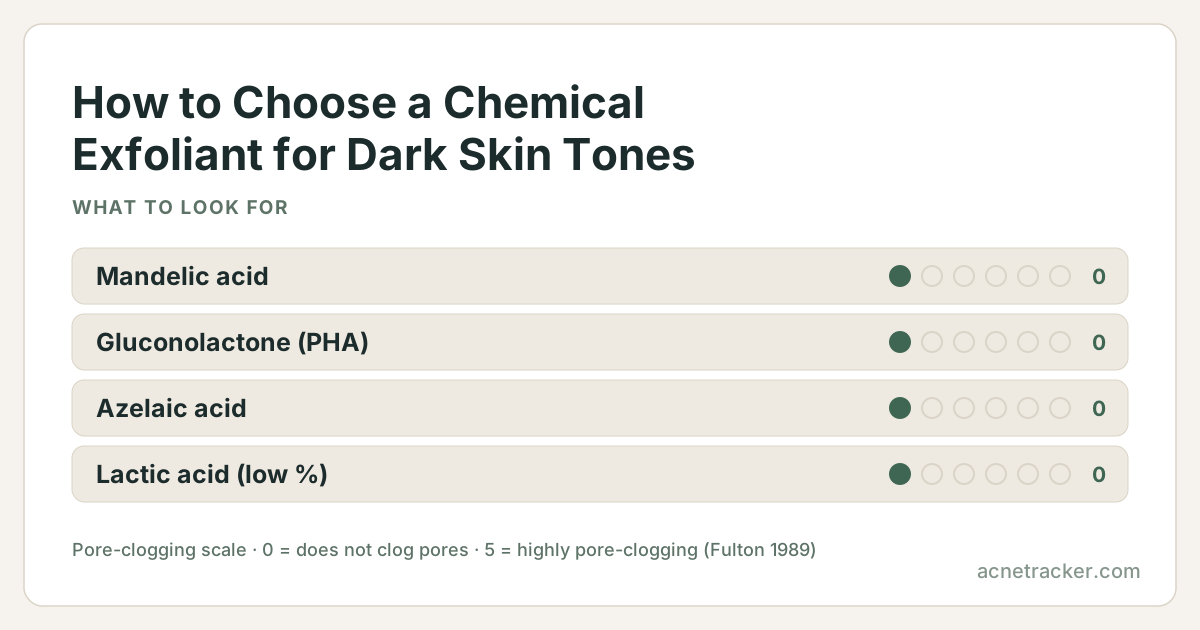
Ingredients to look for
| Ingredient | Why it matters |
|---|---|
| Mandelic acid | A large-molecule AHA with a low irritation risk that also fades pigment, making it one of the best exfoliants for deeper tones prone to PIH. |
| Gluconolactone (PHA) | A gentle, hydrating polyhydroxy acid that resurfaces with minimal irritation, a safe starting exfoliant for melanin-rich skin. |
| Azelaic acid | Calms inflammation and directly targets excess pigment, well suited to dark skin tones dealing with both congestion and marks. |
| Lactic acid (low %) | At low strength it exfoliates gently while hydrating, a cautious AHA option when a PHA is not quite enough. |
Ingredients to avoid
| Ingredient | Why it matters |
|---|---|
| High-percentage, deep-penetrating peels | Aggressive acids risk the inflammation that triggers post-inflammatory hyperpigmentation, which is more common and longer-lasting on deeper skin tones. |
| Physical scrubs and stiff brushes | Friction causes micro-inflammation that can leave dark marks on melanin-rich skin, doing more harm than the exfoliation is worth. |
| Skipping sunscreen | UV both darkens existing pigment and drives new marks, so exfoliating without daily SPF directly undermines even tone on dark skin. |
| Aggressive DIY treatments to fade marks fast | Trying to force pigment away with strong acids usually inflames the skin and deepens the very marks you are trying to clear. |
How to choose
Prioritise the gentlest acid that gets the job done, because on deeper tones the cost of irritation is a lasting dark mark. Mandelic acid stands out: its large molecule keeps irritation low while it fades pigment, making it ideal for PIH-prone skin. Polyhydroxy acids like gluconolactone are a safe, hydrating starting point, and azelaic acid is excellent when both congestion and marks are present. Reserve stronger, small-molecule acids like glycolic for skin that has proven it can tolerate them, and even then use moderate strength. Always patch test, introduce one product at a time, and keep frequency low at first. Read past 'brightening' claims to the actual acids. Above all, pair every exfoliating routine with daily broad-spectrum SPF, since sun exposure is the fastest route to the pigment problems you are trying to prevent.
How to apply
Patch test first, then apply a gentle acid such as mandelic acid or a PHA in the evening on clean skin, starting once or twice a week and building slowly only if the skin stays calm. Treat areas evenly to avoid patchy results. Follow with a soothing, hydrating moisturizer. The most important step is daily broad-spectrum SPF every morning, since sun exposure darkens marks and provokes new pigment. If you see any irritation or a new dark mark forming, stop and let the skin recover fully, because pushing through irritation on deeper tones tends to worsen pigmentation.
Frequently asked questions
Which chemical exfoliant is safest for dark skin?
Gentle acids with a low irritation risk are safest, because irritation can trigger dark marks on deeper tones. Mandelic acid is a standout, polyhydroxy acids like gluconolactone are a mild starting point, and azelaic acid helps when marks are present.
Why do dark skin tones need to be careful with exfoliation?
Because melanin-rich skin responds to inflammation by producing pigment, so an over-aggressive acid can leave post-inflammatory hyperpigmentation, a dark mark that lasts long after the irritation. Gentle acids used moderately avoid this while still exfoliating effectively.
Can I use glycolic acid on deeper skin tones?
Yes, but with caution and at moderate strength, since its small molecule penetrates deeply and can irritate. Gentler options like mandelic acid or a PHA are often a safer first choice. Patch test and build up slowly if you use glycolic.
How do I fade dark marks without making them worse?
Use gentle acids like mandelic or azelaic acid consistently, avoid aggressive treatments and scrubbing, and never skip daily SPF, since sun exposure re-darkens marks. Patience matters: forcing results with strong acids usually inflames the skin and deepens the pigment.
Sources & further reading
There is no single study of this exact question. The guidance here is reasoned from the ingredient profiles below, each of which carries its own references:
- Mandelic Acid2 refs
- Gluconolactone3 refs
- Azelaic Acid3 refs
- Lactic Acid3 refs
Show every reference behind this page (8)
- Mandelic acid — PubChem compound summarycited by Mandelic Acid
- DermNet — Alpha hydroxy acidscited by Mandelic Acid, Lactic Acid
- European Commission CosIng database — Gluconolactonecited by Gluconolactone, Azelaic Acid, Lactic Acid
- Clinical and cosmeceutical uses of hydroxyacids (PubMed)cited by Gluconolactone
- PubChem — Glucono-delta-lactonecited by Gluconolactone
- PubChem — Azelaic acid compound summarycited by Azelaic Acid
- DermNet — Azelaic acidcited by Azelaic Acid
- PubChem — Lactic acid compound summarycited by Lactic Acid
Medical disclaimer
Ingredients mentioned on this page
Find your personal acne triggers
Our free Acne Tracker lets you log breakouts, sleep, stress and diet, and shows you which factors correlate with your flare-ups.