How to Choose a Chemical Exfoliant for Acne-Prone Skin
For acne-prone skin, exfoliating acids do one important job: they keep the pore lining turning over so cells do not pile up and plug the follicle where breakouts start. That makes the acid family a genuine decision, not a marketing detail. This guide explains why salicylic acid earns its reputation here, where azelaic and mandelic acid fit, and why aggressive exfoliation makes acne worse rather than better. Persistent, painful or cystic acne can be a medical condition that responds to prescription treatment, so exfoliants are best seen as support, not a cure. We review ingredient profiles so you can assess any product on its merits.
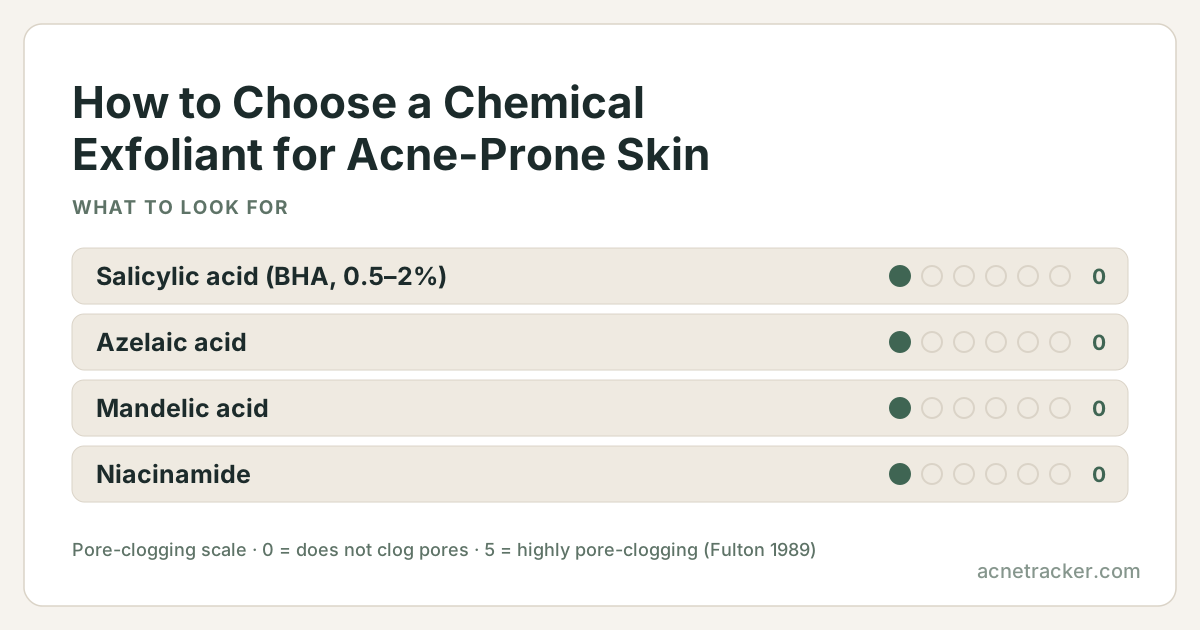
Ingredients to look for
| Ingredient | Why it matters |
|---|---|
| Salicylic acid (BHA, 0.5–2%) | Oil-soluble and mildly anti-inflammatory, it clears the pore lining from the inside — the best-studied exfoliating acid for comedonal, breakout-prone skin. |
| Azelaic acid | Technically not a peeling acid but often grouped here; it normalises keratinisation, calms inflammation and helps the post-acne marks that outlast the spot. |
| Mandelic acid | A gentle AHA with antibacterial behaviour that suits acne-prone skin which reacts badly to stronger acids or wants to fade discolouration slowly. |
| Niacinamide | A supporting ingredient that reduces inflammation and reinforces the barrier, helping breakout-prone skin tolerate regular exfoliation. |
Ingredients to avoid
| Ingredient | Why it matters |
|---|---|
| Frequent physical scrubs on active breakouts | Abrasion spreads inflammation and can rupture pustules, worsening spread and raising the risk of marks and scarring. |
| Stacking multiple strong acids at once | Combining high-strength AHA and BHA every day overwhelms the barrier, and a compromised barrier breaks out more, not less. |
| Alcohol-heavy 'drying' spot formulas | They dehydrate and inflame the surrounding skin, trading one visible spot for a wider patch of irritation. |
| Fragrance-heavy exfoliating lotions | Added fragrance is a common irritant on already-inflamed acne-prone skin and offers no exfoliating benefit. |
How to choose
Lead with salicylic acid if comedones — blackheads and closed bumps — are your main picture, because oil solubility lets it clear the follicle from within. If inflammation and post-acne marks dominate, azelaic acid is worth prioritising, as it works on redness and pigment as well as congestion. For reactive skin that flares easily, mandelic acid is the gentlest effective starting point. Check strength and format: a leave-on at a stated percentage does more than a wash-off, and pH around 3.5–4 keeps AHAs active. Ignore claims like 'clarifying' and 'blemish-busting' and read the actual actives. Above all, resist the urge to go strong and daily; acne-prone skin heals best on a moderate, consistent routine with the barrier intact. If breakouts are widespread, cystic or scarring, see a doctor rather than escalating acids.
How to apply
Apply a leave-on exfoliant in the evening on clean skin, starting two evenings a week and building gradually. Spread it over the whole affected area rather than dabbing single spots, since acne forms across zones, not just where you can see it. Follow with a lightweight moisturizer to keep the barrier calm. Avoid scrubbing on the same nights. Because acids raise sun sensitivity, wear broad-spectrum SPF every morning. If skin becomes tight, red or flaky, pause and let it recover before restarting at a lower frequency.
Frequently asked questions
Which acid is best for acne-prone skin?
Salicylic acid is the usual first choice because it is oil-soluble and works inside the pore where comedones form. If marks and redness are the bigger issue, azelaic acid may suit you better. Mandelic acid is a gentle option for reactive skin.
Can exfoliating acids clear acne on their own?
They help keep pores clear and can reduce breakouts, but acne is often multi-factorial. Moderate or severe, painful or scarring acne can be a medical condition and is best assessed by a doctor rather than treated with acids alone.
Why did my skin break out more after starting an acid?
Some people see a temporary 'purge' as congestion clears faster, but ongoing worsening usually means the product is too strong or too frequent and the barrier is irritated. Scale back and simplify before assuming the acid is working.
Can I use an acid and a retinoid together for acne?
Sometimes, but layering two strong actives often over-exfoliates and inflames acne-prone skin. Many people do better alternating nights. Introduce one active at a time so you can tell what your skin actually tolerates.
Sources & further reading
There is no single study of this exact question. The guidance here is reasoned from the ingredient profiles below, each of which carries its own references:
- Salicylic Acid2 refs
- Azelaic Acid3 refs
- Mandelic Acid2 refs
- Niacinamide2 refs
Show every reference behind this page (8)
- Salicylic acid as a peeling agent: a comprehensive review (PubMed)cited by Salicylic Acid
- FDA OTC monograph — acne drug products (salicylic acid 0.5–2%)cited by Salicylic Acid
- PubChem — Azelaic acid compound summarycited by Azelaic Acid
- DermNet — Azelaic acidcited by Azelaic Acid
- European Commission CosIng database — Azelaic Acidcited by Azelaic Acid, Niacinamide
- Mandelic acid — PubChem compound summarycited by Mandelic Acid
- DermNet — Alpha hydroxy acidscited by Mandelic Acid
- Niacinamide: mechanisms of action and its topical use in dermatology (PubMed)cited by Niacinamide
Medical disclaimer
Ingredients mentioned on this page
Find your personal acne triggers
Our free Acne Tracker lets you log breakouts, sleep, stress and diet, and shows you which factors correlate with your flare-ups.