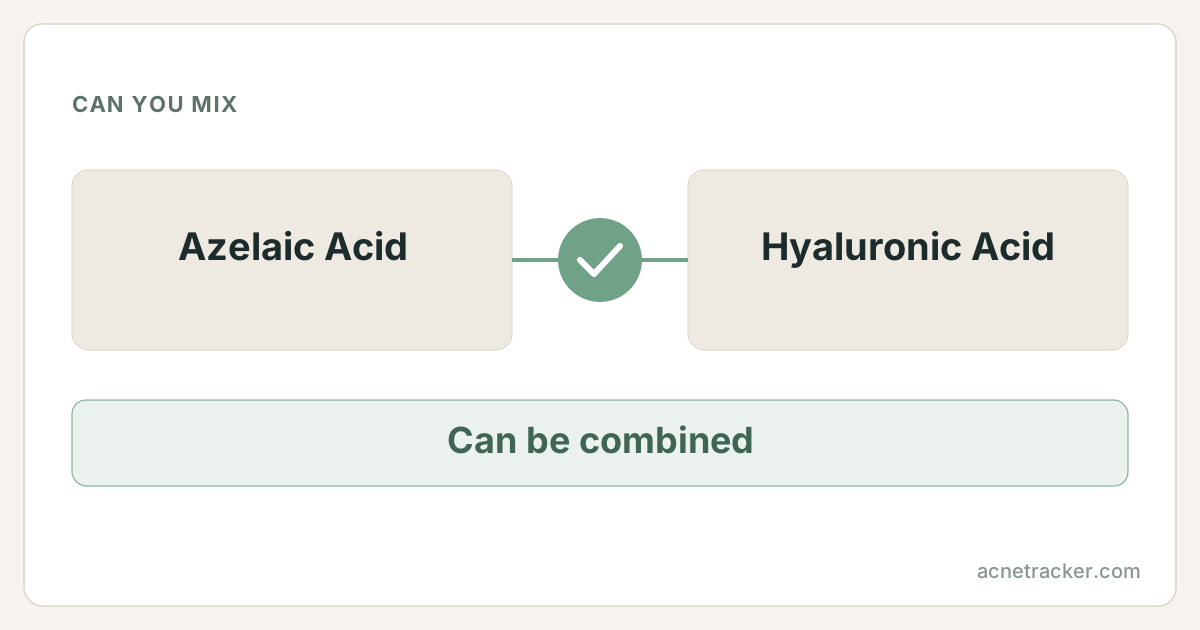
Can You Mix Azelaic Acid and Hyaluronic Acid?
Yes, with no caveats worth the name. Hyaluronic acid is a large, inert sugar polymer that holds water; it has no active site, no pH demands and nothing for azelaic acid to react with. If anything it is the ideal companion, because azelaic acid's main complaint — a stinging, tight first fortnight — is exactly what a humectant plus moisturiser softens. Hyaluronic acid first, azelaic acid on top.
How this pairing resolves
The two ingredients, their published numbers, and where they land together.
The numbers beside each ingredient are its published comedogenic rating and effective pH window, taken from its own profile page.
Show the numbers
| Ingredients | Metric | 0–5 |
|---|---|---|
| Azelaic Acid | Comedogenic rating | 0/5 |
| Azelaic Acid | Effective pH | 4.0–5.0 |
| Hyaluronic Acid | Comedogenic rating | 0/5 |
| Hyaluronic Acid | Effective pH | no published pH |
Why
There is almost no chemistry to discuss here, which is the honest answer rather than a dodge. Hyaluronic acid is a glycosaminoglycan: a long repeating chain of glucuronic acid and N-acetylglucosamine, in cosmetics usually supplied as the sodium salt at molecular weights from a few thousand to over a million daltons. It is called an acid for the carboxyl groups on the chain, but at skin pH it is fully ionised and behaves as a humectant polymer — it binds water and sits in the upper layers. It has no enzyme target, does not shift the pH of what it is mixed with in any meaningful way, and is not oxidisable in a way azelaic acid could exploit. Azelaic acid, meanwhile, needs no help getting where it goes and is not carried further by a humectant. So the interaction is not chemical, it is sensory and structural. Azelaic acid's sting appears to be a transient irritant effect rather than barrier damage — it typically fades within a couple of weeks of consistent use — and a hydrated stratum corneum tolerates it better. The one genuine annoyance is texture: hyaluronic acid gels and thick azelaic acid creams can roll into little pills if you rush them. That is a formulation clash, not an ingredient conflict.
How to combine them
Apply hyaluronic acid to damp skin — it is a humectant, and on bone-dry skin in dry indoor air it can pull water from the deeper layers rather than the atmosphere, which is the origin of the 'hyaluronic acid made my skin drier' complaint. Then wait until it is tacky rather than wet, spread azelaic acid over it, and seal with a moisturiser. That order matters: azelaic acid creams are thick and occlusive-feeling, and anything applied on top of them tends to pill. The sequence works morning or evening; azelaic acid is not photosensitising, so a morning slot under SPF is fine and often preferred, since sun protection is what preserves any pigment progress. If you get pilling anyway, use less of both, pat rather than rub, and let each layer settle for a minute. There is no need to alternate days, no adjustment period for the hyaluronic acid, and no reason to buy anything specialised.
Example routine
| When | Steps |
|---|---|
| Morning | Cleanser → Hyaluronic acid on damp skin → Azelaic acid 10% → Moisturiser → SPF 30+ |
| Evening | Cleanser → Hyaluronic acid on damp skin → Moisturiser |
| If it stings | Moisturiser first, then azelaic acid over it (buffering) |
| If it pills | Less product, pat don't rub, 60 seconds between layers |
Warning signs
Frequently asked questions
Does hyaluronic acid make azelaic acid penetrate deeper?
No — that claim gets recycled a lot. Hyaluronic acid is a large polymer that hydrates the surface; it is not a penetration enhancer for azelaic acid. It makes the routine more comfortable, which is a different and more honest benefit.
Should hyaluronic acid go on before or after azelaic acid?
Hyaluronic acid, on damp skin, then azelaic acid, then moisturiser. Thin to thick is the rule, and azelaic acid formulas are thick enough that products applied over them frequently pill.
Will hyaluronic acid stop azelaic acid from stinging?
It can reduce it. Hydrated skin tolerates azelaic acid better, and applying a moisturiser first and azelaic acid over it — buffering — is a standard trick. The sting usually settles on its own within two weeks regardless.
Is this pair safe in pregnancy?
Both are commonly regarded as pregnancy-compatible, and azelaic acid is one of the few actives that gets named as an option when retinoids are off the table. Still confirm with your midwife or doctor rather than taking a website's word for it.
Do I need hyaluronic acid at all if I already use a moisturiser?
Not necessarily. A good moisturiser already contains humectants. Hyaluronic acid is a nice-to-have that makes a stinging active more pleasant; it is not a required step and skipping it costs you nothing structural.
Sources & further reading
There is no single study of this exact question. The guidance here is reasoned from the ingredient profiles below, each of which carries its own references:
- Azelaic Acid3 refs
- Hyaluronic Acid3 refs
Show every reference behind this page (5)
- PubChem — Azelaic acid compound summarycited by Azelaic Acid
- DermNet — Azelaic acidcited by Azelaic Acid
- European Commission CosIng database — Azelaic Acidcited by Azelaic Acid, Hyaluronic Acid
- PubChem — Hyaluronic acid compound summarycited by Hyaluronic Acid
- DermNet — Moisturisers and humectantscited by Hyaluronic Acid
Medical disclaimer
Ingredients mentioned on this page
Find your personal acne triggers
Our free Acne Tracker lets you log breakouts, sleep, stress and diet, and shows you which factors correlate with your flare-ups.