Acne on the Neck
The neck sits between the face and the chest and shares breakout triggers with both, plus a few of its own. Its skin has oil glands and is regularly covered by collars, scarves and long hair, so it clogs, but it is also a magnet for irritants that trickle down from the head: hair conditioner, styling products, and residue from shampoo. Add necklaces, high collars and, in some, shaving friction along the lower neck, and it is easy to see why breakouts land here. Neck acne is usually straightforward comedonal and inflammatory acne, and tracing which of these triggers applies to you is often the fastest route to clearing it.
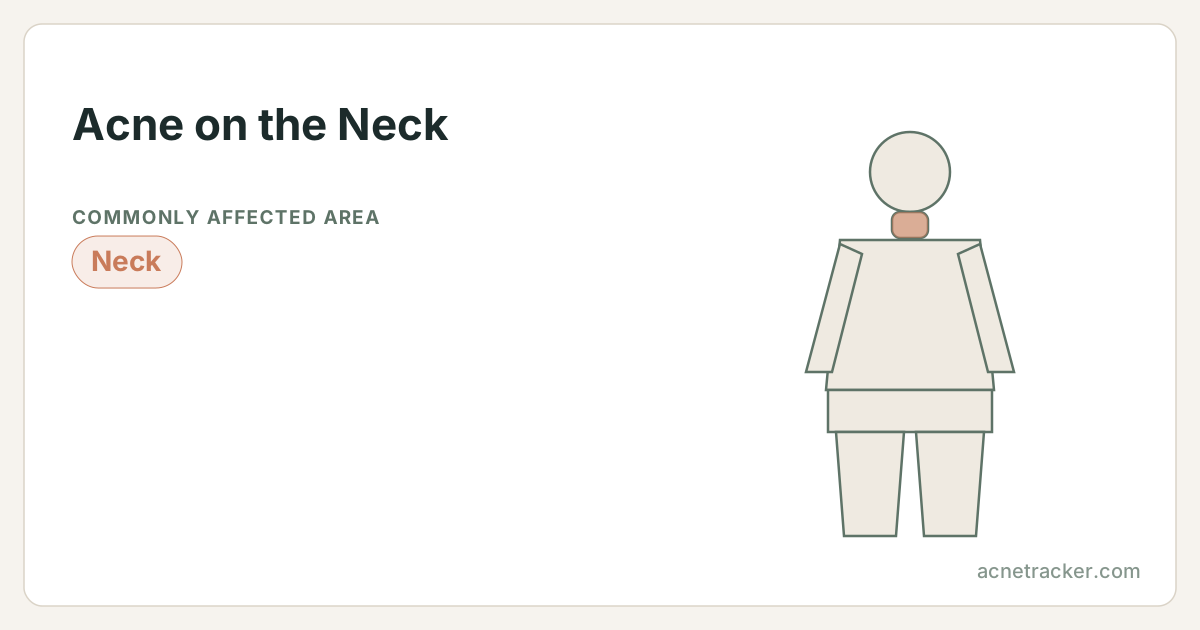
How to recognize it
Neck acne appears as blackheads, small bumps and red inflamed spots on the sides and back of the neck and along the collar line, often heaviest where a shirt collar or necklace sits or where hair rests. Breakouts along the hairline at the back of the neck frequently point to hair products. If the bumps are on the beard area of the lower neck in someone who shaves, ingrown-hair irritation may be mixed in. Uniform, itchy bumps in even sheets that flare after sweating suggest fungal folliculitis rather than ordinary neck acne.
What causes it
Hair and styling products
Conditioner, styling creams and oils, and shampoo residue run down onto the neck and clog follicles, especially along the back hairline. Pomade-related breakouts here are common and easily overlooked.
Collars, scarves and necklaces
Shirt collars, scarves and necklace chains rub and press the neck and trap sweat against it, inflaming follicles along the exact lines where they sit.
Sweat and long hair
Long hair holds sweat, heat and product against the neck, particularly at the back, keeping the skin damp and prone to clogging during warm weather and workouts.
Shaving friction
On the lower neck of people who shave, the razor irritates follicles and can cause ingrown hairs and inflamed bumps that sit alongside or mimic acne.
Ingredients with evidence
| Ingredient | Role |
|---|---|
| Salicylic acid (BHA) | Clears clogged pores on the neck and is easy to apply as a leave-on 2% liquid a few evenings a week. |
| Benzoyl peroxide | Reduces bacteria in inflamed neck spots; a wash or low-strength leave-on, rinsed well as it can bleach collars. |
| Adapalene | A retinoid that keeps neck follicles from clogging over time; apply thinly at night, avoiding freshly shaved skin until it settles. |
| Niacinamide | Calms redness and supports the barrier on neck skin, which can be sensitive. |
| Azelaic acid | Anti-inflammatory and helpful for marks, gentle enough for the neck and for skin prone to ingrown-hair irritation. |
Building the routine
Track down the trigger while you treat. Rinse shampoo and conditioner off the neck and back hairline thoroughly at the end of a shower so product does not linger, and keep long hair off the neck when it is hot or you are sweating. Use a leave-on salicylic-acid liquid a few evenings a week and a thin layer of adapalene at night, adding benzoyl peroxide or azelaic acid for inflamed spots, then a light moisturiser. Choose looser collars, wash scarves and remove necklaces that press or trap sweat. If you shave the lower neck, use a sharp blade, shave with the grain and avoid going over the same spot, which reduces ingrown-hair bumps.
When to see a doctor
Frequently asked questions
Why do I get acne on my neck?
The neck clogs from oil and sweat like the chest, but its most common special triggers are hair and styling products running down onto it, plus collars, scarves and necklaces that rub and trap sweat. Tracing which applies to you usually points to the fix.
Can hair products cause breakouts on my neck?
Yes, very commonly. Conditioner, styling creams and oils, and shampoo residue drift onto the neck and back hairline and clog follicles. Rinsing them off thoroughly at the end of a shower and keeping hair off the neck often clears these breakouts.
Why do I break out along my collar line?
Collars rub and press the neck and trap sweat against it, inflaming follicles along the contact line. Looser, breathable collars, washing shirts regularly and keeping the area clear with salicylic acid reduce breakouts there.
Are the bumps on my neck acne or ingrown hairs?
On the lower neck of someone who shaves, they may be ingrown-hair irritation rather than acne, which needs gentler shaving technique more than acne products. If you are unsure, or the bumps are deep or enlarging, a doctor can tell them apart.
Sources & further reading
What this page cites about the condition itself:
There is no single study of this exact question. The guidance here is reasoned from the ingredient profiles below, each of which carries its own references:
- Salicylic Acid2 refs
- Benzoyl Peroxide3 refs
- Adapalene3 refs
- Niacinamide2 refs
- Azelaic Acid3 refs
Show every reference behind this page (10)
- Salicylic acid as a peeling agent: a comprehensive review (PubMed)cited by Salicylic Acid
- FDA OTC monograph — acne drug products (salicylic acid 0.5–2%)cited by Salicylic Acid, Benzoyl Peroxide, Adapalene
- PubChem — Benzoyl peroxide compound summarycited by Benzoyl Peroxide
- DermNet — Benzoyl peroxidecited by Benzoyl Peroxide
- PubChem — Adapalene compound summarycited by Adapalene
- DermNet — Adapalenecited by Adapalene
- Niacinamide: mechanisms of action and its topical use in dermatology (PubMed)cited by Niacinamide
- European Commission CosIng database — Niacinamidecited by Niacinamide, Azelaic Acid
- PubChem — Azelaic acid compound summarycited by Azelaic Acid
- DermNet — Azelaic acidcited by Azelaic Acid
Medical disclaimer
Ingredients mentioned on this page
Find your personal acne triggers
Our free Acne Tracker lets you log breakouts, sleep, stress and diet, and shows you which factors correlate with your flare-ups.