Licorice Root Extract: Comedogenic Rating & Ingredient Analysis
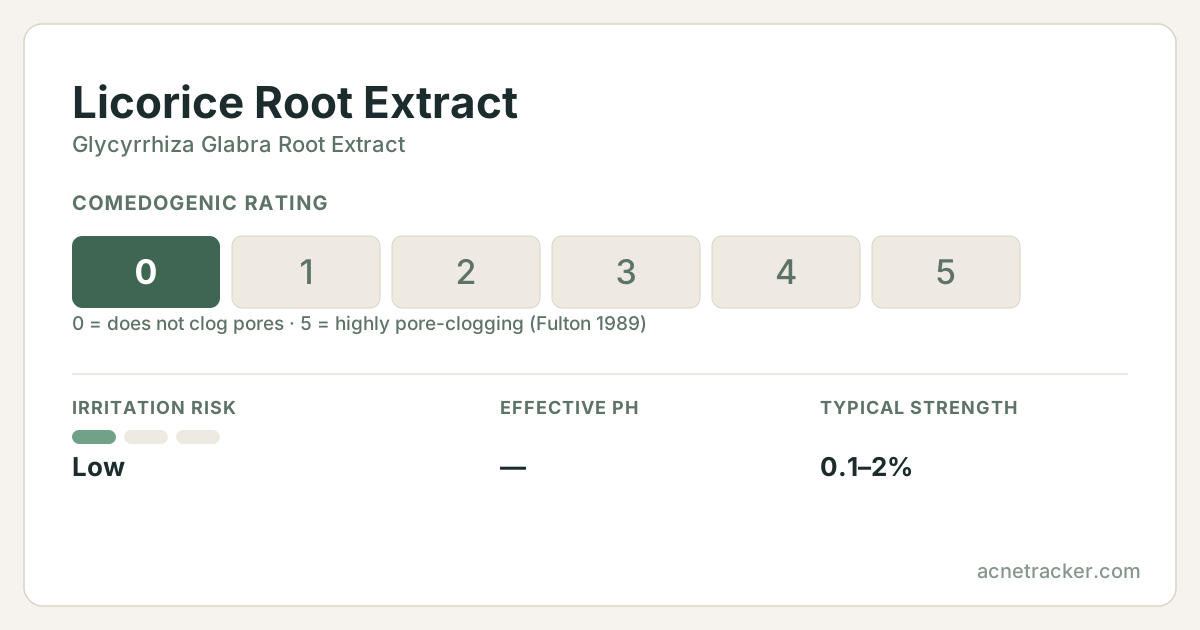
Licorice root extract is one of the gentlest and best-liked brightening botanicals in skincare. Derived from the root of Glycyrrhiza glabra, it offers a rare combination of tone-evening and calming effects, which makes it especially useful for post-acne marks and sensitive skin that cannot tolerate harsher brighteners. Rather than exfoliating or forcing change, it works quietly to soothe inflammation and gently discourage excess pigment. With a comedogenic rating of 0 and very low irritation risk, it suits nearly every skin type and pairs beautifully with actives like niacinamide and vitamin C.
Quick facts
- Comedogenic rating
- our estimate — not measured
- Irritation risk
- Low
- Effective pH
- —
- Typical strength
- 0.1–2%
- Pregnancy
- Considered safe
- Suits skin types
- oilydrycombinationsensitivenormalacne-pronemature
Where this number comes from
No one has published a comedogenic rating for this ingredient. Fulton's 1989 table tested about 250 raw materials and this was not among them, and we found no later study measuring it. The figure shown is our own reasoning from the ingredient's chemistry and how it is used — treat it as an estimate, not a measurement.
Fulton read his own scale as 0-1 not significant, 2-3 borderline, 4-5 positive. The assay is the rabbit ear at 10% dilution, which the paper itself calls extremely sensitive and not fully predictive of human skin. Ratings describe the raw ingredient; concentration and formulation change real-world behaviour.
Caution profile
The four published fields on this page, on one 0–5 scale. Further from the centre means more care is needed — never that the ingredient is worse.
Derived, not measured: pore-clogging is the published comedogenic rating; irritation maps low/moderate/high to 1/3/5; pregnancy maps safe/caution/avoid to 0/3/5; skin-type limits is how many of the seven skin types this entry does NOT list. Every input is printed in words in the quick-facts card above.
Show the numbers
| Metric | 0–5 | Published field |
|---|---|---|
| Pore-clogging | 0 | 0/5 |
| Irritation | 1 | Low |
| Skin-type limits | 0 | 7/7 |
| Pregnancy | 0 | Considered safe |
Working pH and typical strength
Where this ingredient is formulated to sit, and at what concentration.
Both bars come from the fields above: the pH window and the typical strength range published for this ingredient. The tinted column is healthy skin's surface pH (about 4.7–5.75).
Show the numbers
| Metric | 0–5 |
|---|---|
| Typical strength | 0.1–2% |
What is it?
Licorice root extract is a botanical containing several active compounds, the most important of which for skin are glabridin, liquiritin and glycyrrhizin. Glabridin is studied for its ability to interfere with the pigment-making enzyme tyrosinase, which is the basis for the extract's brightening reputation, while glycyrrhizin and related molecules contribute soothing, anti-inflammatory activity. This dual action — calming and tone-evening at once — is what sets licorice apart from purely exfoliating or acidic brighteners. Because it is a whole extract, the concentration of each active varies by product, but well-formulated licorice extracts are a reliable, low-risk way to address uneven tone.
Benefits
Gently fades dark spots
Licorice's glabridin helps limit excess pigment production, gradually softening dark spots and the brown marks left behind by healed breakouts.
Calms inflammation
Its glycyrrhizin content has soothing, anti-inflammatory activity that helps settle the redness of irritated and blemish-prone skin.
Antioxidant protection
The extract provides antioxidant defense, helping protect the skin from the oxidative stress that worsens pigmentation and dullness.
Suits sensitive skin
As a mild, non-acidic brightener, it is a good option for reactive skin that cannot tolerate stronger tone-correcting actives.
How to use
Licorice root extract appears in serums, essences and moisturizers, often alongside other brightening ingredients. Apply after cleansing, morning and night, and pair it with vitamin C in the day and niacinamide anytime for a stronger tone-evening effect. Daily sunscreen is essential when treating any pigmentation, since UV exposure drives the excess pigment that brighteners work to reduce. Because it is gentle and non-acidic, there is no adjustment period and it layers freely with other actives, making it easy to slot into an existing routine.
Side effects
Licorice root extract is very well tolerated and side effects are rare. As a botanical it can, uncommonly, cause sensitivity in people prone to plant allergies, usually showing as mild redness or itching. It is not photosensitizing and does not increase sun sensitivity. Any stinging from a licorice-containing product is more likely due to other ingredients such as acids or fragrance in the same formula.
Who should avoid it
Almost no one needs to avoid topical licorice root extract. People with a history of botanical allergies should patch test first as a precaution. Note that concerns about licorice affecting blood pressure relate to eating large amounts of licorice, not to the topical extract, which is not absorbed in meaningful amounts through the skin.
Frequently asked questions
Does licorice root extract fade dark spots?
Yes, gently. Its glabridin content helps reduce excess pigment production, gradually softening dark spots and post-acne marks, especially with consistent use and daily sunscreen.
Is licorice extract good for sensitive skin?
Very. It is a mild, non-acidic brightener with soothing, anti-inflammatory properties, making it one of the best tone-evening options for reactive skin.
Can I use licorice extract with vitamin C?
Yes, and they complement each other well. Both help even skin tone through different mechanisms, so combining them can give a stronger brightening effect.
Does licorice root extract clog pores?
No. It has a comedogenic rating of 0 and is a lightweight extract, so it brightens and soothes acne-prone skin without contributing to clogged pores.
Is licorice root extract safe during pregnancy?
Topical licorice root extract is generally considered safe and is a popular pregnancy-friendly brightener. Since brightening routines are usually the part people most want to rebuild while pregnant, run yours past your doctor as a whole rather than judging this one ingredient in isolation.
Where this ingredient shows up here
Counted across this database, not the web — these are the pages on this site that reason about this ingredient.
Sources & further reading
Medical disclaimer
Find your personal acne triggers
Our free Acne Tracker lets you log breakouts, sleep, stress and diet, and shows you which factors correlate with your flare-ups.