Can You Mix Azelaic Acid and Centella Asiatica?
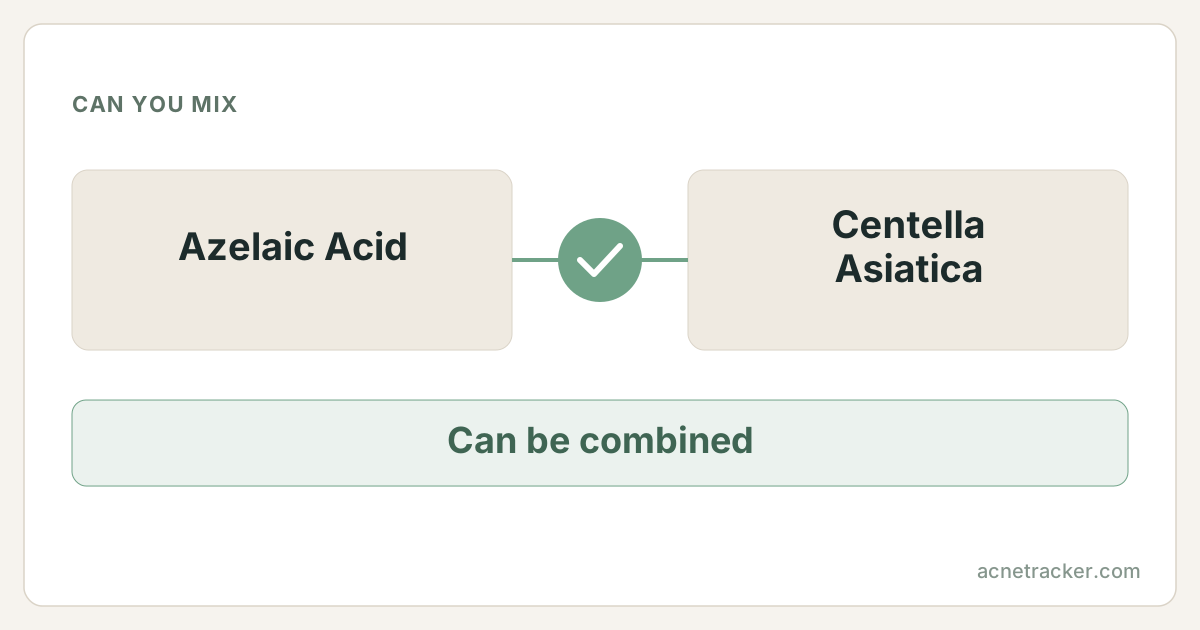
Yes, and it is a sensible pairing for red, reactive skin. Centella asiatica — cica — is a soothing botanical with no reactivity toward azelaic acid, and it addresses the discomfort that makes people quit azelaic acid in week one. Be clear on the hierarchy though: azelaic acid is the one with published rosacea trial evidence. Cica supports it; it does not replace it.
How this pairing resolves
The two ingredients, their published numbers, and where they land together.
The numbers beside each ingredient are its published comedogenic rating and effective pH window, taken from its own profile page.
Show the numbers
| Ingredients | Metric | 0–5 |
|---|---|---|
| Azelaic Acid | Comedogenic rating | 0/5 |
| Azelaic Acid | Effective pH | 4.0–5.0 |
| Centella Asiatica | Comedogenic rating | 0/5 |
| Centella Asiatica | Effective pH | no published pH |
Why
Centella asiatica is a marsh plant whose activity is attributed to a group of triterpenes: asiaticoside, madecassoside, asiatic acid and madecassic acid, often standardised together as titrated extract. Their reported effects centre on wound healing and inflammation — stimulating fibroblast activity and collagen synthesis in healing models, and damping inflammatory signalling. The extract has a long traditional use and a genuine, if uneven, research literature; much of the strongest work involves standardised extracts in wound contexts rather than a cosmetic essence at unspecified percentage, which is the honest gap between the science and the shelf. Azelaic acid arrives from the other direction: its anti-inflammatory action is thought to involve reducing reactive oxygen species from neutrophils and interfering with the kallikrein-5 and cathelicidin cascade implicated in rosacea, and 15% gel has been through controlled trials for papulopustular rosacea. So both have an anti-redness rationale, but only one of them has the trial record — and, awkwardly, the one with the record is also the one that stings. That is precisely why they are paired: cica makes azelaic acid liveable during the fortnight when it is least pleasant and you are most likely to give up on it.
How to combine them
Cica products are usually light essences, serums or gel-creams, so they go on before azelaic acid: cleanse, cica, let it absorb, azelaic acid, moisturiser, SPF 30+. If your cica product is a rich cream, flip it — azelaic acid first, cica cream on top as the moisturising step. Either order is fine chemically; you are just following thin to thick. Cica needs no adjustment period and can be used twice daily indefinitely, which makes it a good permanent base layer rather than a treatment with a schedule. If azelaic acid stings badly in the first two weeks, applying the cica product first and azelaic acid over it is a reasonable buffer. Sun protection matters if redness is your concern: UV is one of the most consistent rosacea triggers, and a mineral sunscreen is often better tolerated on reactive skin. If your facial redness flushes, burns, comes with visible vessels or bumps, that is a conversation for a doctor — azelaic acid is a real rosacea option, but at 15–20% it is a prescription-strength decision, not a self-diagnosis.
Example routine
| When | Steps |
|---|---|
| Morning | Cleanser → Cica essence/serum → Azelaic acid 10% → Moisturiser → SPF 30+ |
| Evening | Cleanser → Cica essence → Moisturiser |
| If cica is a cream | Azelaic acid first → Cica cream over it as the moisturiser step |
| First 2 weeks | Cica first as a buffer under azelaic acid while the sting settles |
Warning signs
Frequently asked questions
Does centella asiatica cancel out azelaic acid?
No. There is no chemical interaction — cica's triterpenes are not oxidisers, acids or chelators. Soothing an active's sting is not the same as blocking its mechanism; azelaic acid keeps inhibiting tyrosinase and inflammation regardless.
Which is better for rosacea redness?
Azelaic acid, on the evidence. Its 15% gel has been through controlled trials in papulopustular rosacea; cica has a soothing rationale but not that record. Prescription strengths are a decision for your dermatologist.
Will cica stop azelaic acid stinging?
It can make the first fortnight more comfortable, especially applied underneath as a buffer. The sting typically fades on its own within two weeks of consistent use, so cica shortens the pain rather than changing the outcome.
Is cica the same as centella asiatica?
Yes — 'cica' is the marketing shorthand. On an INCI list look for Centella Asiatica Extract, or the isolated triterpenes such as madecassoside and asiaticoside, which tell you more than the front-of-pack claim does.
Can I use both in pregnancy?
Azelaic acid is commonly named among the pregnancy-compatible actives. Topical centella is not associated with particular concern, but botanical extracts are variable and pregnancy data is thin — ask your midwife or doctor rather than assuming.
Sources & further reading
There is no single study of this exact question. The guidance here is reasoned from the ingredient profiles below, each of which carries its own references:
- Azelaic Acid3 refs
- Centella Asiatica2 refs
Show every reference behind this page (4)
- PubChem — Azelaic acid compound summarycited by Azelaic Acid
- DermNet — Azelaic acidcited by Azelaic Acid
- European Commission CosIng database — Azelaic Acidcited by Azelaic Acid, Centella Asiatica
- Bylka W et al. Centella asiatica in dermatology: an overview. Phytother Res 2014 Aug (PubMed)cited by Centella Asiatica
Medical disclaimer
Ingredients mentioned on this page
Find your personal acne triggers
Our free Acne Tracker lets you log breakouts, sleep, stress and diet, and shows you which factors correlate with your flare-ups.