How to Choose a Serum for Hyperpigmentation
Hyperpigmentation — sun spots, melasma, and the dark marks that linger after acne — responds to serums that interrupt pigment production at different points, but only if one non-negotiable partner is in place: daily sunscreen. Without it, every fading active is fighting fresh UV-driven pigment and losing. This guide describes the tone-evening ingredients worth looking for on any label, how to combine them sensibly, and why patience of three to six months is the realistic timeline. It also flags where a doctor, not a serum, is the right call, because some pigment is stubborn and some brightening ingredients need professional guidance.
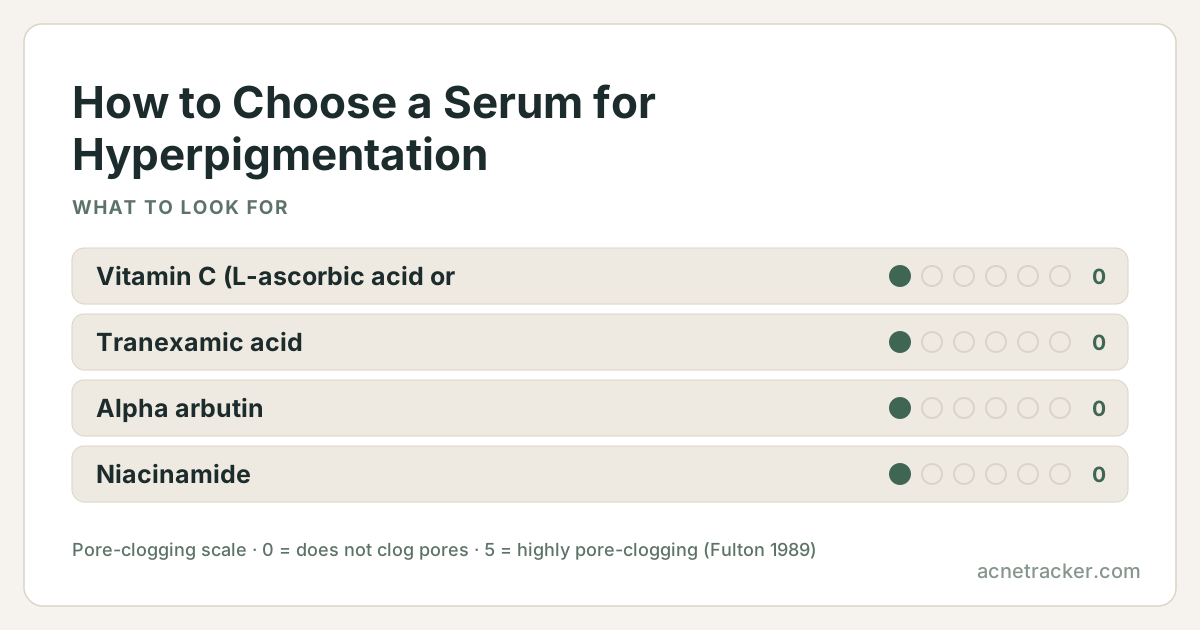
Ingredients to look for
| Ingredient | Why it matters |
|---|---|
| Vitamin C (L-ascorbic acid or derivatives) | An antioxidant that inhibits pigment formation and brightens overall tone, and boosts your sunscreen's daytime protection. |
| Tranexamic acid | Targets the stubborn, often hormonally driven pigment of melasma and blends well with niacinamide and vitamin C. |
| Alpha arbutin | A gentle tyrosinase inhibitor that fades dark spots gradually with a low irritation risk, suiting most skin types. |
| Niacinamide | Slows the transfer of pigment to surface skin cells and calms the inflammation that can trigger more discolouration. |
| Azelaic acid | Fades pigment while being gentle enough for sensitive skin and suitable during pregnancy, when many actives are off-limits. |
Ingredients to avoid
| Ingredient | Why it matters |
|---|---|
| Unregulated high-dose hydroquinone bought without guidance | Effective but prescription-territory; misuse can cause rebound darkening and a persistent blue-grey discolouration. |
| Harsh scrubs and aggressive acid stacking | Irritation itself triggers post-inflammatory pigment, so over-exfoliating can deepen the very marks you are treating. |
| Skipping sunscreen while using brighteners | UV drives pigment production; without daily SPF, fading actives cannot outpace new darkening. |
| Fragrance-heavy formulas on inflammation-prone skin | Added irritation risks fresh post-inflammatory pigmentation, working against the serum's purpose. |
How to choose
Match the active to the type of pigment. Post-acne marks and general sun-related spots respond well to vitamin C, alpha arbutin and niacinamide, often combined. Melasma, which is deeper and hormonally influenced, does better with tranexamic acid and azelaic acid, and frequently needs a dermatologist. If you are pregnant or breastfeeding, azelaic acid and vitamin C are the safer brightening choices, while stronger options should wait. Look for a serum that combines two or three complementary brighteners rather than a single ingredient, since pigment forms through several steps and hitting more than one is more effective. Judge stability too: vitamin C serums should be in opaque, air-limiting packaging, and a formula that has turned deep orange has oxidised and lost potency. Most importantly, accept the timeline — visible fading takes eight to sixteen weeks, and there is no serum that erases pigment quickly.
How to apply
Use vitamin C in the morning, where its antioxidant effect complements sunscreen, and apply gentler brighteners like alpha arbutin or niacinamide either time of day. Then apply broad-spectrum SPF 30 or higher every single morning and reapply through the day — this step is not optional with pigmentation and largely determines whether you see results. Introduce acids and vitamin C gradually to avoid the irritation that itself causes pigment. Consistency over months, not intensity in one week, is what fades hyperpigmentation.
Frequently asked questions
How long does a serum take to fade hyperpigmentation?
Expect eight to sixteen weeks for visible improvement, and longer for deep or hormonal pigment like melasma. Superficial post-acne marks fade fastest; anything promising results in days is overstating what topical ingredients can do.
Which is better for dark spots, vitamin C or niacinamide?
They work at different steps and are better together than in competition — vitamin C inhibits pigment formation while niacinamide slows its transfer to surface cells. Many effective routines use both plus daily sunscreen.
Can I treat melasma with an over-the-counter serum?
Serums with tranexamic acid, azelaic acid and niacinamide can help, but melasma is stubborn and easily worsened by heat and sun. A dermatologist can offer prescription options and is worth seeing for persistent cases.
Which pigment serum is safe during pregnancy?
Azelaic acid, vitamin C and niacinamide are generally considered suitable, while retinoids and high-dose hydroquinone are avoided. Always confirm your specific routine with your own doctor or midwife.
Why is sunscreen so important when treating pigmentation?
UV exposure directly stimulates the pigment cells you are trying to calm, so unprotected sun undoes fading progress daily. Without consistent SPF, even the best brightening serum cannot get ahead of new darkening.
Sources & further reading
There is no single study of this exact question. The guidance here is reasoned from the ingredient profiles below, each of which carries its own references:
- Vitamin C3 refs
- Tranexamic Acid3 refs
- Alpha-Arbutin3 refs
- Niacinamide2 refs
- Azelaic Acid3 refs
Show every reference behind this page (11)
- PubChem — Ascorbic Acid compound summarycited by Vitamin C
- DermNet — Topical vitamin Ccited by Vitamin C
- European Commission CosIng database — Ascorbic Acidcited by Vitamin C, Alpha-Arbutin, Niacinamide, Azelaic Acid
- PubChem — Tranexamic acid compound summarycited by Tranexamic Acid
- Tranexamic Acid for Hyperpigmentation Disorders: A Literature Review on Efficacy and Safety in Melasma and PIH. J Cosmet Dermatol 2026 Feb (PubMed)cited by Tranexamic Acid
- DermNet — Melasmacited by Tranexamic Acid
- PubChem — Arbutincited by Alpha-Arbutin
- A comprehensive review of the therapeutic potential of α-arbutin (PubMed)cited by Alpha-Arbutin
- Niacinamide: mechanisms of action and its topical use in dermatology (PubMed)cited by Niacinamide
- PubChem — Azelaic acid compound summarycited by Azelaic Acid
- DermNet — Azelaic acidcited by Azelaic Acid
Medical disclaimer
Ingredients mentioned on this page
Find your personal acne triggers
Our free Acne Tracker lets you log breakouts, sleep, stress and diet, and shows you which factors correlate with your flare-ups.