Vitamin E: Comedogenic Rating & Ingredient Analysis
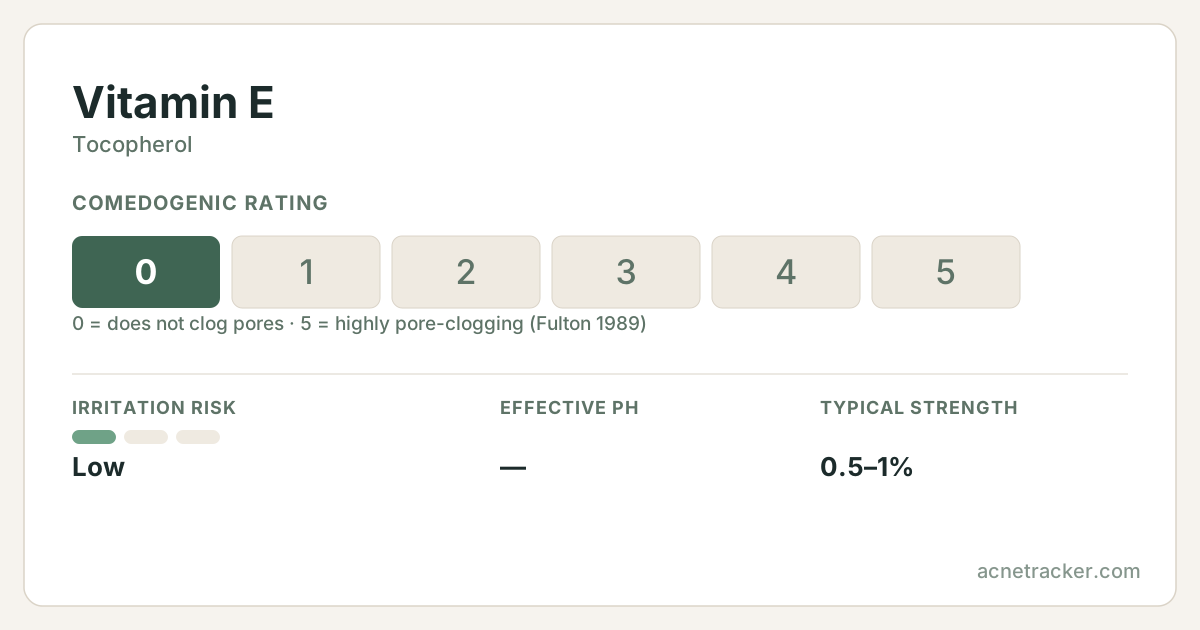
Vitamin E, listed on labels as tocopherol, is the skin's main fat-soluble antioxidant and one of the quiet workhorses of cosmetic formulation. Unlike water-soluble vitamin C, tocopherol lives in the lipid layers of the skin and in the oil phase of a product, where it protects fats from going rancid — both the natural lipids in your barrier and the oils in the bottle. That dual role means you will find it in a huge range of serums, moisturizers and oils, usually at a modest 0.5–1%. It rarely stars on the front of the label, yet it does a great deal in the background: cushioning the barrier, calming the look of irritation, and above all working as a team-mate to vitamin C, which it regenerates and stabilizes.
Quick facts
- Comedogenic rating
- measured (Fulton 1989)
- Irritation risk
- Low
- Effective pH
- —
- Typical strength
- 0.5–1%
- Pregnancy
- Considered safe
- Suits skin types
- drynormalcombinationmaturesensitive
Where this number comes from
Read directly from Table I of Fulton's 1989 paper — the primary source, not one of the copied tables that circulate online.
Fulton printed a RANGE for this ingredient (0-3), marked to show that the result depends on the source of the raw material. We publish the low end, because variability between batches is not evidence that a finished product clogs pores — flagging it at the high end would warn people off an ingredient the assay did not consistently condemn.
Fulton read his own scale as 0-1 not significant, 2-3 borderline, 4-5 positive. The assay is the rabbit ear at 10% dilution, which the paper itself calls extremely sensitive and not fully predictive of human skin. Ratings describe the raw ingredient; concentration and formulation change real-world behaviour.
Caution profile
The four published fields on this page, on one 0–5 scale. Further from the centre means more care is needed — never that the ingredient is worse.
Derived, not measured: pore-clogging is the published comedogenic rating; irritation maps low/moderate/high to 1/3/5; pregnancy maps safe/caution/avoid to 0/3/5; skin-type limits is how many of the seven skin types this entry does NOT list. Every input is printed in words in the quick-facts card above.
Show the numbers
| Metric | 0–5 | Published field |
|---|---|---|
| Pore-clogging | 0 | 0/5 |
| Irritation | 1 | Low |
| Skin-type limits | 1.4 | 5/7 |
| Pregnancy | 0 | Considered safe |
Working pH and typical strength
Where this ingredient is formulated to sit, and at what concentration.
Both bars come from the fields above: the pH window and the typical strength range published for this ingredient. The tinted column is healthy skin's surface pH (about 4.7–5.75).
Show the numbers
| Metric | 0–5 |
|---|---|
| Typical strength | 0.5–1% |
What is it?
Tocopherol is a family of fat-soluble compounds, of which alpha-tocopherol is the most biologically active. In the skin it embeds itself in cell membranes and the lipid matrix of the barrier, where it intercepts the chain reaction of lipid peroxidation — the process by which free radicals damage fats and degrade the barrier. Once a tocopherol molecule has neutralized a radical it becomes oxidized itself, and this is where vitamin C comes in: ascorbic acid regenerates spent vitamin E back to its active form, which is why the two are formulated together so often and why network antioxidant serums pair them with ferulic acid. Tocopherol is also a mild emollient, softening and smoothing the surface, and it doubles as a preservative-booster that keeps the oils in a formula from oxidizing on the shelf.
Benefits
Protects the barrier from oxidation
As the skin's primary fat-soluble antioxidant, tocopherol shields membrane lipids from free-radical damage, helping the barrier stay intact against sun and pollution stress.
Boosts and stabilizes vitamin C
Vitamin E and vitamin C regenerate each other, so pairing them measurably increases the antioxidant performance and shelf stability of a serum compared with either alone.
Softens and conditions skin
Its emollient nature smooths rough, dry patches and improves the feel of the skin surface, which is why it appears in so many moisturizers and facial oils.
Calms the look of dryness and irritation
By supporting the lipid barrier and reducing oxidative stress, tocopherol helps soothe the appearance of dry, stressed skin and supports its recovery over time.
How to use
Vitamin E is easy to use because it is already blended into most moisturizers, oils and antioxidant serums at an effective level, so you rarely need a standalone product. If you use a pure vitamin C serum, choosing one that also contains tocopherol gives you the well-studied antioxidant network for free. It suits day or night; in the morning it complements sunscreen, and at night it supports overnight barrier repair. If you buy pure vitamin E oil, remember it is highly concentrated and best used sparingly as a spot treatment on dry areas rather than all over acne-prone skin.
Side effects
Tocopherol is well tolerated by most people, but it has a documented downside: undiluted, high-concentration vitamin E oil is a relatively common cause of contact dermatitis in susceptible individuals, showing up as itchy redness. In its rich, oily form it can also feel heavy and, on very oily or acne-prone skin, contribute to clogged pores — which is why its comedogenic rating is higher than that of most antioxidants. Used at the low percentages found in balanced formulas, these problems are uncommon.
Who should avoid it
Very oily and acne-prone skin should be cautious with heavy, pure vitamin E oils, which can feel greasy and may clog pores; the small amounts in a lightweight serum or gel are usually fine. Anyone who has reacted to vitamin E oil before, or who has a known tocopherol sensitivity, should avoid concentrated products and patch test any new formula.
Pairs well with
Frequently asked questions
Does vitamin E clog pores?
Pure vitamin E oil is rich and can contribute to clogged pores on oily, acne-prone skin, which is why it scores higher on the comedogenic scale. The low levels used inside balanced serums and lotions are far less likely to cause problems.
Should I use vitamin E with vitamin C?
Yes, they are a classic pairing. Vitamin C regenerates spent vitamin E and the two together provide stronger, more stable antioxidant protection than either used on its own.
Can vitamin E fade acne scars?
The evidence is weak. Despite its popular reputation, controlled studies have not shown that topical vitamin E reliably improves the appearance of scars, and in some people the oil caused irritation. Manage expectations here.
Is vitamin E oil good for the face?
It can help dry patches as a targeted emollient, but pure oil is concentrated and can feel heavy or trigger irritation. For most faces, vitamin E delivered inside a moisturizer or serum is a better format than the neat oil.
Is vitamin E safe during pregnancy?
Topical vitamin E is generally considered safe during pregnancy and breastfeeding at the levels used in cosmetics. As always, check with your doctor about your specific circumstances.
Where this ingredient shows up here
Counted across this database, not the web — these are the pages on this site that reason about this ingredient.
Sources & further reading
Medical disclaimer
Find your personal acne triggers
Our free Acne Tracker lets you log breakouts, sleep, stress and diet, and shows you which factors correlate with your flare-ups.