How to Choose a Serum for Dull Skin
Dullness is usually a surface story: a build-up of dead cells that scatters light instead of reflecting it, plus dehydration and uneven tone that mute the skin's natural glow. A serum brings radiance back by gently accelerating cell turnover, adding water and antioxidants, and evening out colour — not by scrubbing harder, which is the most common mistake. This guide describes the brightening and resurfacing ingredients to look for on any label, and the over-exfoliation trap that leaves skin looking briefly polished but then rough and inflamed. Radiance is a sign of a healthy, hydrated, gently exfoliated barrier, not a stripped one.
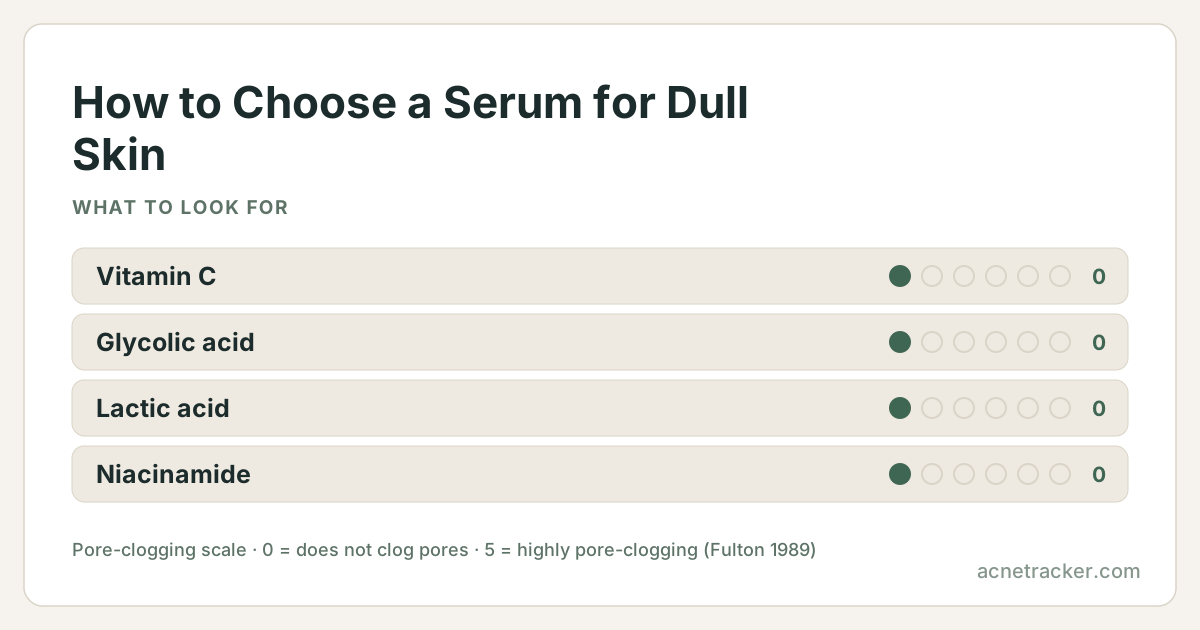
Ingredients to look for
| Ingredient | Why it matters |
|---|---|
| Vitamin C | The signature radiance antioxidant: it brightens overall tone, fights the dullness of environmental damage and lifts a tired complexion. |
| Glycolic acid | A small water-soluble AHA that dissolves the dead-cell build-up scattering light, revealing smoother, more reflective skin. |
| Lactic acid | A gentler AHA that exfoliates while adding hydration, ideal for dullness on skin that cannot tolerate stronger acids. |
| Niacinamide | Evens tone and supports the barrier, so the glow from exfoliation is not offset by irritation-driven redness. |
| Hyaluronic acid | Dehydrated skin looks flat and grey; adding water plumps the surface so it reflects light and looks luminous. |
Ingredients to avoid
| Ingredient | Why it matters |
|---|---|
| Daily use of strong scrubs or high-percentage acids | Over-exfoliation strips the barrier, and the resulting redness and roughness read as more dullness, not less. |
| Oxidised vitamin C that has turned dark orange | It has lost potency and can irritate; brightening depends on a stable, well-packaged formula. |
| Layering many exfoliating acids at once | Combining AHAs, BHAs and retinoids overwhelms the barrier, causing the flaky, inflamed look you were trying to fix. |
| Relying on 'glow' shimmer particles | Cosmetic shimmer sits on top for an hour; it does nothing for the underlying dullness once washed off. |
How to choose
Decide whether your dullness is mainly texture, tone or dehydration, since that points to different serums. Rough, flaky texture calls for a gentle exfoliating acid — lactic acid if your skin is sensitive, glycolic if it is resilient. Uneven, greyish tone responds to vitamin C, ideally in stable, opaque packaging. Flat, tired-looking skin that improves after moisturiser is dehydrated, and a hyaluronic acid serum restores the light-reflecting plumpness. Many people benefit from a vitamin C serum in the morning and a gentle exfoliating acid a couple of evenings a week, not both at once. Read past 'radiance', 'glow' and 'illuminating' as marketing and check the actives. And resist the urge to exfoliate daily chasing faster results — glow comes from a healthy barrier that is gently, not aggressively, resurfaced.
How to apply
Use vitamin C in the morning under sunscreen, where its antioxidant effect adds daytime protection and brightness. Apply exfoliating acids in the evening, starting two nights a week and increasing only as tolerated. Always finish with moisturiser, and never skip morning sunscreen — exfoliated skin is more sun-sensitive, and sun damage is itself a cause of dullness. If skin starts to sting or flake, cut back the acids; that is over-exfoliation, and it dulls skin rather than brightening it.
Frequently asked questions
Which causes of dullness can a serum actually address?
The reversible ones. Dullness usually comes from a build-up of dead surface cells, dehydration, uneven tone and accumulated sun damage, which together stop skin reflecting light evenly. A serum addresses these with gentle exfoliation, hydration and antioxidants rather than harsher scrubbing.
Is vitamin C or exfoliation better for radiance?
They tackle different causes and work well together — vitamin C brightens tone and fights damage, while gentle exfoliation smooths texture. Use vitamin C in the morning and an exfoliating acid a couple of evenings a week.
Can layering too many active serums leave skin flat?
Yes. Stacking actives strips the barrier, and that causes redness, flaking and inflammation that read as dullness — so more treatment past a point backfires. Radiance depends on a healthy, intact barrier, which means using actives in moderation.
How quickly will a serum make my skin glow?
Hydration can add luminosity within days, but tone and texture improvements from vitamin C and gentle acids take a few weeks of consistent use. A genuine, lasting glow is a sign of steady skin health, not an overnight effect.
Sources & further reading
There is no single study of this exact question. The guidance here is reasoned from the ingredient profiles below, each of which carries its own references:
- Vitamin C3 refs
- Glycolic Acid3 refs
- Lactic Acid3 refs
- Niacinamide2 refs
- Hyaluronic Acid3 refs
Show every reference behind this page (9)
- PubChem — Ascorbic Acid compound summarycited by Vitamin C
- DermNet — Topical vitamin Ccited by Vitamin C
- European Commission CosIng database — Ascorbic Acidcited by Vitamin C, Glycolic Acid, Lactic Acid, Niacinamide, Hyaluronic Acid
- PubChem — Glycolic acid compound summarycited by Glycolic Acid
- DermNet — Alpha hydroxy acidscited by Glycolic Acid, Lactic Acid
- PubChem — Lactic acid compound summarycited by Lactic Acid
- Niacinamide: mechanisms of action and its topical use in dermatology (PubMed)cited by Niacinamide
- PubChem — Hyaluronic acid compound summarycited by Hyaluronic Acid
- DermNet — Moisturisers and humectantscited by Hyaluronic Acid
Medical disclaimer
Ingredients mentioned on this page
Find your personal acne triggers
Our free Acne Tracker lets you log breakouts, sleep, stress and diet, and shows you which factors correlate with your flare-ups.