Can You Mix Hyaluronic Acid and Vitamin C?
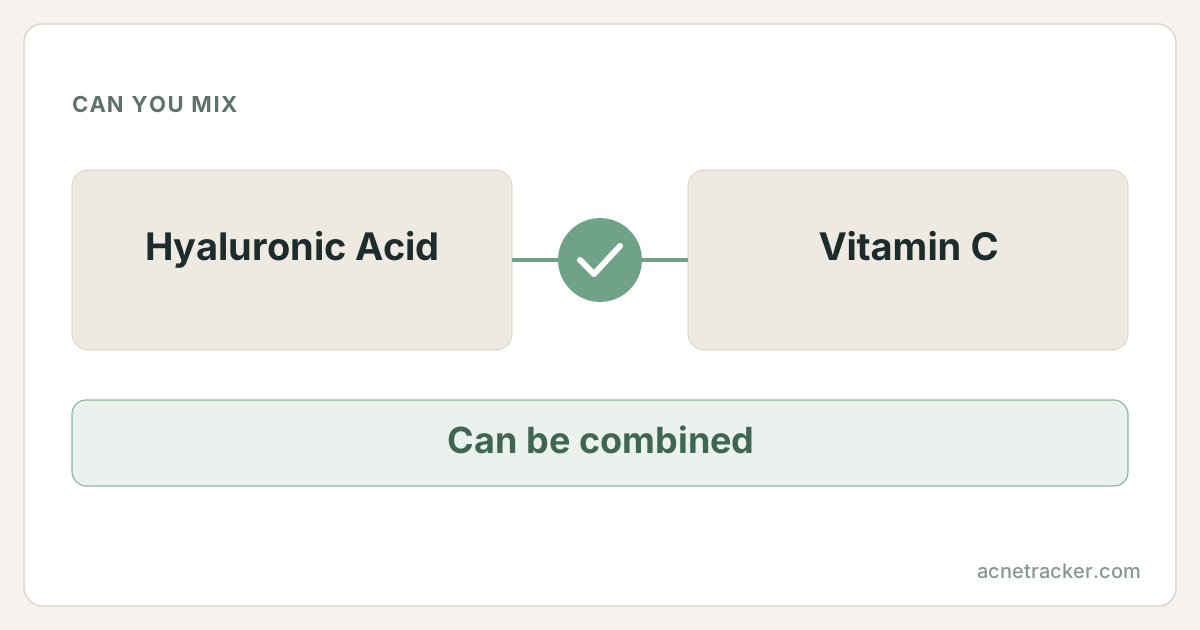
Yes, and it is one of the easiest, most recommended combinations in skincare. Hyaluronic acid is a hydrating humectant with no pH conflict, so it pairs perfectly with vitamin C's antioxidant action and even helps offset any dryness the vitamin C might cause. Apply vitamin C first, then hyaluronic acid, then moisturizer. This works morning or night and suits nearly every skin type.
How this pairing resolves
The two ingredients, their published numbers, and where they land together.
The numbers beside each ingredient are its published comedogenic rating and effective pH window, taken from its own profile page.
Show the numbers
| Ingredients | Metric | 0–5 |
|---|---|---|
| Hyaluronic Acid | Comedogenic rating | 0/5 |
| Hyaluronic Acid | Effective pH | no published pH |
| Vitamin C | Comedogenic rating | 0/5 |
| Vitamin C | Effective pH | 2.5–3.5 |
Why
Despite its name, hyaluronic acid is not an exfoliating acid — it is a humectant that binds water, holding many times its weight in moisture to plump and hydrate the skin. It has no low-pH requirement and no reactive chemistry, so it does not compete with or destabilize L-ascorbic acid. That makes this pairing effortless. The two are actually complementary in a useful way: vitamin C serums, especially acidic L-ascorbic acid formulas, can feel drying or leave a tight sensation, and hyaluronic acid draws water back into the surface to counter that. Vitamin C brings antioxidant protection, supports collagen, and helps brighten, while hyaluronic acid handles hydration and comfort. There is even a formulation logic: applying hyaluronic acid to slightly damp skin over a vitamin C layer helps seal in moisture and improves overall feel. Because there is no irritation stacking and no chemical clash, this is a safe daily combination for essentially all skin types, including sensitive.
How to combine them
Apply thinnest to thickest and lightest actives first. Cleanse, then apply your vitamin C serum to clean, dry skin and let it absorb for a minute or two. Follow with hyaluronic acid — ideally onto slightly damp skin so it has water to grab, since applying it to bone-dry skin in a dry climate can occasionally pull moisture the wrong way. Then lock everything in with a moisturizer, and in the morning finish with SPF 30+. You can use this exact sequence in both your morning and evening routines. If your vitamin C already contains hyaluronic acid, you may not need a separate step, but adding one rarely hurts and boosts comfort for dry or sensitized skin.
Example routine
| When | Steps |
|---|---|
| Morning | Cleanser → Vitamin C → Hyaluronic acid → Moisturizer → SPF 30+ |
| Evening | Cleanser → Vitamin C → Hyaluronic acid → Moisturizer |
| Tip | Apply hyaluronic acid to slightly damp skin, then seal with moisturizer |
| Dry skin | Add hyaluronic acid twice daily to offset vitamin C dryness |
Warning signs
Frequently asked questions
Does hyaluronic acid lower vitamin C's effectiveness?
No. Hyaluronic acid is a humectant with no reactive chemistry and no pH demand, so it does not destabilize or dilute vitamin C. It simply adds hydration alongside the antioxidant benefit.
Which goes on first, vitamin C or hyaluronic acid?
Vitamin C first, on clean dry skin, then hyaluronic acid, then moisturizer. This lets the vitamin C absorb at its working pH while hyaluronic acid seals in hydration afterward.
Can this pair help if vitamin C dries me out?
Yes. Hyaluronic acid draws water into the skin and eases the tight feeling some vitamin C serums cause, which is a big reason the two are so often recommended together.
Is it fine to use both morning and night?
Absolutely. There is no irritation risk from the combination, so the vitamin C then hyaluronic acid then moisturizer sequence works twice daily for nearly all skin types.
Sources & further reading
There is no single study of this exact question. The guidance here is reasoned from the ingredient profiles below, each of which carries its own references:
- Hyaluronic Acid3 refs
- Vitamin C3 refs
Show every reference behind this page (5)
- PubChem — Hyaluronic acid compound summarycited by Hyaluronic Acid
- European Commission CosIng database — Hyaluronic Acidcited by Hyaluronic Acid, Vitamin C
- DermNet — Moisturisers and humectantscited by Hyaluronic Acid
- PubChem — Ascorbic Acid compound summarycited by Vitamin C
- DermNet — Topical vitamin Ccited by Vitamin C
Medical disclaimer
Ingredients mentioned on this page
Find your personal acne triggers
Our free Acne Tracker lets you log breakouts, sleep, stress and diet, and shows you which factors correlate with your flare-ups.