Can You Mix Alpha Arbutin and Vitamin C?
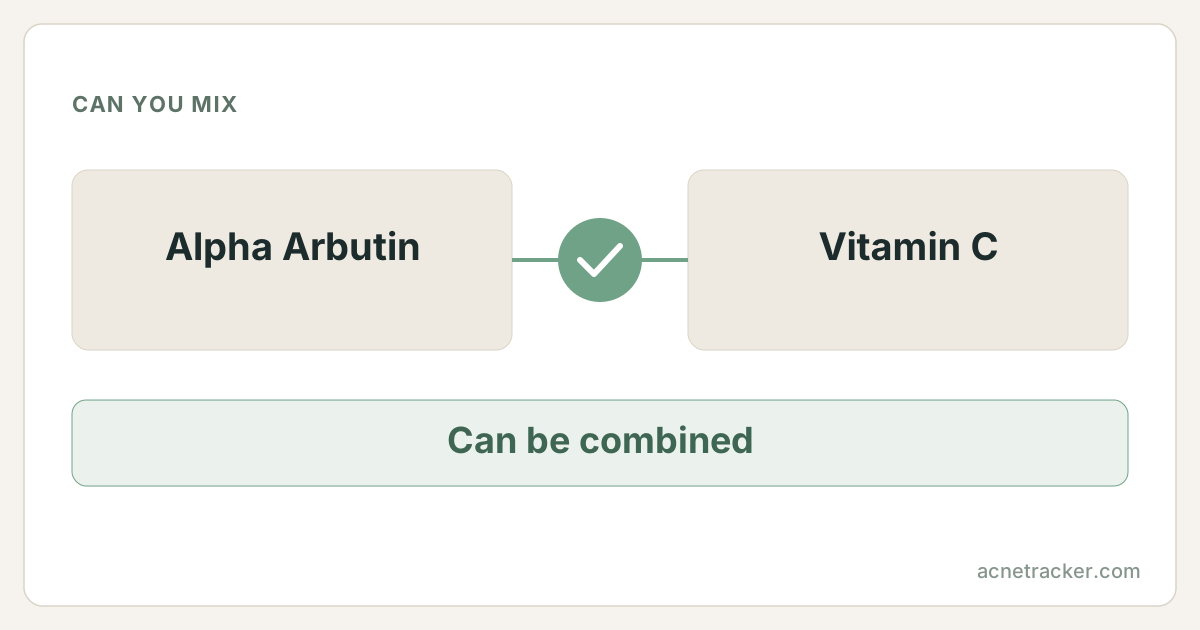
Yes, and they make an excellent brightening team for dark spots and uneven tone. Alpha arbutin is a gentle tyrosinase inhibitor that pairs smoothly with vitamin C, which lowers melanin production and adds antioxidant defense. There is no pH clash or irritation stacking, so you can layer them in the same routine. Apply vitamin C first, then alpha arbutin, then moisturizer and sunscreen.
How this pairing resolves
The two ingredients, their published numbers, and where they land together.
The numbers beside each ingredient are its published comedogenic rating and effective pH window, taken from its own profile page.
Show the numbers
| Ingredients | Metric | 0–5 |
|---|---|---|
| Alpha Arbutin | Comedogenic rating | 0/5 |
| Alpha Arbutin | Effective pH | 4.0–6.0 |
| Vitamin C | Comedogenic rating | 0/5 |
| Vitamin C | Effective pH | 2.5–3.5 |
Why
Both ingredients target hyperpigmentation, but they hit different points in the melanin pathway, which is exactly what makes them a smart pair. Alpha arbutin is a stable derivative of hydroquinone that inhibits tyrosinase, the key enzyme in melanin production, releasing its active form slowly and gently so it rarely irritates. Vitamin C also interferes with melanin synthesis and, separately, provides antioxidant protection that limits the free-radical and UV triggers that drive pigment production in the first place. Because they suppress pigment through complementary mechanisms rather than the same one, using them together can give a more thorough brightening effect. There is no chemical antagonism: alpha arbutin is water-soluble and works across a broad pH range, so it does not require or fight the acidic environment vitamin C prefers. Neither ingredient exfoliates, so there is no barrier-stripping to stack. This combination is well tolerated even by sensitive skin, which makes it a popular alternative to harsher pigment treatments.
How to combine them
Layer them in the same routine, thinnest to thickest. Cleanse, apply vitamin C to dry skin and let it absorb, then apply alpha arbutin, then moisturizer. In the morning, finish with SPF 30+ — sunscreen is essential with any pigmentation routine, because unprotected sun exposure will undo the fading. You can use this pairing morning, evening, or both; many people use vitamin C in the morning for antioxidant defense and alpha arbutin twice daily for steady pigment work. Consistency matters more than concentration with brightening: dark spots fade over weeks to months, so keep the routine steady. If pure L-ascorbic acid irritates, a gentler derivative combines with alpha arbutin just as well.
Example routine
| When | Steps |
|---|---|
| Morning | Cleanser → Vitamin C → Alpha arbutin → Moisturizer → SPF 30+ |
| Evening | Cleanser → Alpha arbutin → Moisturizer |
| Consistency | Use daily for weeks to months to see pigment fade |
| Sensitive skin | Swap to a mild vitamin C derivative if needed |
Warning signs
Frequently asked questions
Do vitamin C and alpha arbutin work on the same spots?
Yes, but through different mechanisms. Alpha arbutin inhibits the tyrosinase enzyme while vitamin C reduces melanin synthesis and adds antioxidant defense, so together they fade dark spots more thoroughly.
Can I layer them at the same time?
Yes. There is no pH conflict or irritation stacking. Apply vitamin C first, then alpha arbutin, then moisturizer and, in the morning, sunscreen.
Is alpha arbutin safer than hydroquinone?
Alpha arbutin is a gentle, stable derivative that releases slowly, so it is generally milder and better tolerated for everyday brightening. Pairing it with vitamin C boosts results without harsh side effects.
How long until alpha arbutin and vitamin C fade dark spots?
Pigment fades gradually, usually over several weeks to a few months of consistent daily use. Diligent sunscreen is what protects and speeds the progress you make.
Sources & further reading
There is no single study of this exact question. The guidance here is reasoned from the ingredient profiles below, each of which carries its own references:
- Alpha-Arbutin3 refs
- Vitamin C3 refs
Show every reference behind this page (5)
- European Commission CosIng database — Alpha-Arbutincited by Alpha-Arbutin, Vitamin C
- PubChem — Arbutincited by Alpha-Arbutin
- A comprehensive review of the therapeutic potential of α-arbutin (PubMed)cited by Alpha-Arbutin
- PubChem — Ascorbic Acid compound summarycited by Vitamin C
- DermNet — Topical vitamin Ccited by Vitamin C
Medical disclaimer
Ingredients mentioned on this page
Find your personal acne triggers
Our free Acne Tracker lets you log breakouts, sleep, stress and diet, and shows you which factors correlate with your flare-ups.