Tranexamic Acid: Comedogenic Rating & Ingredient Analysis
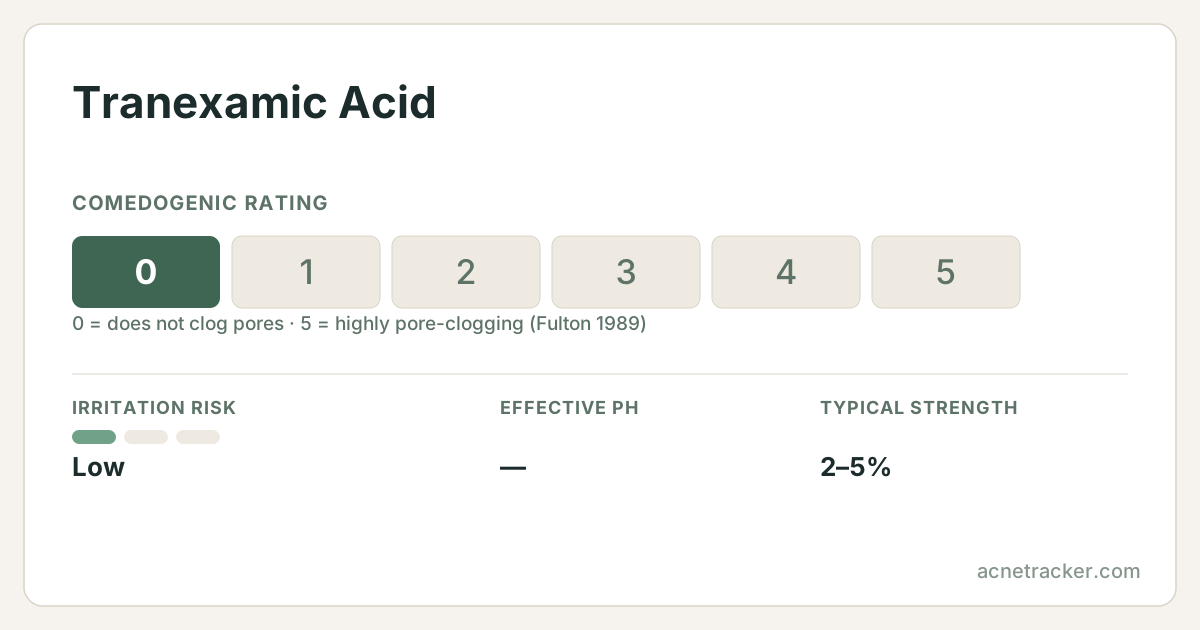
Tranexamic acid is a topical brightening ingredient that has become a favorite for stubborn discoloration, particularly melasma and the dark marks left behind after acne. It began life as a medical drug used to control bleeding, but researchers noticed it also had a striking effect on skin pigmentation, and it has since been reformulated for topical skincare at concentrations of roughly 2–5%. Unlike exfoliating acids, it does not resurface the skin; instead it works upstream on the signals that tell pigment cells to overproduce melanin. It is gentle, well tolerated across skin types, and increasingly paired with other brighteners for a more complete approach to uneven tone.
Quick facts
- Comedogenic rating
- our estimate — not measured
- Irritation risk
- Low
- Effective pH
- —
- Typical strength
- 2–5%
- Pregnancy
- Considered safe
- Suits skin types
- oilydrycombinationsensitivenormalacne-pronemature
Where this number comes from
No one has published a comedogenic rating for this ingredient. Fulton's 1989 table tested about 250 raw materials and this was not among them, and we found no later study measuring it. The figure shown is our own reasoning from the ingredient's chemistry and how it is used — treat it as an estimate, not a measurement.
Fulton read his own scale as 0-1 not significant, 2-3 borderline, 4-5 positive. The assay is the rabbit ear at 10% dilution, which the paper itself calls extremely sensitive and not fully predictive of human skin. Ratings describe the raw ingredient; concentration and formulation change real-world behaviour.
Caution profile
The four published fields on this page, on one 0–5 scale. Further from the centre means more care is needed — never that the ingredient is worse.
Derived, not measured: pore-clogging is the published comedogenic rating; irritation maps low/moderate/high to 1/3/5; pregnancy maps safe/caution/avoid to 0/3/5; skin-type limits is how many of the seven skin types this entry does NOT list. Every input is printed in words in the quick-facts card above.
Show the numbers
| Metric | 0–5 | Published field |
|---|---|---|
| Pore-clogging | 0 | 0/5 |
| Irritation | 1 | Low |
| Skin-type limits | 0 | 7/7 |
| Pregnancy | 0 | Considered safe |
Working pH and typical strength
Where this ingredient is formulated to sit, and at what concentration.
Both bars come from the fields above: the pH window and the typical strength range published for this ingredient. The tinted column is healthy skin's surface pH (about 4.7–5.75).
Show the numbers
| Metric | 0–5 |
|---|---|
| Typical strength | 2–5% |
What is it?
Despite the name, tranexamic acid is not an exfoliating acid at all — it is a small synthetic molecule derived from the amino acid lysine, with no low-pH activity and no keratolytic effect. Its interest in skincare comes from how it interrupts pigment production: it interferes with the interaction between skin cells and the melanocytes that make melanin, calming the overactive pigment response that drives melasma and post-inflammatory hyperpigmentation. Because it targets the messaging behind excess pigment rather than the surface, it addresses both the discoloration itself and, in melasma, the vascular and inflammatory components that make it so persistent. It is stable, water-friendly and easy to formulate, which is why it appears in so many modern brightening serums.
Benefits
Fades melasma and stubborn pigment
Tranexamic acid is one of the few topicals studied specifically for melasma, working on the signaling that drives excess melanin rather than just buffing the surface, which helps with discoloration that resists other treatments.
Clears post-acne marks
By calming the overactive pigment response triggered by inflammation, it helps fade the brown post-inflammatory marks that linger after breakouts heal, a common concern for acne-prone skin.
Gentle and broadly compatible
It has a low irritation profile and no exfoliating action, so it suits sensitive skin and layers comfortably with almost everything, unlike stronger acids that can sting or over-exfoliate.
Works well in a brightening stack
Because it targets pigment through a different route than vitamin C, niacinamide or kojic acid, combining it with them can address uneven tone from several angles at once for a more even-looking complexion.
How to use
Apply a tranexamic acid serum, typically at 2–5%, once or twice daily after cleansing and before moisturizer. It is gentle enough for morning and evening use and does not require a slow introduction, though patch testing any new product is wise. It layers well with niacinamide, vitamin C and other brighteners, and stacking complementary ingredients often works better than relying on one alone. Because you are treating pigmentation, daily broad-spectrum sunscreen is essential — without sun protection, new UV exposure will keep re-triggering the very discoloration you are trying to fade. Results build gradually over weeks to months.
Side effects
Topical tranexamic acid is well tolerated and side effects are uncommon and mild — occasional slight redness, dryness or irritation, usually settling quickly. It does not cause the peeling or sun sensitivity of exfoliating acids. As with any new active, patch test first, especially if your skin is reactive. If irritation appears in a multi-ingredient product, another component is often responsible. This information concerns cosmetic topical use; oral tranexamic acid is a medication that should only be taken under medical supervision.
Who should avoid it
Very few people need to avoid topical tranexamic acid. Those with a known sensitivity to it should skip it, and anyone with a personal or family history of clotting disorders who is considering oral forms must speak to a doctor — though that caution applies to the medication, not typical cosmetic topical use. If you are pregnant, topical use is generally considered low risk, but confirm with your doctor. Discontinue any product that causes a reaction.
Pairs well with
Frequently asked questions
What does tranexamic acid do for skin?
It is a brightening ingredient that targets excess pigment. It calms the signaling between skin cells and pigment-producing melanocytes, which helps fade melasma and the dark marks left after acne, without exfoliating the skin.
Is tranexamic acid an exfoliating acid?
No. Despite the name, it is not an AHA or BHA and has no low-pH exfoliating action. It is a lysine-derived molecule that works on pigment signaling, so it is gentle and does not resurface the skin.
Can I use tranexamic acid with vitamin C and niacinamide?
Yes, and it is a popular combination. Each targets uneven tone through a different route, so pairing tranexamic acid with vitamin C, niacinamide or kojic acid can address discoloration from several angles at once.
Is tranexamic acid safe during pregnancy?
Topical cosmetic use is generally considered low risk because absorption through the skin is minimal, and it is often chosen for pregnancy-related melasma. Still, confirm with your doctor before starting any new active while pregnant.
How long does tranexamic acid take to work?
Pigmentation fades slowly. Many people see gradual improvement over roughly 8 to 12 weeks of consistent use paired with daily sunscreen, which is essential to stop new sun exposure from re-triggering the discoloration.
Where this ingredient shows up here
Counted across this database, not the web — these are the pages on this site that reason about this ingredient.
Combination guides 10
+2 more on the site
Condition pages 3
Sources & further reading
Medical disclaimer
Find your personal acne triggers
Our free Acne Tracker lets you log breakouts, sleep, stress and diet, and shows you which factors correlate with your flare-ups.