How to Choose an Eye Cream for Periorbital Hyperpigmentation
Periorbital hyperpigmentation is the brown, genuinely pigmented version of dark circles — melanin deposited in and under the skin around the orbit, rather than blood or shadow. It is extremely common in richly pigmented skin, often familial, and frequently made worse by two things nobody mentions on the label: rubbing and sunlight. This page covers the actives with a real mechanism against melanin, the concentrations that lid skin will actually tolerate, and the central trap of treating pigment in skin this thin, which is that the treatment can easily generate more of the problem it is meant to solve.
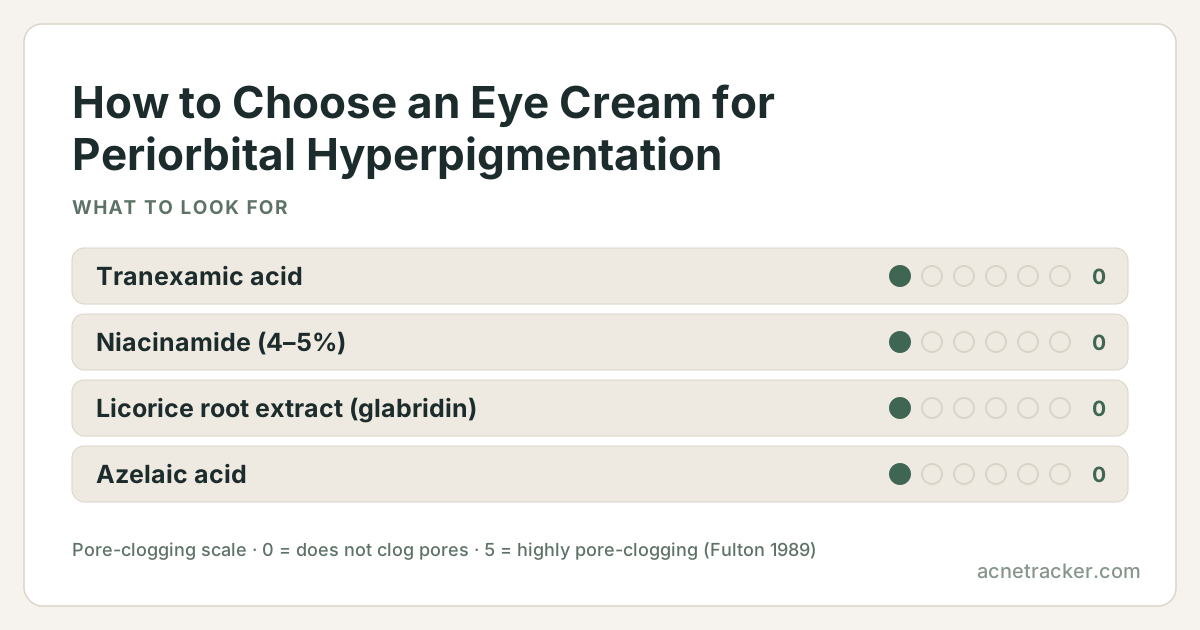
Ingredients to look for
| Ingredient | Why it matters |
|---|---|
| Tranexamic acid | Interrupts the plasmin pathway that signals melanocytes rather than attacking the enzyme directly, so it works upstream of the usual actives and is generally well tolerated on thin skin. |
| Niacinamide (4–5%) | Blocks the transfer of pigment packages from melanocytes to keratinocytes. Modest alone, useful in a stack, and one of the few brighteners that rarely stings near the eye. |
| Licorice root extract (glabridin) | A botanical tyrosinase inhibitor with anti-inflammatory activity in the same molecule — a genuinely sensible pairing when inflammation is part of what drives the pigment. |
| Azelaic acid | Selectively targets overactive melanocytes and leaves normal ones alone, which is why it has a good record in darker skin tones where other actives can overshoot. |
| Vitamin C derivatives | Reduces oxidised melanin and inhibits its synthesis. Around the eye, choose a buffered derivative over a 15–20% acid serum designed for cheeks. |
Ingredients to avoid
| Ingredient | Why it matters |
|---|---|
| Hydroquinone bought without a prescription | It is prescription-controlled in the EU and Norway for good reasons, including ochronosis with prolonged misuse. If your pigment warrants it, that is a conversation with a doctor, not an import order. |
| Strong peels and lasers as a first move | Aggressive resurfacing on pigment-prone periorbital skin is the classic route to post-inflammatory hyperpigmentation that is darker than the original problem. |
| Eye makeup removers used with friction | Repeated mechanical trauma is one of the best-established aggravators of pigment here. Dissolve the makeup and lift it off; do not scrub it off. |
| Fragrance in a leave-on eye product | Fragrance allergy on eyelid skin produces low-grade chronic dermatitis, and chronic dermatitis in pigment-prone skin ends as more pigment. |
How to choose
Confirm you are treating pigment before you spend anything: stretch the skin sideways, and if the colour stays exactly where it was, melanin is the answer. Then read labels with a bias toward the gentle end. Everything effective against pigment is also an irritant at the wrong dose, and here the paradox bites hard — irritation on periorbital skin triggers melanocytes, so an over-strong routine actively darkens you. Prefer 4–5% niacinamide over 10%, a vitamin C derivative over L-ascorbic acid, azelaic acid over glycolic acid, and one active introduced at a time rather than a four-acid stack. Look for fragrance-free on the label and check the position of denatured alcohol. The single non-negotiable is a sunscreen you will genuinely wear to the orbital rim every day, because UV drives melanin faster than any inhibitor suppresses it, and a mineral filter is often easier to tolerate near the eye than a chemical one. Set expectations at twelve weeks for a first hint and six months for a result worth photographing. Constitutional pigment that has been there since childhood improves partially at best.
How to apply
Apply your pigment active in the evening, on the bone below the eye and out toward the temple, following where the darkness actually sits rather than a generic under-eye arc. Give it a couple of minutes, then seal with a bland moisturiser — the barrier support reduces the irritation that would otherwise cost you progress. In the morning, sunscreen comes before makeup and goes right up to the orbital rim. Sunglasses do more for this specific complaint than most people credit, since they cut both UV and the squinting that drives rubbing.
Frequently asked questions
What causes brown pigmentation around the eyes?
Several things stack: an inherited tendency toward dermal melanin deposition, sun exposure on skin that rarely gets sunscreen, and post-inflammatory pigment from years of rubbing driven by allergic rhinitis or eczema. In many people it is all three, which is why treating only one gives partial results.
How long does periorbital hyperpigmentation take to fade?
Longer than people expect. Melanin sitting deeper in the dermis clears very slowly because the skin has no efficient route to remove it, so three months of consistent use is the earliest realistic checkpoint and six to twelve months is a fair horizon for constitutional pigment.
Is niacinamide or vitamin C better for dark circles from pigment?
They work at different points and are better together than ranked. Niacinamide stops finished pigment being handed to skin cells; vitamin C interferes with making it and reduces the oxidised form. Around the eye, niacinamide is the safer starting point because it stings far less.
Can rubbing my eyes cause dark circles?
Yes, and it is one of the most reversible causes on this list. Chronic friction produces low-grade inflammation, and inflammation in pigment-prone skin produces melanin. If you have hay fever or eczema, treating the itch properly does more than any brightening cream will.
When should pigmentation around the eye be checked by a doctor?
If a patch is new in adulthood and expanding, sits on one side only, has an irregular border or changing colour, or comes with a scaly rash that will not settle. A doctor can also confirm whether pigment or vasculature is dominant with a proper examination, which saves months of aiming at the wrong target.
Sources & further reading
There is no single study of this exact question. The guidance here is reasoned from the ingredient profiles below, each of which carries its own references:
- Tranexamic Acid3 refs
- Niacinamide2 refs
- Licorice Root Extract2 refs
- Azelaic Acid3 refs
- Vitamin C3 refs
Show every reference behind this page (10)
- PubChem — Tranexamic acid compound summarycited by Tranexamic Acid
- Tranexamic Acid for Hyperpigmentation Disorders: A Literature Review on Efficacy and Safety in Melasma and PIH. J Cosmet Dermatol 2026 Feb (PubMed)cited by Tranexamic Acid
- DermNet — Melasmacited by Tranexamic Acid
- Niacinamide: mechanisms of action and its topical use in dermatology (PubMed)cited by Niacinamide
- European Commission CosIng database — Niacinamidecited by Niacinamide, Licorice Root Extract, Azelaic Acid, Vitamin C
- PubMed — Glabridin promotes melanosome degradation and alleviates melanosome-induced mitochondrial dysfunction in keratinocytes via autophagy (Biochem Biophys Res Commun, 2026)cited by Licorice Root Extract
- PubChem — Azelaic acid compound summarycited by Azelaic Acid
- DermNet — Azelaic acidcited by Azelaic Acid
- PubChem — Ascorbic Acid compound summarycited by Vitamin C
- DermNet — Topical vitamin Ccited by Vitamin C
Medical disclaimer
Ingredients mentioned on this page
Find your personal acne triggers
Our free Acne Tracker lets you log breakouts, sleep, stress and diet, and shows you which factors correlate with your flare-ups.