Can You Mix Bakuchiol and Tranexamic Acid?
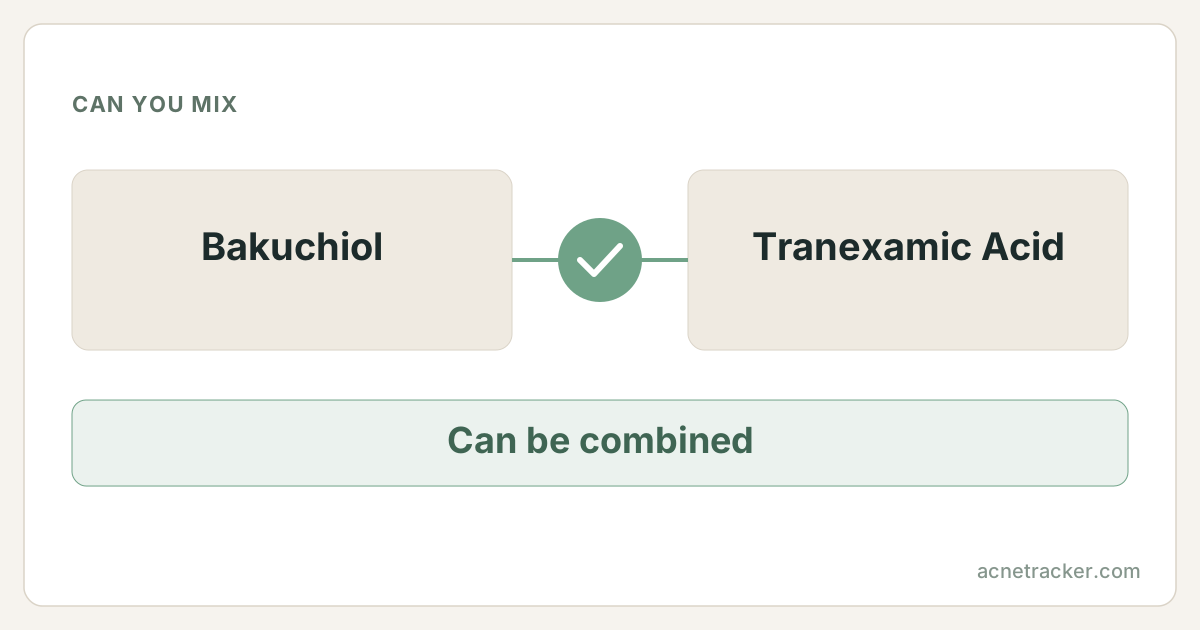
Yes, and it is a smart pairing for stubborn discolouration on skin that cannot tolerate retinol. Tranexamic acid calms the pigment pathway behind melasma and post-inflammatory marks, and also soothes redness, while bakuchiol renews and firms. Neither is harsh, so they combine into a gentle anti-ageing and tone-correcting routine without barrier strain.
How this pairing resolves
The two ingredients, their published numbers, and where they land together.
The numbers beside each ingredient are its published comedogenic rating and effective pH window, taken from its own profile page.
Show the numbers
| Ingredients | Metric | 0–5 |
|---|---|---|
| Bakuchiol | Comedogenic rating | 0/5 |
| Bakuchiol | Effective pH | no published pH |
| Tranexamic Acid | Comedogenic rating | 0/5 |
| Tranexamic Acid | Effective pH | no published pH |
Why
Tranexamic acid is not really an exfoliating acid despite the name; it is a derivative of the amino acid lysine that interrupts the plasmin pathway linking blood vessels and pigment-producing melanocytes. That mechanism makes it unusually good at fading the stubborn, hormone-driven pigmentation of melasma and the persistent marks left by inflammation, and it also visibly reduces diffuse redness. Bakuchiol adds renewal and collagen support without any of retinol's irritation. The two mechanisms do not overlap or compete: tranexamic acid works upstream on how pigment and redness are triggered, while bakuchiol works on surface turnover and firmness. Both are non-photosensitising and pH-flexible, so no scheduling gymnastics are required. For someone whose main concerns are melasma or redness plus early ageing, but whose skin flares with retinoids, this pair covers a lot of ground gently — you get meaningful tone correction alongside a real renewal signal, without the peeling that usually accompanies that combination of goals.
How to combine them
Both come as light, water-based serums, so apply the thinner one first. On clean skin, apply tranexamic acid, let it absorb, then bakuchiol, then moisturiser. Tranexamic acid can be used morning or evening; pairing it with bakuchiol in the morning under sunscreen is a strong anti-pigment routine, since SPF stops new pigment from forming faster than either serum can fade it. You can equally split them — tranexamic acid in the day, bakuchiol at night — if your skin prefers fewer layers per session. There is no adjustment ramp required, but tranexamic acid works slowly on melasma, so give the routine a couple of months and keep sun protection absolutely consistent.
Example routine
| When | Steps |
|---|---|
| Morning | Cleanser → Tranexamic acid → Bakuchiol serum → Moisturiser → SPF 30+ |
| Evening | Cleanser → Bakuchiol serum → Moisturiser |
| Alternative split | Tranexamic acid AM, bakuchiol PM |
| Note | Melasma fades slowly — expect two to three months |
Warning signs
Frequently asked questions
Is bakuchiol and tranexamic acid good for melasma?
It is a sensible gentle option. Tranexamic acid targets the vascular-pigment pathway behind melasma while bakuchiol renews the surface, and because neither irritates, sensitive melasma-prone skin can use them daily. Strict sunscreen is essential.
Does tranexamic acid exfoliate like other acids with bakuchiol?
No. Despite the name, tranexamic acid is a lysine derivative, not an exfoliant, so it does not lower pH or add peeling on top of bakuchiol. The pair stays gentle.
Can bakuchiol and tranexamic acid help with redness?
Yes. Tranexamic acid reduces diffuse redness by acting on the vascular pathway, and bakuchiol is non-irritating, so the combination can calm tone while still renewing skin.
What order do I apply tranexamic acid and bakuchiol?
Tranexamic acid first, since it is the thinner, pigment-targeting serum, then bakuchiol, then moisturiser. In the morning, always finish with sunscreen.
Sources & further reading
There is no single study of this exact question. The guidance here is reasoned from the ingredient profiles below, each of which carries its own references:
- Bakuchiol3 refs
- Tranexamic Acid3 refs
Show every reference behind this page (6)
- PubChem — Bakuchiol compound summarycited by Bakuchiol
- Bakuchiol: a retinol-like functional compound (PubMed)cited by Bakuchiol
- DermNet — Cosmeceuticalscited by Bakuchiol
- PubChem — Tranexamic acid compound summarycited by Tranexamic Acid
- Tranexamic Acid for Hyperpigmentation Disorders: A Literature Review on Efficacy and Safety in Melasma and PIH. J Cosmet Dermatol 2026 Feb (PubMed)cited by Tranexamic Acid
- DermNet — Melasmacited by Tranexamic Acid
Medical disclaimer
Ingredients mentioned on this page
Find your personal acne triggers
Our free Acne Tracker lets you log breakouts, sleep, stress and diet, and shows you which factors correlate with your flare-ups.