Can You Mix Azelaic Acid and Tranexamic Acid?
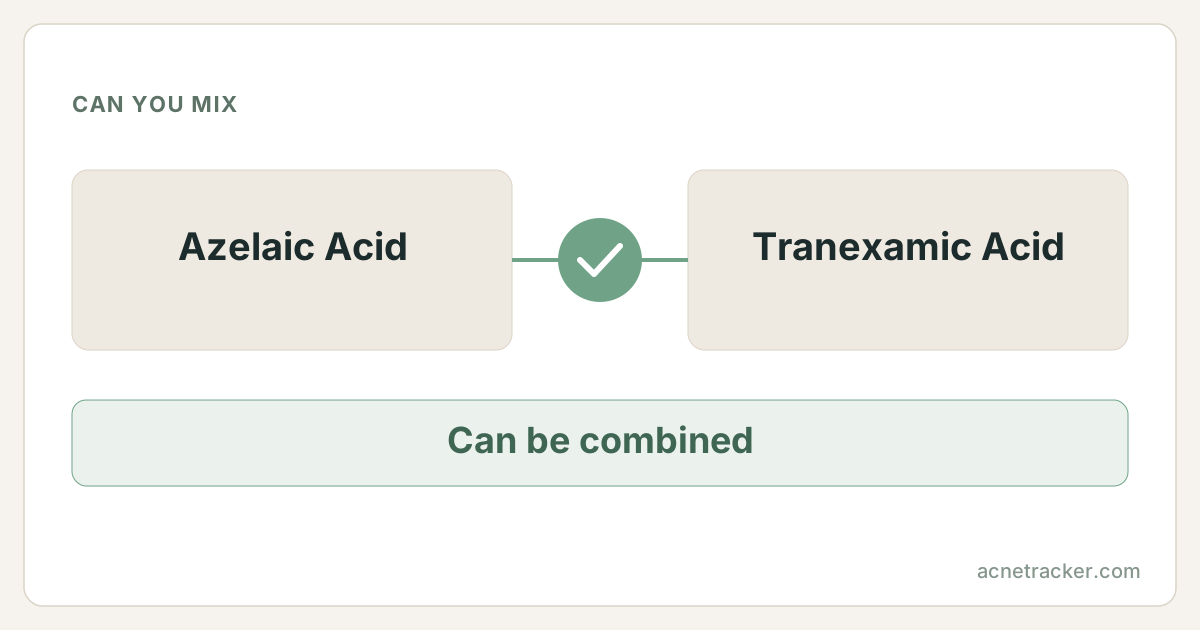
Yes, and there is a decent mechanistic reason to. Tranexamic acid interrupts the signal that tells a melanocyte to start making pigment; azelaic acid inhibits the enzyme that does the making. One works upstream, the other downstream, on the same pathway. Neither is an exfoliant, neither is photosensitising, and they layer without fuss. Use both daily, morning, under sunscreen.
How this pairing resolves
The two ingredients, their published numbers, and where they land together.
The numbers beside each ingredient are its published comedogenic rating and effective pH window, taken from its own profile page.
Show the numbers
| Ingredients | Metric | 0–5 |
|---|---|---|
| Azelaic Acid | Comedogenic rating | 0/5 |
| Azelaic Acid | Effective pH | 4.0–5.0 |
| Tranexamic Acid | Comedogenic rating | 0/5 |
| Tranexamic Acid | Effective pH | no published pH |
Why
This is one of the few pigment pairings where 'complementary' is more than a marketing word. Tranexamic acid is a synthetic analogue of the amino acid lysine, and it works by occupying the lysine-binding sites on plasminogen. In skin, UV exposure prompts keratinocytes to release plasminogen activator; the resulting plasmin drives production of inflammatory mediators such as prostaglandins that in turn signal melanocytes to ramp up. Block that step and you have turned down the instruction rather than the machinery. Azelaic acid attacks the machinery: it is a competitive inhibitor of tyrosinase, the copper-containing enzyme that converts tyrosine towards melanin. Because the two act at separate points, they are additive in principle rather than two keys fighting for one lock — which is exactly the criticism you can fairly make of stacking two tyrosinase inhibitors. Note the honest boundary here: this is a well-grounded mechanistic rationale, and each ingredient has its own evidence base, but that is not the same as a trial demonstrating the specific pair outperforms either alone. Treat the reasoning as a reason to try it, not as a proven number.
How to combine them
Both are undramatic, so this is an easy routine. Tranexamic acid serums are typically water-based and thin at 2–5%; azelaic acid is thick. Thin to thick: cleanse, tranexamic acid, let it absorb, azelaic acid, moisturiser, SPF 30+. Morning is the better slot for both, because the pathway you are interrupting is UV-driven and sunscreen is doing at least as much work as either serum. Tranexamic acid is not an exfoliant and does not need an adjustment period; azelaic acid may tingle for the first fortnight. If your skin is reactive, add one, wait a month, then add the other — not because they clash but so you know which one to blame. Give this a minimum of three months before judging. Pigment routines fail far more often from stopping early and skipping sunscreen than from picking the wrong actives. Oral tranexamic acid for melasma exists but is a prescription decision with real contraindications — that conversation belongs with a dermatologist, not a skincare routine.
Example routine
| When | Steps |
|---|---|
| Morning | Cleanser → Tranexamic acid 2–5% → Azelaic acid 10% → Moisturiser → SPF 30+ |
| Evening | Cleanser → Moisturiser (or tranexamic acid again if tolerated) |
| Reactive skin | Add one active, wait 4 weeks, then add the second |
| Review | Photograph in the same light monthly; judge at 3–4 months |
Warning signs
Frequently asked questions
Is tranexamic acid an exfoliating acid like glycolic acid?
No. Despite the name it is a lysine derivative, not a hydroxy acid. It does not lower pH to loosen dead skin and it does not make you sun-sensitive — which is part of why it layers so easily with azelaic acid.
Do they cancel each other out since both target pigment?
No, because they act at different points. Tranexamic acid dampens the plasmin-driven signal to melanocytes; azelaic acid inhibits tyrosinase inside them. Redundancy would be stacking two tyrosinase inhibitors, which this is not.
Which serum goes on first?
Tranexamic acid first — it is usually a thin water-based serum — then azelaic acid, which is thick and pills if covered. Moisturiser and sunscreen last.
How long before this helps melasma?
Melasma is stubborn, relapsing and heavily UV-driven; nothing topical resolves it in weeks. Give any routine three to four months alongside rigorous daily sun protection, and take a confirmed melasma diagnosis to a dermatologist.
Can I use both while pregnant?
Azelaic acid is commonly named as one of the pregnancy-compatible options for pigment and acne. Topical tranexamic acid is less well characterised in pregnancy, and melasma in pregnancy is common enough that this is worth asking your doctor about directly.
Sources & further reading
There is no single study of this exact question. The guidance here is reasoned from the ingredient profiles below, each of which carries its own references:
- Azelaic Acid3 refs
- Tranexamic Acid3 refs
Show every reference behind this page (6)
- PubChem — Azelaic acid compound summarycited by Azelaic Acid
- DermNet — Azelaic acidcited by Azelaic Acid
- European Commission CosIng database — Azelaic Acidcited by Azelaic Acid
- PubChem — Tranexamic acid compound summarycited by Tranexamic Acid
- Tranexamic Acid for Hyperpigmentation Disorders: A Literature Review on Efficacy and Safety in Melasma and PIH. J Cosmet Dermatol 2026 Feb (PubMed)cited by Tranexamic Acid
- DermNet — Melasmacited by Tranexamic Acid
Medical disclaimer
Ingredients mentioned on this page
Find your personal acne triggers
Our free Acne Tracker lets you log breakouts, sleep, stress and diet, and shows you which factors correlate with your flare-ups.