Can You Mix Benzoyl Peroxide and Tranexamic Acid?
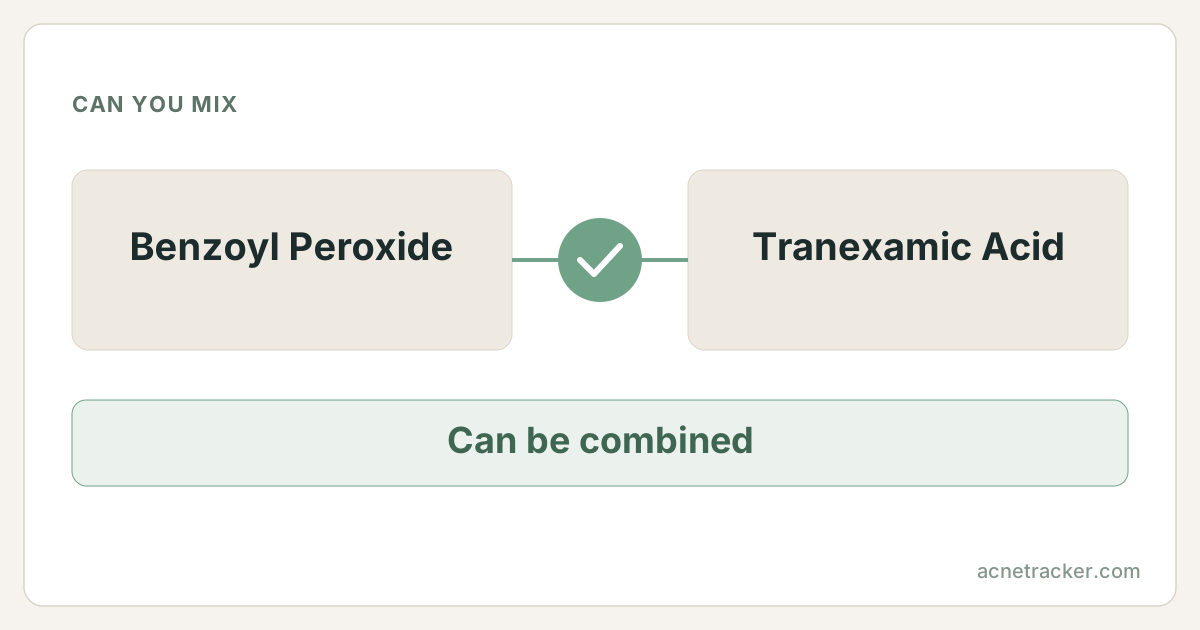
Yes. Tranexamic acid is a small, stable amino acid derivative with no oxidisable chemistry, so benzoyl peroxide leaves it alone. The pairing makes practical sense too: benzoyl peroxide clears the active inflamed lesion while tranexamic acid works on the discolouration that lingers afterwards. Neither name should mislead you — despite the word acid, tranexamic acid does not exfoliate and does not sting.
How this pairing resolves
The two ingredients, their published numbers, and where they land together.
The numbers beside each ingredient are its published comedogenic rating and effective pH window, taken from its own profile page.
Show the numbers
| Ingredients | Metric | 0–5 |
|---|---|---|
| Benzoyl Peroxide | Comedogenic rating | 0/5 |
| Benzoyl Peroxide | Effective pH | no published pH |
| Tranexamic Acid | Comedogenic rating | 0/5 |
| Tranexamic Acid | Effective pH | no published pH |
Why
Tranexamic acid is a synthetic derivative of the amino acid lysine, originally developed as an oral medicine to reduce bleeding by blocking plasminogen from converting to plasmin. Its skincare use came from an observation, not a theory: patients taking it for other reasons had their melasma improve. On skin the working hypothesis is the same pathway in miniature — plasmin activity in keratinocytes stimulates melanocytes, so inhibiting it interrupts the signal that tells pigment cells to fire. That is a completely different mechanism to tyrosinase inhibitors, which is why tranexamic acid is often used alongside them rather than instead. Chemically it is inert in this context: a saturated cyclohexane ring with an amine and a carboxyl group, nothing an oxygen radical from benzoyl peroxide has any interest in, and it functions at a near-neutral pH that competes with nothing. The common confusion is the name — it sits in the acid category linguistically but behaves nothing like an AHA, so it adds no exfoliation and no photosensitivity to a routine that is already drying. It is one of the few pigment actives you can genuinely run daily beside benzoyl peroxide.
How to combine them
There is no need for elaborate scheduling. The straightforward routine is tranexamic acid serum in the morning after cleansing, moisturiser, then sunscreen, with benzoyl peroxide in the evening on inflamed spots followed by moisturiser. If you prefer both at night, apply benzoyl peroxide to the spots, let it absorb, then spread tranexamic acid across the marked areas and moisturise over the top. Typical cosmetic concentrations run 2–5%, and going higher has not been shown to work better. Sunscreen is what decides the outcome — a pigment inhibitor cannot outrun daily UV, and studies on tranexamic acid for melasma are all conducted alongside photoprotection. Give it twelve weeks minimum. Oral tranexamic acid for pigmentation exists but is a prescription decision with real clotting considerations; that conversation belongs with a doctor.
Example routine
| When | Steps |
|---|---|
| Morning | Cleanser → Tranexamic acid 3–5% → Moisturiser → SPF 30+ |
| Evening | Cleanser → Benzoyl peroxide 2.5% on spots → Moisturiser |
| Both at night option | Benzoyl peroxide on spots → absorb → Tranexamic acid on marks → Moisturiser |
| Assessment | Photograph in the same light monthly; judge at 12 weeks |
Warning signs
Frequently asked questions
Does tranexamic acid add exfoliation on top of benzoyl peroxide's dryness?
No, despite the name. It is a lysine derivative that works on the plasmin pathway involved in pigment signalling. It does not lower skin pH, does not exfoliate and does not increase sun sensitivity.
Can benzoyl peroxide oxidise tranexamic acid?
There is nothing on the molecule to oxidise — it is a saturated ring with an amine and a carboxyl group. The instability problems people associate with benzoyl peroxide apply to tretinoin, not to this compound.
Will tranexamic acid help red marks or brown ones?
Its published evidence is strongest for melasma and pigmented discolouration. Red post-acne marks are dilated blood vessels and mostly resolve on their own over months, which is a different process.
Can I use tranexamic acid and benzoyl peroxide every day?
Tranexamic acid, yes — daily with no adjustment period. Benzoyl peroxide daily depends on your tolerance; many people do better at three evenings a week with moisturiser on the others.
Sources & further reading
There is no single study of this exact question. The guidance here is reasoned from the ingredient profiles below, each of which carries its own references:
- Benzoyl Peroxide3 refs
- Tranexamic Acid3 refs
Show every reference behind this page (6)
- PubChem — Benzoyl peroxide compound summarycited by Benzoyl Peroxide
- DermNet — Benzoyl peroxidecited by Benzoyl Peroxide
- FDA — Drugs (OTC acne products)cited by Benzoyl Peroxide
- PubChem — Tranexamic acid compound summarycited by Tranexamic Acid
- Tranexamic Acid for Hyperpigmentation Disorders: A Literature Review on Efficacy and Safety in Melasma and PIH. J Cosmet Dermatol 2026 Feb (PubMed)cited by Tranexamic Acid
- DermNet — Melasmacited by Tranexamic Acid
Medical disclaimer
Ingredients mentioned on this page
Find your personal acne triggers
Our free Acne Tracker lets you log breakouts, sleep, stress and diet, and shows you which factors correlate with your flare-ups.