How to Choose a Serum for Post-Acne Marks
The marks left after a spot heals are not scars, and knowing which kind you have decides the serum. Red or purple marks (post-inflammatory erythema) are lingering dilated vessels; brown marks (post-inflammatory hyperpigmentation) are excess pigment. Different ingredients help each, and neither responds to the same serum that treats a true pitted scar, which is a texture problem for a clinic rather than a bottle. This guide explains how to read your own marks, the actives worth seeking for red versus brown, and the realistic pace of fading — usually months — plus the sunscreen habit that quietly determines the outcome.
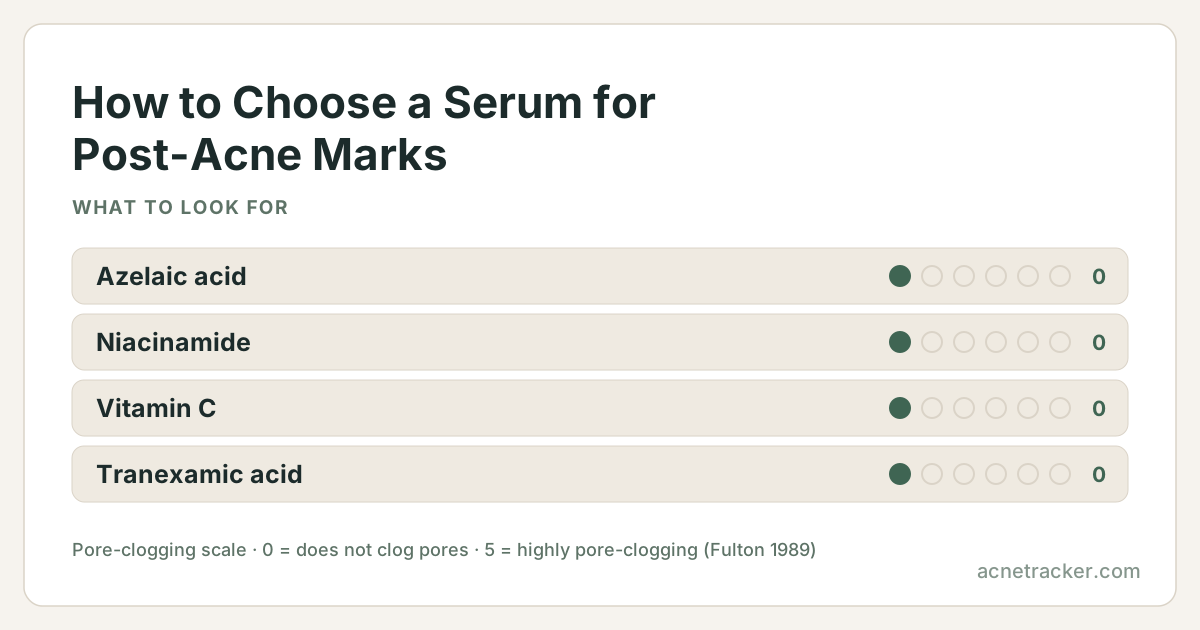
Ingredients to look for
| Ingredient | Why it matters |
|---|---|
| Azelaic acid | One of the few actives that helps both red and brown marks, calming inflammation while fading excess pigment gently. |
| Niacinamide | Reduces redness and slows pigment transfer, making it useful whichever kind of post-acne mark you have. |
| Vitamin C | Brightens brown marks, supports collagen for slightly indented healing skin, and strengthens daytime sun defence. |
| Tranexamic acid | Helps fade the brown pigment of stubborn marks and pairs well with niacinamide in a leave-on serum. |
| Alpha arbutin | A gentle option focused on brown discolouration, with a low irritation risk on skin still recovering from breakouts. |
Ingredients to avoid
| Ingredient | Why it matters |
|---|---|
| Aggressive scrubbing to 'buff away' marks | Marks sit in deeper layers than scrubs reach, and the friction inflames skin, risking fresh pigment. |
| Picking and squeezing active spots | The single biggest cause of longer-lasting marks and true scarring; the damage happens before the mark forms. |
| Expecting a serum to fix pitted scars | Indented, textured scarring is a collagen problem; serums fade colour but do not rebuild that lost structure. |
| Skipping sunscreen | Sun deepens brown marks and prolongs redness, slowing every fading active you apply. |
How to choose
First, identify the mark. Press gently: if the colour briefly fades, it is likely red (vascular) and niacinamide, azelaic acid and centella-style soothing ingredients are your focus. If it stays brown, it is pigment, and vitamin C, alpha arbutin, tranexamic acid and azelaic acid do the work. Azelaic acid and niacinamide are the practical all-rounders when you have a mix of both, which is common. Choose a leave-on serum over a wash-off product, since fading needs sustained contact. If your skin is still breaking out, favour gentler brighteners and avoid piling on strong acids, because irritation feeds new marks. Look past 'scar' on the label — most products using that word address colour, not indentation. And set expectations honestly: red marks can take weeks to months, brown marks often longer, and consistency plus daily sunscreen matters more than any single ingredient.
How to apply
Apply your chosen serum once or twice daily to clean skin before moisturiser, using vitamin C in the morning and gentler actives at either time. The habit that changes results most is daily broad-spectrum sunscreen, which stops sun from re-darkening healing marks. Keep treating a spot's aftermath even after the pimple is gone, since fading is the slow part. Above all, resist touching or picking active spots — preventing the mark is far easier than removing it later.
Frequently asked questions
How do I know if I have a mark or a scar?
Marks are flat changes in colour — red or brown — that fade over time. Scars are changes in texture, either pitted or raised, and they do not flatten on their own. Serums address marks; scars usually need clinical treatment.
Do red post-acne marks and brown ones need different serums?
Largely yes. Red marks respond to soothing, anti-redness ingredients like niacinamide and azelaic acid, while brown marks need pigment-fading actives like vitamin C and alpha arbutin. Azelaic acid usefully helps with both.
Can a serum remove acne scars completely?
No serum rebuilds the collagen lost in a pitted scar. Serums can improve the colour and support skin quality, but genuine textural scarring is best addressed with clinical options like microneedling or resurfacing.
How long until post-acne marks fade with a serum?
Red marks often take several weeks to a few months; brown marks can take several months, especially on deeper skin tones. Consistent use and daily sunscreen speed the process more than switching products constantly.
Sources & further reading
There is no single study of this exact question. The guidance here is reasoned from the ingredient profiles below, each of which carries its own references:
- Azelaic Acid3 refs
- Niacinamide2 refs
- Vitamin C3 refs
- Tranexamic Acid3 refs
- Alpha-Arbutin3 refs
Show every reference behind this page (11)
- PubChem — Azelaic acid compound summarycited by Azelaic Acid
- DermNet — Azelaic acidcited by Azelaic Acid
- European Commission CosIng database — Azelaic Acidcited by Azelaic Acid, Niacinamide, Vitamin C, Alpha-Arbutin
- Niacinamide: mechanisms of action and its topical use in dermatology (PubMed)cited by Niacinamide
- PubChem — Ascorbic Acid compound summarycited by Vitamin C
- DermNet — Topical vitamin Ccited by Vitamin C
- PubChem — Tranexamic acid compound summarycited by Tranexamic Acid
- Tranexamic Acid for Hyperpigmentation Disorders: A Literature Review on Efficacy and Safety in Melasma and PIH. J Cosmet Dermatol 2026 Feb (PubMed)cited by Tranexamic Acid
- DermNet — Melasmacited by Tranexamic Acid
- PubChem — Arbutincited by Alpha-Arbutin
- A comprehensive review of the therapeutic potential of α-arbutin (PubMed)cited by Alpha-Arbutin
Medical disclaimer
Ingredients mentioned on this page
Find your personal acne triggers
Our free Acne Tracker lets you log breakouts, sleep, stress and diet, and shows you which factors correlate with your flare-ups.