Can You Mix Retinol and Tranexamic Acid?
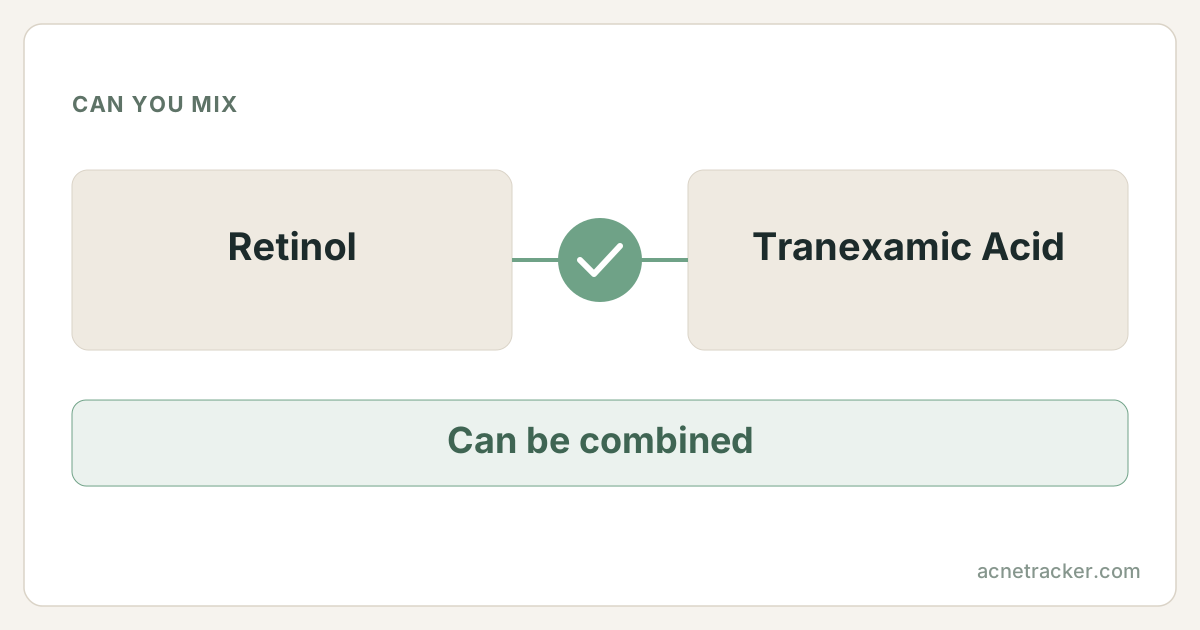
Yes — retinol and tranexamic acid work well together, particularly for melasma and stubborn discolouration. Tranexamic acid calms the pigment-triggering signals in the skin while retinol speeds turnover to fade the pigment already there. It is gentle, non-exfoliating and chemically compatible with retinol, so you can layer them in the same routine, applying tranexamic acid first.
How this pairing resolves
The two ingredients, their published numbers, and where they land together.
The numbers beside each ingredient are its published comedogenic rating and effective pH window, taken from its own profile page.
Show the numbers
| Ingredients | Metric | 0–5 |
|---|---|---|
| Retinol | Comedogenic rating | 1/5 |
| Retinol | Effective pH | 5.0–6.0 |
| Tranexamic Acid | Comedogenic rating | 0/5 |
| Tranexamic Acid | Effective pH | no published pH |
Why
Despite the word acid, tranexamic acid is not an exfoliant and has no low working pH to defend. It is best known medically as a clotting agent, and in skincare it interrupts the interaction between skin cells and the pigment-producing melanocytes. It works partly by inhibiting the plasmin pathway that UV and inflammation use to switch on melanin, which makes it especially effective for melasma and inflammation-driven pigmentation that ordinary brighteners struggle with. Retinol comes at pigment from a different direction, accelerating cell turnover so that pigment-laden cells are shed faster and new, more even skin comes through, while also improving overall tone and texture. The two mechanisms are complementary rather than overlapping, and there is no chemical clash: tranexamic acid is stable, non-irritating and does not destabilise retinol. Because it is soothing and anti-inflammatory, it can even take a little edge off retinol's irritation. This makes the pair a well-tolerated, evidence-informed route to tackling difficult pigmentation while still getting retinol's renewal benefits.
How to combine them
Layer them in the evening: cleanse, apply tranexamic acid serum to clean skin, allow it a minute to absorb, then apply retinol and seal with moisturizer. No long wait is needed because tranexamic acid is not acidic. It can also be used in the morning, where it pairs well with sunscreen for daytime pigment protection, letting you keep retinol for night. Tranexamic acid is gentle enough for twice-daily use, so it can feature in both routines, while retinol begins at two or three nights a week and increases gradually. As with any pigmentation plan, broad-spectrum SPF 30 or higher every morning is essential — UV is the main driver of melasma, and retinol raises sun sensitivity, so consistent protection is what allows both ingredients to show results.
Example routine
| When | Steps |
|---|---|
| Evening (retinol nights) | Cleanser → Tranexamic acid → Retinol → Moisturizer |
| Morning (pigment defence) | Cleanser → Tranexamic acid → Moisturizer → SPF 30+ |
| Recovery evenings | Cleanser → Tranexamic acid → Moisturizer |
Warning signs
Frequently asked questions
Does tranexamic acid exfoliate the way retinol resurfaces skin?
No. Despite the name it does not exfoliate or need a low pH. It calms the signalling that triggers pigment production, which is why it layers comfortably with retinol rather than competing with it.
Is tranexamic acid with retinol good for melasma?
Yes, it is one of the more useful pairings for melasma. Tranexamic acid dampens the pigment-triggering plasmin pathway while retinol renews the skin, and together with strict sun protection they can gradually even out tone.
What order do I apply them in?
Apply tranexamic acid first on clean skin, then retinol, then moisturizer. Because it is gentle and non-acidic, no long wait is required between the two steps.
Can I use tranexamic acid in pregnancy but not retinol?
Evidence on topical tranexamic acid in pregnancy is limited, so check with your doctor first. Retinoids including retinol are not recommended during pregnancy, so the retinol comes out of the routine either way.
Sources & further reading
There is no single study of this exact question. The guidance here is reasoned from the ingredient profiles below, each of which carries its own references:
- Retinol2 refs
- Tranexamic Acid3 refs
Show every reference behind this page (5)
- Improvement of naturally aged skin with vitamin A (retinol) (PubMed)cited by Retinol
- European Commission SCCS opinion on vitamin A in cosmeticscited by Retinol
- PubChem — Tranexamic acid compound summarycited by Tranexamic Acid
- Tranexamic Acid for Hyperpigmentation Disorders: A Literature Review on Efficacy and Safety in Melasma and PIH. J Cosmet Dermatol 2026 Feb (PubMed)cited by Tranexamic Acid
- DermNet — Melasmacited by Tranexamic Acid
Medical disclaimer
Ingredients mentioned on this page
Find your personal acne triggers
Our free Acne Tracker lets you log breakouts, sleep, stress and diet, and shows you which factors correlate with your flare-ups.