Kojic Acid: Comedogenic Rating & Ingredient Analysis
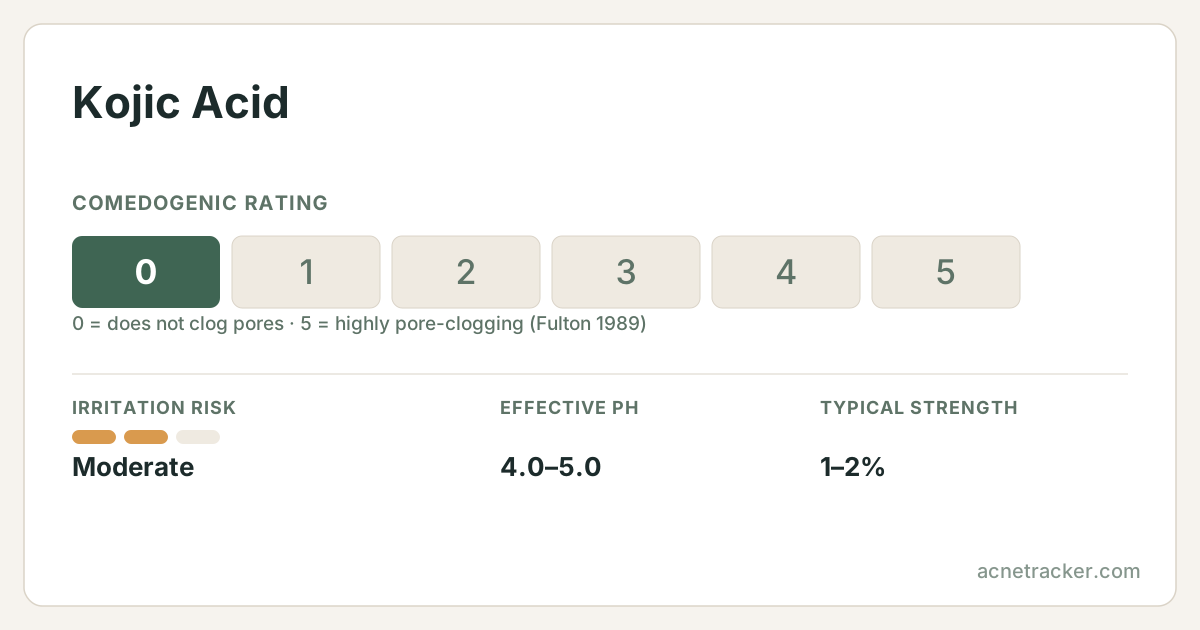
Kojic acid is a naturally derived brightening ingredient valued for its ability to fade dark spots, post-acne marks and other forms of uneven pigmentation. It is a byproduct of the fermentation processes used to make foods such as sake, soy sauce and rice wine, and it has been used in cosmetic brightening formulas for decades. It works by directly interfering with the enzyme that skin needs to produce melanin, which places it among the more targeted anti-pigment actives. It is effective but a little more prone to irritation than some gentler brighteners, so it is typically used at modest concentrations of around 1–2% and is often combined with complementary ingredients.
Quick facts
- Comedogenic rating
- our estimate — not measured
- Irritation risk
- Moderate
- Effective pH
- 4.0–5.0
- Typical strength
- 1–2%
- Pregnancy
- Ask your doctor
- Suits skin types
- oilycombinationnormalacne-prone
Where this number comes from
No one has published a comedogenic rating for this ingredient. Fulton's 1989 table tested about 250 raw materials and this was not among them, and we found no later study measuring it. The figure shown is our own reasoning from the ingredient's chemistry and how it is used — treat it as an estimate, not a measurement.
Fulton read his own scale as 0-1 not significant, 2-3 borderline, 4-5 positive. The assay is the rabbit ear at 10% dilution, which the paper itself calls extremely sensitive and not fully predictive of human skin. Ratings describe the raw ingredient; concentration and formulation change real-world behaviour.
Caution profile
The four published fields on this page, on one 0–5 scale. Further from the centre means more care is needed — never that the ingredient is worse.
Derived, not measured: pore-clogging is the published comedogenic rating; irritation maps low/moderate/high to 1/3/5; pregnancy maps safe/caution/avoid to 0/3/5; skin-type limits is how many of the seven skin types this entry does NOT list. Every input is printed in words in the quick-facts card above.
Show the numbers
| Metric | 0–5 | Published field |
|---|---|---|
| Pore-clogging | 0 | 0/5 |
| Irritation | 3 | Moderate |
| Skin-type limits | 2.1 | 4/7 |
| Pregnancy | 3 | Ask your doctor |
Working pH and typical strength
Where this ingredient is formulated to sit, and at what concentration.
Both bars come from the fields above: the pH window and the typical strength range published for this ingredient. The tinted column is healthy skin's surface pH (about 4.7–5.75).
Show the numbers
| Metric | 0–5 |
|---|---|
| Working pH | 4.0–5.0 |
| Typical strength | 1–2% |
What is it?
Kojic acid is an organic compound produced by certain fungi, most notably Aspergillus species, during fermentation. Its brightening power comes from tyrosinase inhibition: tyrosinase is the key enzyme melanocytes use to manufacture melanin, and by slowing it down kojic acid reduces how much new pigment the skin makes. This mechanism makes it useful for sun spots, melasma and the lingering brown marks that follow inflammation and acne. It also has mild antioxidant properties. Kojic acid can be unstable and prone to oxidizing and discoloring in the container, so it is often stabilized or combined with other agents, and it performs best in a slightly acidic formula.
Benefits
Targets excess pigment directly
By inhibiting tyrosinase, the enzyme that makes melanin, kojic acid reduces the production of new pigment at its source, which helps fade sun spots, melasma and post-inflammatory marks over time.
Helps with post-acne discoloration
The brown marks left after a pimple heals are driven by excess melanin, and kojic acid's action on pigment production makes it a useful option for evening out that lingering discoloration.
Mild antioxidant activity
Alongside its brightening effect, kojic acid offers some antioxidant capacity, contributing to defense against the free radicals that can worsen the look of uneven tone.
Effective in combination
Because it works through tyrosinase inhibition, kojic acid complements brighteners that act by other routes — such as vitamin C, niacinamide and tranexamic acid — so blends often outperform any single ingredient.
How to use
Introduce kojic acid gradually, typically in a serum or cream at around 1–2%, starting a few times a week and building up as your skin adjusts, since it is a little more likely to irritate than the gentlest brighteners. Apply to cleansed skin and always follow with moisturizer. It is often best used in the evening, and because you are treating pigmentation, daily broad-spectrum sunscreen is essential to keep new sun exposure from undoing your progress. Avoid stacking it with strong exfoliating acids in the same routine if your skin is already sensitized, as over-exfoliation invites irritation. Patch test any new product first.
Side effects
Kojic acid carries a moderate irritation potential: redness, dryness, itching or a stinging sensation can occur, particularly at higher concentrations or when combined with other actives. Contact sensitivity is possible with prolonged use, which is another reason to keep concentrations modest and patch test. Because it can oxidize, an old or discolored product may be less effective. As with all pigment treatments, skipping sunscreen undermines results and can worsen discoloration. Stop use if persistent irritation or a rash develops.
Who should avoid it
People with sensitive or reactive skin should approach kojic acid carefully, starting low and infrequent, and anyone who develops contact sensitivity should discontinue it. Data on use during pregnancy and breastfeeding are limited, so caution is warranted and you should confirm with your doctor before using it in that period. Do not combine it aggressively with multiple other strong actives if your barrier is already compromised. If a product causes an ongoing reaction, stop and let the skin recover.
Pairs well with
Avoid combining with
Frequently asked questions
What is kojic acid used for?
It is a brightening ingredient used to fade dark spots, melasma and post-acne marks. It works by inhibiting tyrosinase, the enzyme skin uses to make melanin, which reduces the production of new pigment.
Is kojic acid safe during pregnancy?
Data on kojic acid in pregnancy are limited, so caution is advised. If you are pregnant or breastfeeding, confirm with your doctor before using it, and consider better-studied alternatives for pigmentation in the meantime.
Can I use kojic acid with vitamin C?
Yes. Kojic acid pairs well with vitamin C, niacinamide and tranexamic acid because they target uneven tone through different mechanisms, so combining them can work better than one alone. Introduce new actives one at a time.
Does kojic acid irritate the skin?
It has a moderate irritation potential and can cause redness, dryness or stinging, especially at higher strengths. Start at a low concentration a few times a week, moisturize, and patch test before regular use.
How long does kojic acid take to fade dark spots?
Pigmentation fades slowly. Many people see gradual improvement over roughly 8 to 12 weeks of consistent use, and daily sunscreen is essential to protect the progress from new sun-triggered discoloration.
Where this ingredient shows up here
Counted across this database, not the web — these are the pages on this site that reason about this ingredient.
Combination guides 4
Sources & further reading
Medical disclaimer
Find your personal acne triggers
Our free Acne Tracker lets you log breakouts, sleep, stress and diet, and shows you which factors correlate with your flare-ups.