How to Choose a Spot Treatment for Dark Spots
The 'spot' here is different: not an active pimple but the flat, discoloured mark a healed blemish leaves behind — post-inflammatory hyperpigmentation. It is a pigment problem, not an inflammation or a plug, so an acne spot gel designed to dry out a whitehead does nothing for it and can even prolong the mark by irritating the skin. Fading discolouration is slower and steadier work: you need actives that interrupt excess pigment, applied consistently, and above all daily sun protection, because UV re-darkens a healing mark faster than anything else can fade it. This guide covers the pigment-targeting ingredients worth using, the mistakes that keep a mark around, and why sunscreen is the real spot treatment for dark spots.
Ingredients to look for
| Ingredient | Why it matters |
|---|---|
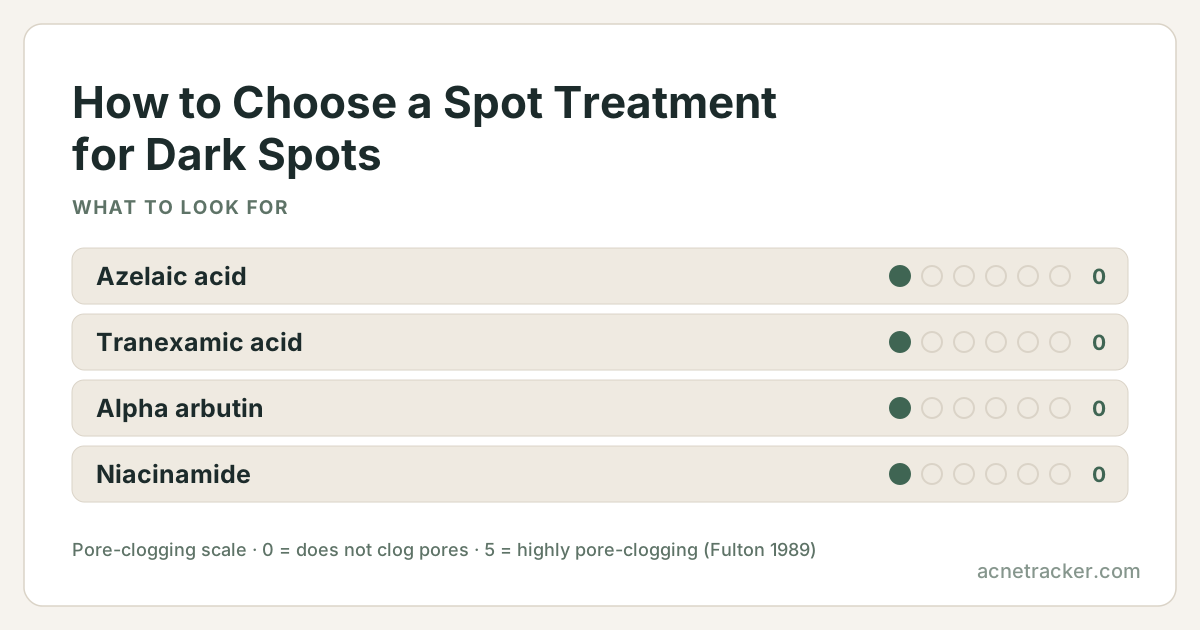
| Azelaic acid | Interrupts excess pigment production while calming residual inflammation, making it ideal for the marks left by acne on all skin tones. |
| Tranexamic acid | Targets discolouration through a different pathway, a useful addition for stubborn post-acne marks that are slow to fade. |
| Alpha arbutin | A gentle, well-tolerated brightener that gradually lightens dark spots without the irritation of harsher agents. |
| Niacinamide | Limits pigment transfer to the surface and evens tone, a low-irritation partner that supports the stronger fading actives. |
| Daily broad-spectrum sunscreen | Not optional: UV re-darkens a healing mark and stalls every other active, so sun protection is the true foundation of fading dark spots. |
Ingredients to avoid
| Ingredient | Why it matters |
|---|---|
| Harsh acne spot gels on a flat mark | A dark spot is pigment, not a pimple, so drying acne gels do nothing useful and their irritation can deepen the discolouration. |
| Skipping sunscreen while treating | Without daily SPF, UV re-darkens the mark faster than any brightening active can fade it, wasting the entire effort. |
| Picking at the original spot | Repeated trauma to the skin drives more pigment and prolongs the mark, which is why not squeezing a pimple protects against dark spots. |
| Over-aggressive exfoliation to 'speed it up' | Piling on strong acids irritates the skin, and irritation itself triggers more pigment, so it commonly makes marks last longer. |
How to choose
First identify what you are treating: a flat brown or tan mark where a pimple used to be is post-inflammatory hyperpigmentation, a pigment issue that needs brightening actives, not the drying spot gels made for live acne. Azelaic acid is an excellent all-round choice because it fades pigment while calming any lingering inflammation and works across all skin tones. Tranexamic acid and alpha arbutin add fading through gentler, complementary routes, and niacinamide supports them with low irritation. Prefer a leave-on serum or cream you can apply consistently over weeks, since fading is gradual. The single most important decision, though, is committing to daily broad-spectrum sunscreen: it is genuinely the most effective 'spot treatment' for dark marks, because UV re-darkens them continuously and undoes every brightening step without it. Choose gentle over aggressive throughout, because irritation triggers the very pigment you are trying to reduce.
How to apply
Apply your fading active — azelaic acid, tranexamic acid or alpha arbutin — across the marked area, not just a single dot, since post-acne pigment often sits in clusters. Layer a soothing niacinamide if you like, and keep the whole routine gentle to avoid triggering more pigment. Then, every single morning, apply broad-spectrum sunscreen and reapply through the day, because this is what protects the fading you are working for. Expect gradual results over weeks to months rather than days. And protect against future marks by not squeezing spots, since the trauma is what leaves the discolouration in the first place.
Frequently asked questions
Why won't my dark spots fade even with treatment?
The usual reason is missing sun protection: UV continuously re-darkens a healing mark faster than any active can fade it. Daily broad-spectrum sunscreen is essential, and without it azelaic acid, arbutin and tranexamic acid all underperform.
Can an acne spot treatment fade a dark mark?
No — a drying acne gel is made for a live pimple, while a dark spot is flat pigment left behind after one heals. It needs brightening actives like azelaic acid, and a harsh acne gel can even worsen the mark by irritating the skin.
How long do post-acne dark spots take to fade?
Usually weeks to several months, depending on depth and skin tone, and only with consistent brightening actives plus daily sunscreen. Fading is inherently gradual, so patience and sun protection matter more than any single strong product.
How do I prevent dark spots from acne in the first place?
Do not pick or squeeze spots, since the trauma is what drives the pigment, and treat inflammation early with gentle actives. Wearing daily sunscreen also stops existing marks from deepening while your skin heals.
Sources & further reading
There is no single study of this exact question. The guidance here is reasoned from the ingredient profiles below, each of which carries its own references:
- Azelaic Acid3 refs
- Tranexamic Acid3 refs
- Alpha-Arbutin3 refs
- Niacinamide2 refs
Show every reference behind this page (9)
- PubChem — Azelaic acid compound summarycited by Azelaic Acid
- DermNet — Azelaic acidcited by Azelaic Acid
- European Commission CosIng database — Azelaic Acidcited by Azelaic Acid, Alpha-Arbutin, Niacinamide
- PubChem — Tranexamic acid compound summarycited by Tranexamic Acid
- Tranexamic Acid for Hyperpigmentation Disorders: A Literature Review on Efficacy and Safety in Melasma and PIH. J Cosmet Dermatol 2026 Feb (PubMed)cited by Tranexamic Acid
- DermNet — Melasmacited by Tranexamic Acid
- PubChem — Arbutincited by Alpha-Arbutin
- A comprehensive review of the therapeutic potential of α-arbutin (PubMed)cited by Alpha-Arbutin
- Niacinamide: mechanisms of action and its topical use in dermatology (PubMed)cited by Niacinamide
Medical disclaimer
Ingredients mentioned on this page
Find your personal acne triggers
Our free Acne Tracker lets you log breakouts, sleep, stress and diet, and shows you which factors correlate with your flare-ups.