Alpha-Arbutin: Comedogenic Rating & Ingredient Analysis
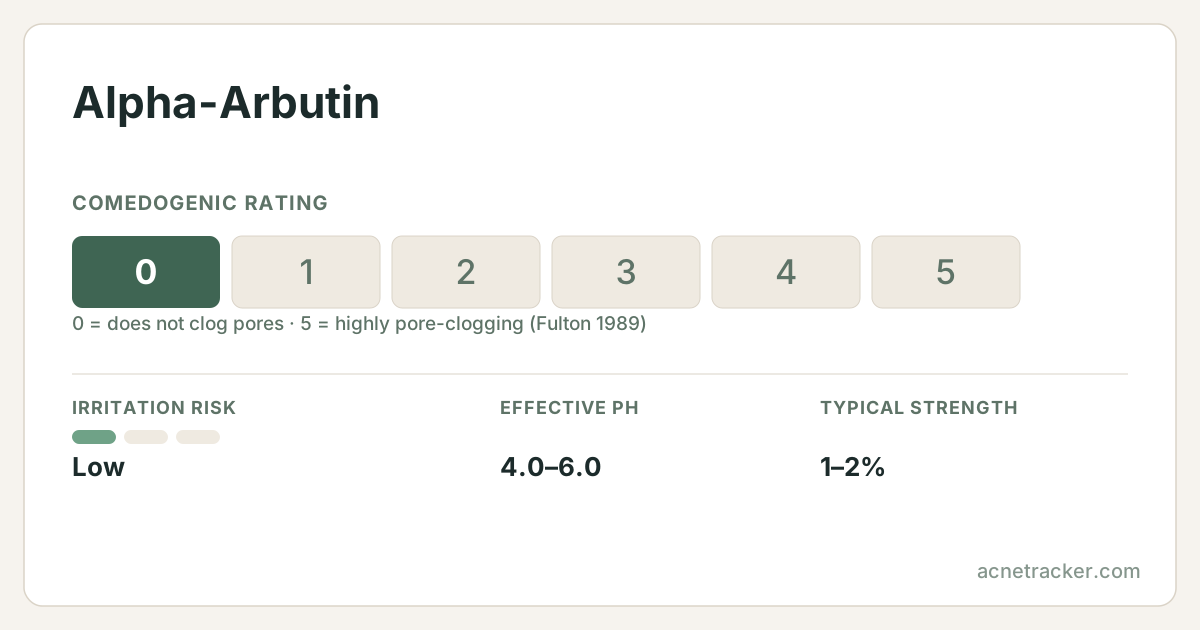
Alpha-arbutin is a stable, well-tolerated brightening ingredient prized for fading dark spots, melasma and the lingering brown marks left behind by acne. It is a naturally derived molecule in which a glucose unit is attached to hydroquinone, and that bond is the whole point: it releases its pigment-blocking action slowly and gently rather than all at once, which makes it far kinder to the skin than raw hydroquinone while still targeting the same enzyme. Effective concentrations sit around 1–2%, and because it does not exfoliate or lower the skin's pH, most people tolerate it without any sting.
Quick facts
- Comedogenic rating
- our estimate — not measured
- Irritation risk
- Low
- Effective pH
- 4.0–6.0
- Typical strength
- 1–2%
- Pregnancy
- Ask your doctor
- Suits skin types
- oilydrycombinationsensitivenormalacne-prone
Where this number comes from
No one has published a comedogenic rating for this ingredient. Fulton's 1989 table tested about 250 raw materials and this was not among them, and we found no later study measuring it. The figure shown is our own reasoning from the ingredient's chemistry and how it is used — treat it as an estimate, not a measurement.
Fulton read his own scale as 0-1 not significant, 2-3 borderline, 4-5 positive. The assay is the rabbit ear at 10% dilution, which the paper itself calls extremely sensitive and not fully predictive of human skin. Ratings describe the raw ingredient; concentration and formulation change real-world behaviour.
Caution profile
The four published fields on this page, on one 0–5 scale. Further from the centre means more care is needed — never that the ingredient is worse.
Derived, not measured: pore-clogging is the published comedogenic rating; irritation maps low/moderate/high to 1/3/5; pregnancy maps safe/caution/avoid to 0/3/5; skin-type limits is how many of the seven skin types this entry does NOT list. Every input is printed in words in the quick-facts card above.
Show the numbers
| Metric | 0–5 | Published field |
|---|---|---|
| Pore-clogging | 0 | 0/5 |
| Irritation | 1 | Low |
| Skin-type limits | 0.7 | 6/7 |
| Pregnancy | 3 | Ask your doctor |
Working pH and typical strength
Where this ingredient is formulated to sit, and at what concentration.
Both bars come from the fields above: the pH window and the typical strength range published for this ingredient. The tinted column is healthy skin's surface pH (about 4.7–5.75).
Show the numbers
| Metric | 0–5 |
|---|---|
| Working pH | 4.0–6.0 |
| Typical strength | 1–2% |
What is it?
The molecule works by inhibiting tyrosinase, the enzyme that controls the first and rate-limiting step of melanin production. By quietly slowing that enzyme, alpha-arbutin reduces the formation of new pigment, so existing spots fade as the skin naturally sheds and no fresh dark patches replace them. The alpha configuration of the glucose bond is more stable and more effective than the beta form found in many plant extracts. Because its effect is preventive as much as corrective, results build gradually over 8–12 weeks and are best held with consistent sunscreen, since UV light constantly stimulates the very pigment it is trying to calm.
Benefits
Fades post-acne dark marks
By dialling down melanin production it gradually lightens the brown spots that often outlast a healed pimple, evening out tone over a couple of months.
Gentler than hydroquinone
The glucose bond releases its activity slowly, avoiding the irritation and stricter usage limits associated with pure hydroquinone while acting on the same target.
Works on stubborn pigmentation
It is used against melasma and sun-induced spots as well as acne marks, making it a versatile choice for uneven, blotchy tone.
Comfortable for sensitive skin
Because it is non-acidic and does not exfoliate, it rarely stings, so reactive skin that cannot handle strong acids can still address pigmentation.
How to use
Apply alpha-arbutin once or twice daily on clean skin, before heavier creams and oils. It layers happily with vitamin C, which tackles pigment by a complementary route, and with niacinamide, which also helps even tone. Follow with sunscreen every morning without exception, because unprotected sun exposure will undo the fading and restart pigment production. Patience is key: give it two to three months of steady use before judging results, and keep using it to prevent spots from returning.
Side effects
Alpha-arbutin is one of the better-tolerated actives, and side effects are rare. A minority of people notice mild redness or slight tingling, usually resolving quickly. Very high, unregulated concentrations are best avoided, as extremely large amounts of arbutin could in theory release more hydroquinone than intended; sticking to the well-studied 1–2% range keeps it both effective and safe.
Who should avoid it
Data on arbutin use during pregnancy is limited, so many clinicians advise caution and prefer better-studied options such as azelaic acid or vitamin C during that time. If you have very reactive skin, patch test first. Anyone using prescription pigmentation treatments should check with a dermatologist before stacking additional brighteners.
Pairs well with
Frequently asked questions
How long does alpha-arbutin take to work?
Expect visible fading of dark spots over eight to twelve weeks of consistent daily use. It works preventively as well as correctively, so results build slowly and are best maintained with ongoing use and sunscreen.
Can I use alpha-arbutin with vitamin C?
Yes, and it is a strong pairing. The two brighten pigment through complementary mechanisms, so using them together can even tone more effectively than either alone.
Is alpha-arbutin better than hydroquinone?
It is gentler and better tolerated, releasing its action slowly, though hydroquinone is more potent. For over-the-counter, long-term use on mild to moderate marks, alpha-arbutin is a safer everyday choice.
Does alpha-arbutin make skin sun-sensitive?
No, it does not increase photosensitivity, but daily sunscreen is still essential because sun exposure stimulates the pigment production it is trying to reduce, undoing your progress.
Is alpha-arbutin safe in pregnancy?
Evidence is limited, so caution is advised and many prefer better-studied alternatives such as azelaic acid or vitamin C during pregnancy. Check with your doctor for your situation.
Where this ingredient shows up here
Counted across this database, not the web — these are the pages on this site that reason about this ingredient.
Combination guides 10
+2 more on the site
Condition pages 4
Buying guides 7
- How to Choose a Face Mask for Hyperpigmentation
- How to Choose a Night Cream for Hyperpigmentation
- How to Choose a Serum for Hyperpigmentation
- How to Choose a Serum for Post-Acne Marks
- How to Choose a Spot Treatment for Dark Spots
- How to Choose a Toner for Hyperpigmentation
+1 more on the site
Sources & further reading
Medical disclaimer
Find your personal acne triggers
Our free Acne Tracker lets you log breakouts, sleep, stress and diet, and shows you which factors correlate with your flare-ups.