How to Choose a Night Cream for Hyperpigmentation
Hyperpigmentation — sun spots, melasma, marks left by old breakouts — fades slowly and only with consistency. Night is a productive time to work on it, because some of the most useful brightening actives are gentler used away from the sun, and overnight repair supports the skin as pigment cells calm down. A night cream cannot bleach dark spots away, but a well-chosen one delivers the ingredients that gradually even tone while the barrier recovers. This guide describes that brightening-plus-repair profile, and is blunt about the single factor that decides whether any of it works: daytime sun protection.
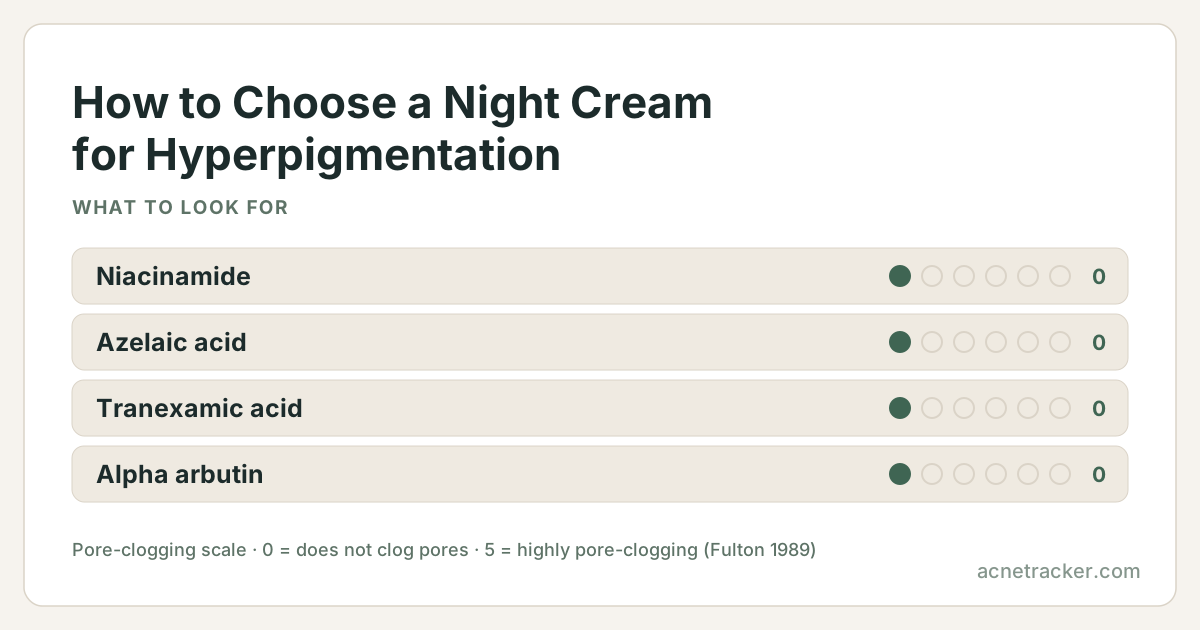
Ingredients to look for
| Ingredient | Why it matters |
|---|---|
| Niacinamide | Interrupts the transfer of pigment to skin cells and evens tone gradually, with an excellent tolerance record at night. |
| Azelaic acid | Targets excess pigment and post-acne marks specifically, and is gentle enough for nightly use on most skin, including melasma. |
| Tranexamic acid | Increasingly used for stubborn pigment and melasma, working on a different pathway than most brighteners. |
| Alpha arbutin | A gentler tyrosinase-inhibiting brightener that fades spots without the irritation of harsher agents. |
| Retinaldehyde | Speeds turnover so pigmented cells shed faster and helps other brighteners penetrate; a night-only active. |
Ingredients to avoid
| Ingredient | Why it matters |
|---|---|
| High-strength acids stacked into the cream | Irritation is a direct cause of post-inflammatory pigment, so an over-active night cream can darken spots it was meant to fade. |
| Fragrance and photosensitising citrus oils | Both irritate and, in the case of citrus oils, can themselves trigger pigmentation on skin exposed to daylight. |
| Any product implying it replaces sunscreen | Nothing fades pigment if daytime UV keeps re-triggering it; a night cream is only half of the job. |
| Hydroquinone used unsupervised for months | It is effective but prescription-territory for good reason; long unsupervised use risks rebound and, rarely, ochronosis. |
How to choose
Look for one or two proven brighteners rather than a scattergun of ten. Niacinamide, azelaic acid, tranexamic acid and alpha arbutin all have reasonable evidence and are gentle enough for nightly use; a retinoid can be added to speed turnover. Prioritise a non-irritating formula, because irritation drives the exact pigment you are trying to fade. Decode the marketing carefully: 'whitening', 'brightening' and 'spot-correcting' are unregulated, and no cream 'erases' dark spots — realistic timelines are eight to twelve weeks for early change, longer for melasma. A dedicated night cream makes sense here so you can pair evening brighteners with a separate high-SPF sunscreen by day. Above all, judge any regimen by whether it includes daily sun protection: without it, the best night cream in the world will disappoint.
How to apply
After cleansing, apply your brightening serum or active, then the night cream to seal it in; if you use a retinoid, that goes on dry skin first. Treat the whole face, not just the spots, since blending prevents new patchiness. Consistency is everything — pigment fades over weeks of nightly use, and stopping early is the usual reason people conclude 'nothing works'. Take a photo monthly in the same light to track slow progress you would otherwise miss. Then the decisive step: broad-spectrum SPF 30–50 every morning, reapplied through the day. Sun protection is not optional with pigmentation; it is the treatment.
Frequently asked questions
Can a night cream fade dark spots while I sleep?
Not overnight, but consistent nightly use of brighteners like niacinamide, azelaic acid or tranexamic acid fades them gradually over weeks to months. Overnight is simply a good window because some brighteners work better away from sunlight.
Why won't my hyperpigmentation fade even with a brightening night cream?
The most common reason is missing daily sunscreen — UV keeps re-triggering pigment faster than the cream fades it. Irritation from an over-active routine can also darken spots. Add SPF and simplify before changing the cream.
Which brightening ingredient is best in a night cream for melasma?
For melasma, azelaic acid and tranexamic acid have particularly useful evidence and are gentle. Melasma is stubborn and easily worsened by heat and light, so pair them with diligent sun protection and, ideally, professional guidance.
Do I still need sunscreen if I only treat pigmentation at night?
Absolutely, and it is the most important step. Daytime UV re-triggers the pigment your night cream is fading, so without morning sunscreen the treatment cannot get ahead. Think of SPF as half the pigmentation routine, not an optional add-on.
Sources & further reading
There is no single study of this exact question. The guidance here is reasoned from the ingredient profiles below, each of which carries its own references:
- Niacinamide2 refs
- Azelaic Acid3 refs
- Tranexamic Acid3 refs
- Alpha-Arbutin3 refs
- Retinal3 refs
Show every reference behind this page (11)
- Niacinamide: mechanisms of action and its topical use in dermatology (PubMed)cited by Niacinamide
- European Commission CosIng database — Niacinamidecited by Niacinamide, Azelaic Acid, Alpha-Arbutin, Retinal
- PubChem — Azelaic acid compound summarycited by Azelaic Acid
- DermNet — Azelaic acidcited by Azelaic Acid
- PubChem — Tranexamic acid compound summarycited by Tranexamic Acid
- Tranexamic Acid for Hyperpigmentation Disorders: A Literature Review on Efficacy and Safety in Melasma and PIH. J Cosmet Dermatol 2026 Feb (PubMed)cited by Tranexamic Acid
- DermNet — Melasmacited by Tranexamic Acid
- PubChem — Arbutincited by Alpha-Arbutin
- A comprehensive review of the therapeutic potential of α-arbutin (PubMed)cited by Alpha-Arbutin
- PubChem — Retinaldehydecited by Retinal
- Kwon HS et al. Efficacy and safety of retinaldehyde 0.1% and 0.05% creams used to treat photoaged skin: A randomized double-blind controlled trial. J Cosmet Dermatol 2018 Jun (PubMed)cited by Retinal
Medical disclaimer
Ingredients mentioned on this page
Find your personal acne triggers
Our free Acne Tracker lets you log breakouts, sleep, stress and diet, and shows you which factors correlate with your flare-ups.