How to Choose a Serum for Acne-Prone Skin
A serum is where acne-prone skin gets its real treatment, because a leave-on formula gives an active hours of contact rather than the seconds a cleanser allows. The goal is not to attack every pore at once but to pick one or two actives that address your specific pattern — congestion, inflamed spots, or post-breakout marks — and use them consistently. This guide describes the ingredients worth seeking on any label and the ones that tend to make matters worse. Because acne is a barrier and inflammation problem as much as an oil problem, the smartest serums do treatment work while keeping the skin calm.
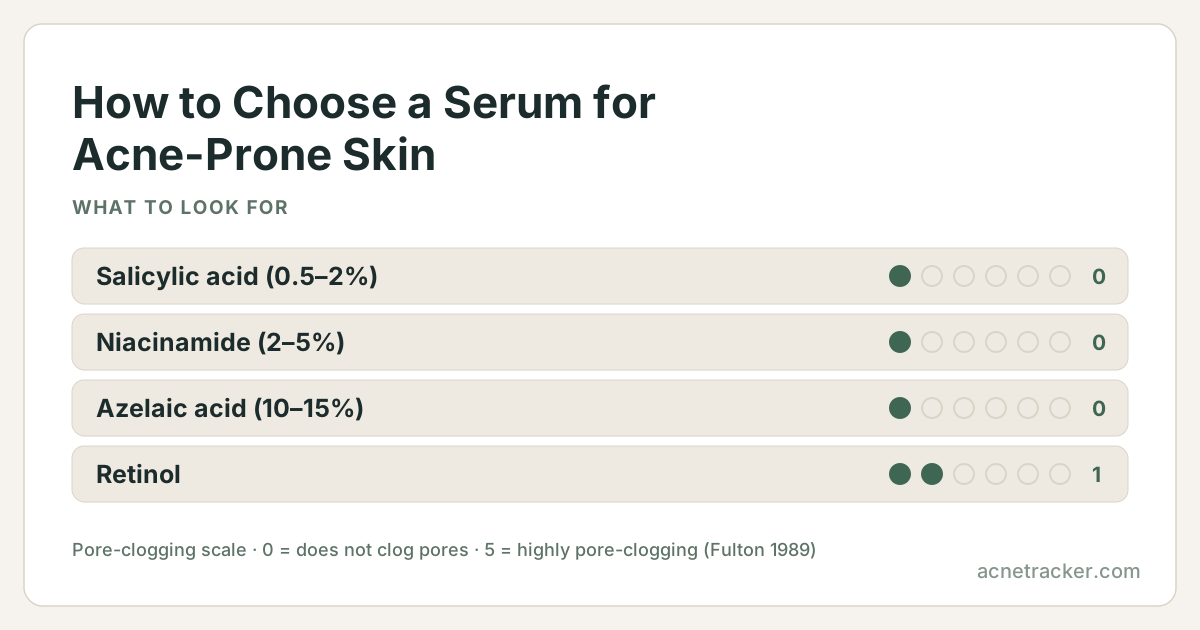
Ingredients to look for
| Ingredient | Why it matters |
|---|---|
| Salicylic acid (0.5–2%) | Oil-soluble, so it penetrates into the pore lining and clears the congestion that turns into blackheads and closed comedones. |
| Niacinamide (2–5%) | Calms inflammation, regulates sebum and supports the barrier, making it one of the few actives that pairs well with almost everything. |
| Azelaic acid (10–15%) | Targets acne-causing bacteria and post-spot discolouration at once, and is gentle enough for the pregnancy-safe list. |
| Retinol | Normalises how pore cells shed, addressing the root cause of clogging over weeks; introduce slowly and not during pregnancy. |
| Zinc PCA | A mild sebum-regulating and soothing addition that suits shiny, breakout-prone skin without adding weight. |
Ingredients to avoid
| Ingredient | Why it matters |
|---|---|
| Heavy plant butters and coconut-derived emollients | Rich occlusive ingredients high on the list can clog acne-prone pores and undo the serum's own work. |
| Denatured alcohol as a top ingredient | The matte feel is temporary; repeated use damages the barrier and provokes the inflammation that drives breakouts. |
| Stacking multiple strong exfoliating acids | Combining salicylic, glycolic and a retinoid at full strength inflames the barrier faster than it clears spots. |
| Added fragrance and essential oils | A common irritant on already-reactive skin, and irritation is one of the things that keeps acne going. |
How to choose
Start by naming your dominant issue, because one serum cannot sensibly do everything. If your skin is congested with blackheads and closed bumps, salicylic acid is the priority. If it is red, inflamed and marked after spots clear, azelaic acid or niacinamide earns the slot. If breakouts are stubborn and recurring, a retinol serum treats the underlying cell turnover, though it takes eight to twelve weeks and is not for pregnancy. Read concentration where it is stated, and be sceptical of serums that list six actives at once — that is usually a sign each is present in a token amount. A short, focused formula at a meaningful percentage beats a crowded label. Water-based, lightweight textures suit acne-prone skin; skip anything that feels greasy on application. Finally, weigh 'purifying' and 'blemish-clearing' as marketing, and judge the actual ingredient list instead.
How to apply
Apply serum to clean, dry skin before moisturiser, in the evening for retinol or acids. Start any active two or three nights a week and build up as tolerated; introducing two new actives at once makes it impossible to tell which one your skin reacts to. Always follow with a light moisturiser to buffer the barrier, and use sunscreen every morning — salicylic acid, azelaic acid and retinol all leave skin more sun-sensitive. Give any serum a full eight to twelve weeks before judging it.
Frequently asked questions
Can I use a niacinamide and a salicylic acid serum together?
Yes, they complement each other well — niacinamide calms while salicylic acid clears pores. If your skin is sensitive, use them at different times of day rather than layered, to reduce the total load at once.
How long before an acne serum shows results?
Salicylic acid can reduce congestion within a couple of weeks, but retinol and azelaic acid need eight to twelve weeks of consistent use. Judging any active before then usually leads to quitting something that was starting to work.
Is a serum enough on its own for acne?
For mild congestion and the odd spot, a well-chosen serum plus gentle cleanser and sunscreen is often enough. Persistent, painful or cystic acne is a medical issue that deserves a doctor rather than a stronger serum.
What serum ingredient is safe if I am pregnant?
Retinol and high-strength salicylic acid are generally advised against in pregnancy. Azelaic acid and niacinamide are widely considered suitable, but confirm your routine with your own doctor or midwife.
Should I stop using a serum if my skin purges?
A short-lived uptick in spots as retinol or an acid speeds turnover can be genuine purging in already-forming areas. New breakouts in unusual places, or stinging and redness, point to irritation instead, and that warrants stopping.
Sources & further reading
There is no single study of this exact question. The guidance here is reasoned from the ingredient profiles below, each of which carries its own references:
- Salicylic Acid2 refs
- Niacinamide2 refs
- Azelaic Acid3 refs
- Retinol2 refs
- Zinc PCA3 refs
Show every reference behind this page (10)
- Salicylic acid as a peeling agent: a comprehensive review (PubMed)cited by Salicylic Acid
- FDA OTC monograph — acne drug products (salicylic acid 0.5–2%)cited by Salicylic Acid
- Niacinamide: mechanisms of action and its topical use in dermatology (PubMed)cited by Niacinamide
- European Commission CosIng database — Niacinamidecited by Niacinamide, Azelaic Acid, Zinc PCA
- PubChem — Azelaic acid compound summarycited by Azelaic Acid
- DermNet — Azelaic acidcited by Azelaic Acid
- Improvement of naturally aged skin with vitamin A (retinol) (PubMed)cited by Retinol
- European Commission SCCS opinion on vitamin A in cosmeticscited by Retinol
- PubChem — Zinc PCA (zinc pyrrolidone carboxylate)cited by Zinc PCA
- Zinc l-pyrrolidone carboxylate inhibits the UVA-induced production of matrix metalloproteinase-1 by in vitro cultured skin fibroblasts, whereas it enhances their collagen synthesis (PubMed)cited by Zinc PCA
Medical disclaimer
Ingredients mentioned on this page
Find your personal acne triggers
Our free Acne Tracker lets you log breakouts, sleep, stress and diet, and shows you which factors correlate with your flare-ups.