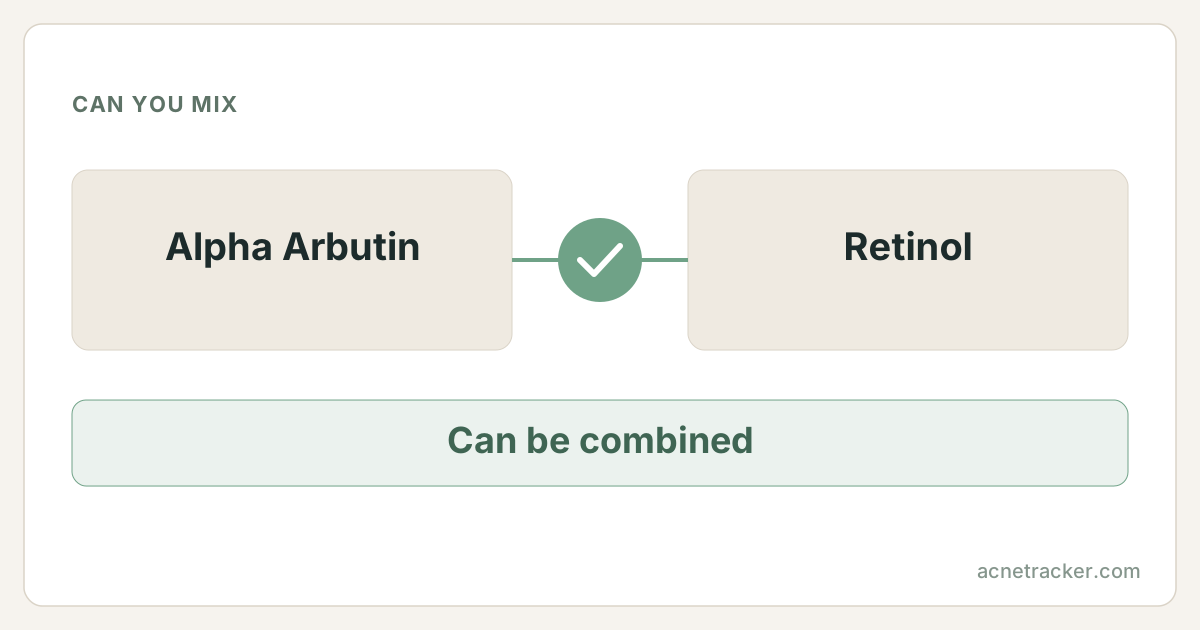
Can You Mix Alpha Arbutin and Retinol?
Yes — alpha arbutin and retinol make an excellent pairing for dark spots and uneven tone. Alpha arbutin blocks new pigment from forming while retinol speeds up the shedding of cells that already hold pigment, so they attack hyperpigmentation from two angles. They are chemically compatible and can be layered in the same routine, with arbutin applied first.
How this pairing resolves
The two ingredients, their published numbers, and where they land together.
The numbers beside each ingredient are its published comedogenic rating and effective pH window, taken from its own profile page.
Show the numbers
| Ingredients | Metric | 0–5 |
|---|---|---|
| Alpha Arbutin | Comedogenic rating | 0/5 |
| Alpha Arbutin | Effective pH | 4.0–6.0 |
| Retinol | Comedogenic rating | 1/5 |
| Retinol | Effective pH | 5.0–6.0 |
Why
Hyperpigmentation forms when the enzyme tyrosinase drives melanin production and that pigment collects in skin cells. Alpha arbutin is a stable, gentle derivative of hydroquinone that inhibits tyrosinase, slowing the creation of new melanin without the harshness of stronger brighteners. Retinol works on the other end of the process: by accelerating cell turnover it helps carry already-pigmented cells up and off the skin faster, fading existing marks, and it can also improve how evenly pigment is distributed. Together they cover both prevention and clearance, which is why the combination is popular for post-inflammatory marks, sun spots and melasma-prone skin. Chemically there is no conflict — alpha arbutin is stable across a mild pH range and does not react with retinol — and arbutin is non-irritating, so it does not add to retinol's side effects. If anything, treating pigment with two complementary mechanisms tends to give faster, more even results than either alone, provided daily sunscreen is used to stop new pigment forming.
How to combine them
Layer them in the evening: cleanse, apply alpha arbutin serum to clean skin, wait a minute, then apply retinol and seal with moisturizer. Because arbutin is gentle and non-acidic, no long wait is needed. You can also split them — alpha arbutin in the morning, where it pairs well with vitamin C and sunscreen for daytime pigment defence, and retinol at night. Alpha arbutin is mild enough for twice-daily use, so it can appear in both routines, while retinol starts at two or three nights a week and builds up. The single most important step for any pigmentation routine is broad-spectrum SPF 30 or higher every morning; without it, UV keeps stimulating the tyrosinase you are trying to calm, and retinol's added sun sensitivity makes protection even more essential.
Example routine
| When | Steps |
|---|---|
| Evening (retinol nights) | Cleanser → Alpha arbutin → Retinol → Moisturizer |
| Morning (pigment defence) | Cleanser → Alpha arbutin → Moisturizer → SPF 30+ |
| Recovery evenings | Cleanser → Alpha arbutin → Moisturizer |
Warning signs
Frequently asked questions
How do alpha arbutin and retinol work together on dark spots?
Alpha arbutin blocks tyrosinase so less new pigment forms, while retinol speeds turnover to shed cells that already hold pigment. Combining prevention and clearance usually fades marks faster than either alone.
Does alpha arbutin go on before or after retinol?
Apply alpha arbutin first on clean skin, then retinol, then moisturizer. Because arbutin is gentle and non-acidic, you do not need a long wait between the two steps.
Can I use alpha arbutin in the morning and retinol at night?
Yes, and it is a great split. Alpha arbutin pairs well with vitamin C and sunscreen for daytime pigment defence, while retinol does its renewal work overnight when it is not exposed to UV.
Is alpha arbutin safe in pregnancy when retinol is not?
Evidence on alpha arbutin in pregnancy is limited, so check with your doctor before using it. Retinol and other retinoids are generally avoided in pregnancy, so the retinol should be paused regardless.
Sources & further reading
There is no single study of this exact question. The guidance here is reasoned from the ingredient profiles below, each of which carries its own references:
- Alpha-Arbutin3 refs
- Retinol2 refs
Show every reference behind this page (5)
- European Commission CosIng database — Alpha-Arbutincited by Alpha-Arbutin
- PubChem — Arbutincited by Alpha-Arbutin
- A comprehensive review of the therapeutic potential of α-arbutin (PubMed)cited by Alpha-Arbutin
- Improvement of naturally aged skin with vitamin A (retinol) (PubMed)cited by Retinol
- European Commission SCCS opinion on vitamin A in cosmeticscited by Retinol
Medical disclaimer
Ingredients mentioned on this page
Find your personal acne triggers
Our free Acne Tracker lets you log breakouts, sleep, stress and diet, and shows you which factors correlate with your flare-ups.