Can You Mix Retinol and Squalane?
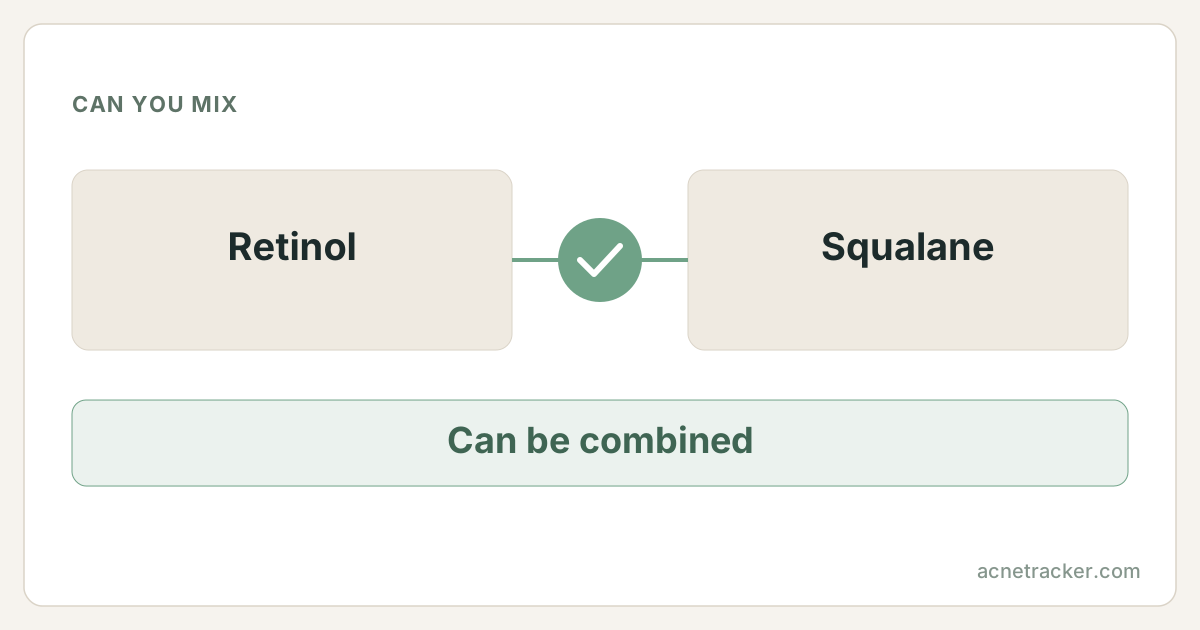
Yes, retinol and squalane are an easy, low-risk match. Squalane is a lightweight, chemically inert oil that mimics your skin's own lipids, so it has nothing to react with retinol and cannot throw off its pH. Its job is simply to soften and seal, which offsets the tightness, flaking and stinging that retinol can cause in the early weeks. Think of it as a cushion, not a second active.
How this pairing resolves
The two ingredients, their published numbers, and where they land together.
The numbers beside each ingredient are its published comedogenic rating and effective pH window, taken from its own profile page.
Show the numbers
| Ingredients | Metric | 0–5 |
|---|---|---|
| Retinol | Comedogenic rating | 1/5 |
| Retinol | Effective pH | 5.0–6.0 |
| Squalane | Comedogenic rating | 1/5 |
| Squalane | Effective pH | no published pH |
Why
Squalane is a fully saturated hydrocarbon made by hydrogenating squalene, a lipid your sebaceous glands already produce. That hydrogenation removes the reactive double bonds that make raw squalene oxidise, leaving a remarkably stable, unreactive oil. Because it carries no acidic or alkaline groups and no oxidising potential, squalane cannot shift retinol out of its preferred near-neutral pH or degrade the molecule the way light and air do. Instead it behaves as an emollient occlusive: it fills the microscopic gaps between surface cells, smooths rough texture and slows the water loss that drives retinol's characteristic dryness. During retinisation the barrier temporarily leaks moisture, and squalane replaces the slip and seal that a stripped barrier lacks. It is also biomimetic and non-comedogenic, absorbing quickly without the greasy film heavier oils leave, which suits the oily and acne-prone skin that so often reaches for retinol. Crucially, squalane adds tolerance without adding any irritation of its own, so nothing about it competes with what the retinol is doing.
How to combine them
Apply retinol first, to clean and fully dry skin, then a few drops of squalane on top to seal it in — an oil-textured emollient generally goes last, or just under a cream if you use one. For reactive or beginner skin, buffer instead: press a thin layer of squalane on first, let it settle for a minute, then apply retinol over it so the actives release more slowly. Squalane is gentle enough for daily use, morning and night, and on your retinol-free recovery nights it keeps the barrier comfortable. Begin retinol at two or three nights a week and build up as tolerance grows, leaning on squalane throughout. A drop of squalane can also be warmed between the palms and pressed over dry patches during the day. Always finish the morning with broad-spectrum SPF 30 or higher, because retinol makes skin more sun-sensitive.
Example routine
| When | Steps |
|---|---|
| Evening (retinol nights) | Cleanser → Retinol → Squalane (→ cream if needed) |
| Buffer option | Squalane → Retinol → Squalane over dry areas |
| Recovery + morning | Cleanser → Squalane (+ SPF 30+ in AM) |
Warning signs
Frequently asked questions
Does squalane weaken retinol's effects?
No. Squalane is inert and only conditions the skin surface; it does not neutralise retinol or block its penetration. By easing dryness it usually helps you stay consistent, which is what actually drives results.
Should squalane go before or after retinol?
Usually after, as the sealing step over retinol. If your skin is very reactive, pressing a thin squalane layer on first as a buffer, then applying retinol, is a gentler alternative.
Is squalane too greasy or pore-clogging for acne-prone skin?
Pure squalane is lightweight and non-comedogenic, so it suits oily, acne-prone skin. Stick to a couple of drops and make sure it is not blended with heavier oils that can clog pores.
Can I use squalane and retinol while pregnant?
Squalane on its own is considered safe in pregnancy. Retinol and other retinoids are generally avoided, so if you are pregnant you can keep the squalane and pause the retinol after checking with your doctor.
Sources & further reading
There is no single study of this exact question. The guidance here is reasoned from the ingredient profiles below, each of which carries its own references:
Show every reference behind this page (5)
- Improvement of naturally aged skin with vitamin A (retinol) (PubMed)cited by Retinol
- European Commission SCCS opinion on vitamin A in cosmeticscited by Retinol
- PubChem — Squalane compound summarycited by Squalane
- DermNet — Emollients and moisturiserscited by Squalane
- European Commission CosIng database — Squalanecited by Squalane
Medical disclaimer
Ingredients mentioned on this page
Find your personal acne triggers
Our free Acne Tracker lets you log breakouts, sleep, stress and diet, and shows you which factors correlate with your flare-ups.