Chin Breakouts Before Your Period
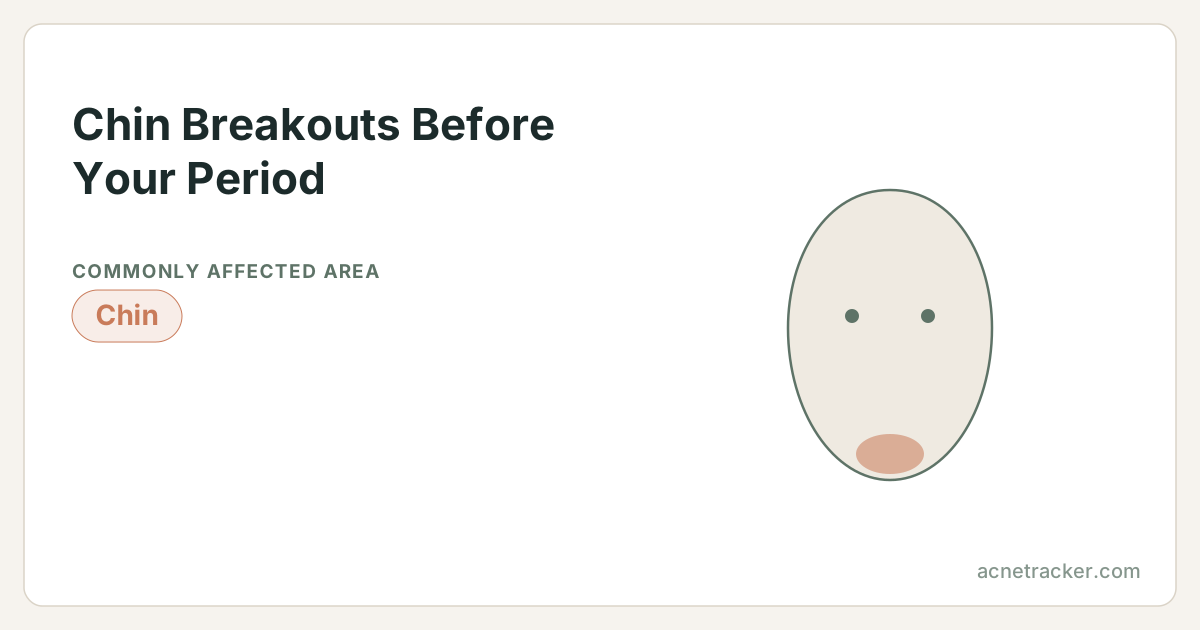
If a sore bump appears low on your chin almost on schedule a few days before your period, you are seeing cyclical hormonal acne. The lower face carries oil glands that are unusually responsive to androgens, and in the second half of the menstrual cycle the balance of hormones shifts in a way that briefly amplifies their effect. The result is a monthly flare that lands in the same spot, often the same one or two follicles, then settles as bleeding begins. Because the trigger is predictable, the most effective approach is to treat ahead of the flare rather than chase each spot after it arrives.
How to recognize it
Cyclical chin acne typically shows as one to a few deep, tender bumps rather than a spread of surface whiteheads, sitting low on the chin and sometimes along the jaw. They feel sore before they are even visible, come up in the luteal week, and often recur in exactly the same place cycle after cycle. The defining feature is the calendar: the timing tracks your period rather than your skincare or diet. If instead you see a constant scatter of small non-tender bumps unrelated to your cycle, that is comedonal congestion, and if bumps are itchy and uniform, consider fungal folliculitis.
What causes it
Luteal-phase hormone shift
In the week before a period, estrogen falls while progesterone and the relative influence of androgens rise. This tips the chin's sensitive oil glands into a brief surge of sebum that plugs follicles and inflames them on cue.
Androgen-sensitive chin glands
The glands of the lower face carry more androgen receptors than the rest of the face, so the same monthly hormone change that leaves the forehead alone produces a reliable bump on the chin.
Pre-period inflammation
The luteal phase is mildly pro-inflammatory for many people, which is why the cyclical bump is often deep and tender rather than a quiet clogged pore, and why it can throb before anything shows.
Stress and sleep overlap
Premenstrual days often bring poorer sleep and higher stress, and the cortisol that comes with them adds to sebum and inflammation, sharpening a flare that hormones have already primed.
Ingredients with evidence
| Ingredient | Role |
|---|---|
| Retinol / retinoids | Used steadily through the month, it keeps follicles clearing so the monthly flare has fewer plugs to inflame. The long-term backbone rather than a spot fix. |
| Salicylic acid (BHA) | Start on the chin a few evenings a week in the days before your period to keep pores clear through the flare window, not only once a bump appears. |
| Niacinamide | Daily use lowers oil and calms the redness of the deep premenstrual bump while supporting the barrier against the actives above. |
| Azelaic acid | Anti-inflammatory and gentle, it settles the tender cyclical spot and fades the dark mark it can leave on the chin afterwards. |
Building the routine
The trick with cyclical acne is timing. Keep a steady base routine all month — gentle cleanser twice a day, niacinamide in the morning, a retinoid a few evenings a week — so your skin is never starting from scratch. Then, in the week before your period, add salicylic acid on the chin on the nights you are not using the retinoid, treating the whole flare zone as prevention rather than waiting for the bump. When a tender spot does surface, resist squeezing it; a warm compress and a dab of azelaic acid calm it faster and without a mark. Moisturize throughout and wear SPF each morning. Tracking your cycle alongside your skin makes the timing easy to get right.
When to see a doctor
Frequently asked questions
Why do I get a spot on my chin before every period?
The oil glands on the chin are especially sensitive to androgens, and in the week before your period the hormone balance briefly amplifies their effect. That produces a predictable, often tender bump in the same spot each cycle.
How can I stop period breakouts on my chin?
You can rarely stop them entirely, but well-timed care shrinks them. Keep a steady retinoid and niacinamide routine all month and add salicylic acid to the chin in the pre-period week, treating the flare zone before the bump appears rather than after.
When exactly do premenstrual chin breakouts appear?
Most often in the luteal phase, roughly the five to seven days before bleeding starts, easing once the period begins. The close link to your cycle dates is the clearest sign the acne is hormonal rather than product-driven.
Does the pill help with cyclical chin acne?
Certain combined contraceptives can reduce hormonally driven acne, but they are a medical decision with benefits and risks to weigh with a doctor, not a skincare step. Discuss whether hormonal treatment suits you rather than starting it for acne alone.
Sources & further reading
What this page cites about the condition itself:
There is no single study of this exact question. The guidance here is reasoned from the ingredient profiles below, each of which carries its own references:
- Retinol2 refs
- Salicylic Acid2 refs
- Niacinamide2 refs
- Azelaic Acid3 refs
Show every reference behind this page (8)
- Improvement of naturally aged skin with vitamin A (retinol) (PubMed)cited by Retinol
- European Commission SCCS opinion on vitamin A in cosmeticscited by Retinol
- Salicylic acid as a peeling agent: a comprehensive review (PubMed)cited by Salicylic Acid
- FDA OTC monograph — acne drug products (salicylic acid 0.5–2%)cited by Salicylic Acid
- Niacinamide: mechanisms of action and its topical use in dermatology (PubMed)cited by Niacinamide
- European Commission CosIng database — Niacinamidecited by Niacinamide, Azelaic Acid
- PubChem — Azelaic acid compound summarycited by Azelaic Acid
- DermNet — Azelaic acidcited by Azelaic Acid
Medical disclaimer
Ingredients mentioned on this page
Find your personal acne triggers
Our free Acne Tracker lets you log breakouts, sleep, stress and diet, and shows you which factors correlate with your flare-ups.