How to Choose a Serum for Large Pores
Pore size is largely set by genetics and cannot be shrunk permanently by any serum, but pores look larger when they are clogged, when oil stretches them, and when the skin around them loses firmness. Those are the factors a serum can influence. The honest goal is refined, less noticeable pores, not closed ones. This guide describes the ingredients that genuinely improve pore appearance — by clearing congestion, regulating oil and supporting skin structure — and the gimmicks that promise to 'erase' pores but only blur them for an hour. Managing expectations here is part of choosing well.
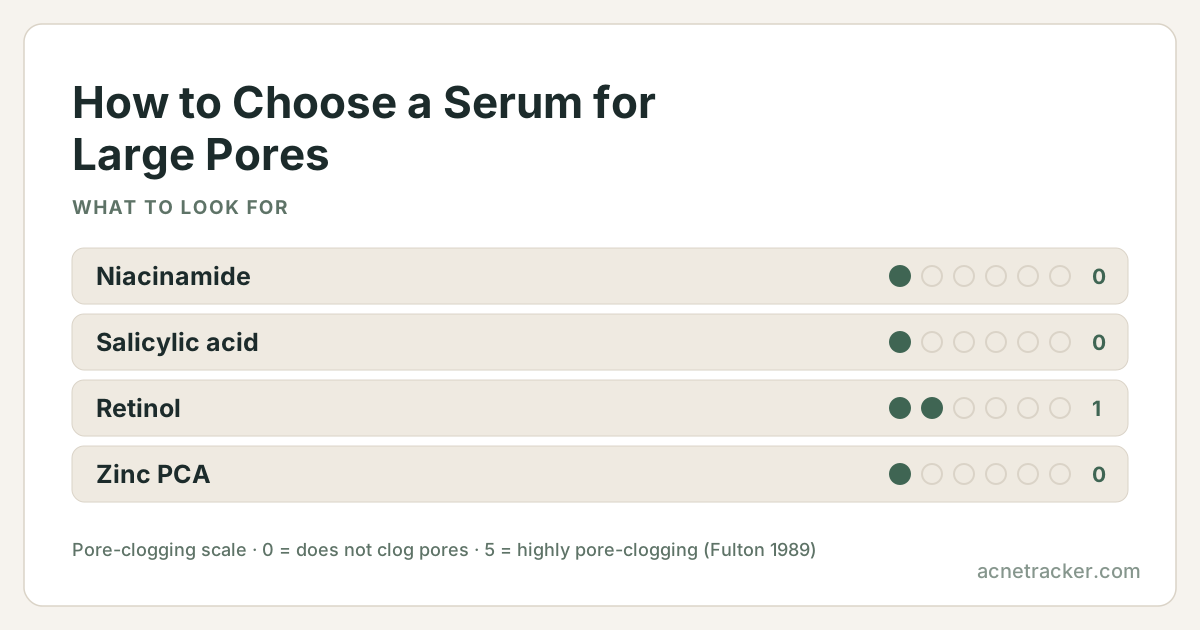
Ingredients to look for
| Ingredient | Why it matters |
|---|---|
| Niacinamide | The best-studied ingredient for pore appearance: it regulates sebum and improves skin structure so pores look tighter over weeks. |
| Salicylic acid | Clears the oil and debris that widen and darken pores, one of the biggest reasons pores look larger than they are. |
| Retinol | Normalises cell turnover and supports collagen, gradually refining pore appearance; introduce slowly and avoid in pregnancy. |
| Zinc PCA | Helps balance oil, reducing the sebum flow that stretches pores and makes them more visible. |
| Azelaic acid | Helps keep pores clear and evens tone around them, softening their overall appearance on congestion-prone skin. |
Ingredients to avoid
| Ingredient | Why it matters |
|---|---|
| Pore-stripping products and harsh clay left to crack | They remove surface debris briefly but irritate and can stimulate more oil, leaving pores no smaller. |
| Heavy comedogenic oils in the formula | They can clog and stretch pores, making them appear larger — the opposite of the goal. |
| Silicone 'pore-blurring' primers sold as treatment | They visually fill pores for a few hours but do nothing to change what the pore actually does. |
| Over-exfoliating in pursuit of tighter pores | Stripping the barrier triggers rebound oil and irritation, which make pores look worse, not better. |
How to choose
Set the expectation first: you are refining appearance, not closing pores, and any product promising to shrink them permanently is overselling. Niacinamide is the evidence-backed starting point and suits nearly everyone. If oil and congestion are why your pores look large, add a salicylic acid serum a few evenings a week to keep them clear. For a longer-term structural approach, a retinol serum improves turnover and firmness, which softens pore appearance over months — introduce it slowly and not during pregnancy. Favour lightweight, water-based textures; rich creams can clog and emphasise pores. Ignore the words 'pore-minimising' and 'pore-perfecting' as claims and read the ingredient list instead. Consistency is the deciding factor, since every mechanism that helps — less oil, clearer pores, firmer skin — works gradually rather than overnight.
How to apply
Apply niacinamide morning or evening to clean skin before moisturiser, and keep salicylic acid or retinol to the evening. Do not stack retinol and strong acids on the same night when starting out, since irritation makes pores look worse. Always use sunscreen in the morning, because sun-related loss of firmness enlarges pore appearance over time. A light, non-comedogenic moisturiser still belongs in the routine — skipping it prompts more oil, which stretches pores further.
Frequently asked questions
Can a serum actually shrink my pores?
Not permanently — pore size is mostly genetic. A serum can make pores look smaller by clearing congestion, reducing oil and firming the surrounding skin, but any claim of permanently shrinking them overstates what is possible.
What is the best ingredient for large pores?
Niacinamide has the most evidence for improving pore appearance and is well tolerated. Salicylic acid helps if congestion is the cause, and retinol offers longer-term refinement. Many people combine niacinamide with one of the other two.
Do pores get bigger with age?
They can look larger as skin loses collagen and firmness, letting pores sag and appear more open. Sun protection and collagen-supporting ingredients like retinol help slow this appearance-related change.
Why do my pores look bigger even after cleansing?
Cleansing removes surface oil but does not change pore size, and over-washing can trigger rebound oil that stretches them again. Consistent use of a regulating serum does more than repeated cleansing.
Sources & further reading
There is no single study of this exact question. The guidance here is reasoned from the ingredient profiles below, each of which carries its own references:
- Niacinamide2 refs
- Salicylic Acid2 refs
- Retinol2 refs
- Zinc PCA3 refs
- Azelaic Acid3 refs
Show every reference behind this page (10)
- Niacinamide: mechanisms of action and its topical use in dermatology (PubMed)cited by Niacinamide
- European Commission CosIng database — Niacinamidecited by Niacinamide, Zinc PCA, Azelaic Acid
- Salicylic acid as a peeling agent: a comprehensive review (PubMed)cited by Salicylic Acid
- FDA OTC monograph — acne drug products (salicylic acid 0.5–2%)cited by Salicylic Acid
- Improvement of naturally aged skin with vitamin A (retinol) (PubMed)cited by Retinol
- European Commission SCCS opinion on vitamin A in cosmeticscited by Retinol
- PubChem — Zinc PCA (zinc pyrrolidone carboxylate)cited by Zinc PCA
- Zinc l-pyrrolidone carboxylate inhibits the UVA-induced production of matrix metalloproteinase-1 by in vitro cultured skin fibroblasts, whereas it enhances their collagen synthesis (PubMed)cited by Zinc PCA
- PubChem — Azelaic acid compound summarycited by Azelaic Acid
- DermNet — Azelaic acidcited by Azelaic Acid
Medical disclaimer
Ingredients mentioned on this page
Find your personal acne triggers
Our free Acne Tracker lets you log breakouts, sleep, stress and diet, and shows you which factors correlate with your flare-ups.