Can You Mix Retinol and Snail Mucin?
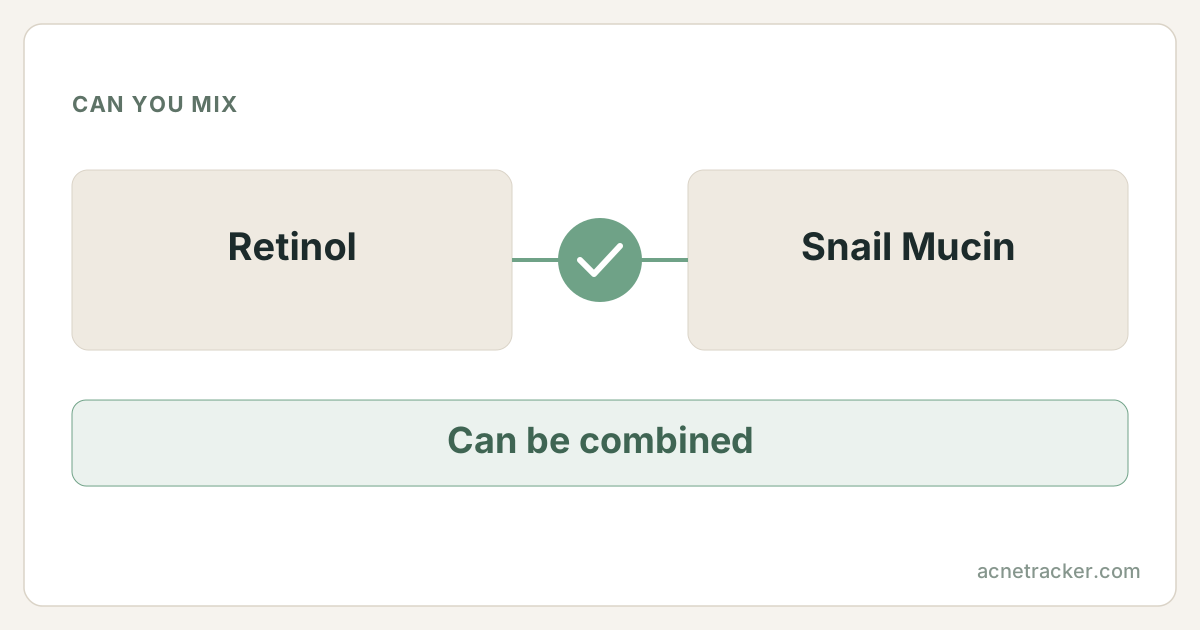
Yes — snail mucin is a soothing, hydrating partner that pairs beautifully with retinol. Snail secretion filtrate is rich in humectants, glycoproteins and calming compounds, so it replenishes moisture and comfort while retinol renews the skin. It does not clash chemically and is often used specifically to buffer retinol's dryness, either layered underneath or in a sandwich around it.
How this pairing resolves
The two ingredients, their published numbers, and where they land together.
The numbers beside each ingredient are its published comedogenic rating and effective pH window, taken from its own profile page.
Show the numbers
| Ingredients | Metric | 0–5 |
|---|---|---|
| Retinol | Comedogenic rating | 1/5 |
| Retinol | Effective pH | 5.0–6.0 |
| Snail Mucin | Comedogenic rating | 0/5 |
| Snail Mucin | Effective pH | no published pH |
Why
Snail secretion filtrate is a complex mixture that includes hyaluronic acid, glycoproteins, glycolic acid in trace amounts, allantoin and antioxidant peptides. In practice it behaves as a hydrating, film-forming and reparative ingredient rather than an active that competes with retinol. Its humectants draw water into the skin and its soothing components, notably allantoin, help calm irritation and support recovery. This matters with retinol because retinol's main downsides are dryness, flaking and a temporarily weakened barrier during the retinization phase; snail mucin directly cushions those effects by adding moisture and a comforting protective layer. There is no meaningful pH conflict or oxidation risk, and the trace glycolic content is far too low to act as an exfoliant against retinol. If anything, the combination tends to make retinol more comfortable and easier to stick with, which is what actually delivers results over time. It is a popular pairing in Korean-style routines precisely because it lets people use an active like retinol while keeping skin calm and hydrated.
How to combine them
Two approaches work well. Layer snail mucin under retinol: cleanse, apply snail mucin essence to slightly damp skin, let it absorb, then apply retinol and seal with moisturizer. Or use it as the buffer in a sandwich: snail mucin first, then retinol, then more snail mucin or a moisturizer on top, which softens retinol's impact for sensitive or beginner skin. Snail mucin is gentle enough for daily use, morning and night, and on retinol-free evenings it keeps skin hydrated and soothed. Start retinol at two or three nights a week and build up, relying on the snail mucin to keep things comfortable. Every morning, finish with broad-spectrum SPF 30 or higher, since retinol increases sun sensitivity even though snail mucin does not.
Example routine
| When | Steps |
|---|---|
| Evening (retinol nights) | Cleanser → Snail mucin → Retinol → Moisturizer |
| Sandwich option | Snail mucin → Retinol → Snail mucin/Moisturizer |
| Recovery + morning | Cleanser → Snail mucin → Moisturizer (+ SPF 30+ in AM) |
Warning signs
Frequently asked questions
Does snail mucin reduce retinol's effectiveness?
No. Snail mucin mainly hydrates and soothes; it does not neutralise retinol. By easing dryness it usually helps you stay consistent, which improves rather than reduces your long-term results.
Should snail mucin go before or after retinol?
Usually before, on slightly damp skin, then retinol and moisturizer. For sensitive skin, sandwiching retinol between layers of snail mucin makes it gentler still.
Can snail mucin help with retinol irritation?
Yes. Its humectants and soothing compounds like allantoin add moisture and calm the skin, which cushions the dryness and flaking of the retinol adjustment period.
Is snail mucin safe to use in pregnancy?
Snail mucin is generally regarded as low-risk, but evidence in pregnancy is limited, so check with your doctor. Retinol and other retinoids are usually avoided in pregnancy, so the retinol should be paused regardless.
Sources & further reading
There is no single study of this exact question. The guidance here is reasoned from the ingredient profiles below, each of which carries its own references:
- Retinol2 refs
- Snail Mucin2 refs
Show every reference behind this page (4)
- Improvement of naturally aged skin with vitamin A (retinol) (PubMed)cited by Retinol
- European Commission SCCS opinion on vitamin A in cosmeticscited by Retinol
- European Commission CosIng — Snail Secretion Filtratecited by Snail Mucin
- DermNet — Moisturisers and skin barriercited by Snail Mucin
Medical disclaimer
Ingredients mentioned on this page
Find your personal acne triggers
Our free Acne Tracker lets you log breakouts, sleep, stress and diet, and shows you which factors correlate with your flare-ups.