Retinyl Retinoate: Comedogenic Rating & Ingredient Analysis
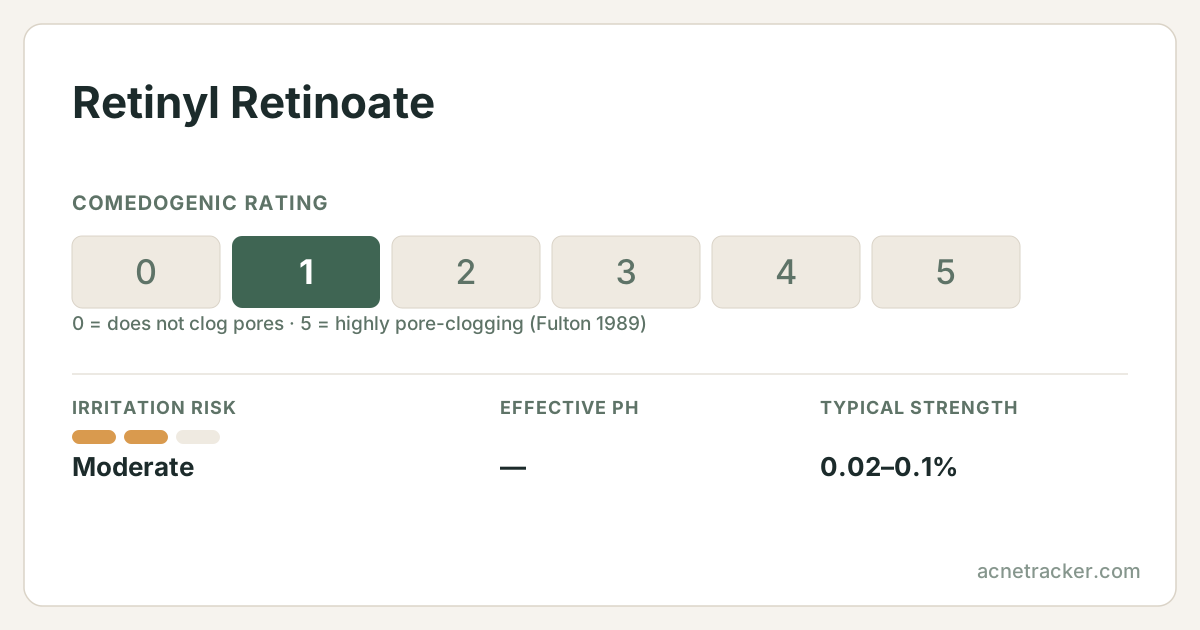
Retinyl retinoate is a hybrid retinoid developed as an attempt to improve on plain retinol. Chemically it links a molecule of retinol to one of retinoic acid, the active form of vitamin A, creating an ester that is more stable in the bottle and, according to its developers, more efficient in the skin than retinol alone. It was researched primarily in Korea and marketed as a more powerful yet reasonably tolerable option for anti-aging and skin renewal. Like other next-generation retinoids, it aims to offer the well-established benefits of vitamin A — smoother texture, firmer skin, fewer breakouts — while reducing some of the instability and irritation of older forms.
Quick facts
- Comedogenic rating
- our estimate — not measured
- Irritation risk
- Moderate
- Effective pH
- —
- Typical strength
- 0.02–0.1%
- Pregnancy
- Avoid
- Suits skin types
- normalcombinationmatureoilyacne-prone
Where this number comes from
No one has published a comedogenic rating for this ingredient. Fulton's 1989 table tested about 250 raw materials and this was not among them, and we found no later study measuring it. The figure shown is our own reasoning from the ingredient's chemistry and how it is used — treat it as an estimate, not a measurement.
Fulton read his own scale as 0-1 not significant, 2-3 borderline, 4-5 positive. The assay is the rabbit ear at 10% dilution, which the paper itself calls extremely sensitive and not fully predictive of human skin. Ratings describe the raw ingredient; concentration and formulation change real-world behaviour.
Caution profile
The four published fields on this page, on one 0–5 scale. Further from the centre means more care is needed — never that the ingredient is worse.
Derived, not measured: pore-clogging is the published comedogenic rating; irritation maps low/moderate/high to 1/3/5; pregnancy maps safe/caution/avoid to 0/3/5; skin-type limits is how many of the seven skin types this entry does NOT list. Every input is printed in words in the quick-facts card above.
Show the numbers
| Metric | 0–5 | Published field |
|---|---|---|
| Pore-clogging | 1 | 1/5 |
| Irritation | 3 | Moderate |
| Skin-type limits | 1.4 | 5/7 |
| Pregnancy | 5 | Avoid |
Working pH and typical strength
Where this ingredient is formulated to sit, and at what concentration.
Both bars come from the fields above: the pH window and the typical strength range published for this ingredient. The tinted column is healthy skin's surface pH (about 4.7–5.75).
Show the numbers
| Metric | 0–5 |
|---|---|
| Typical strength | 0.02–0.1% |
What is it?
Retinyl retinoate belongs to the retinoid family alongside retinol, retinal, hydroxypinacolone retinoate and prescription tretinoin. Its design combines the stability of an ester with a structure that can release retinoic-acid-like activity in the skin, and small published studies from its developers suggest it may outperform an equal amount of retinol on measures like wrinkle depth and photoaging. That said, the body of independent, long-term evidence is far smaller than the decades of data behind retinol and tretinoin, so its advantages should be read with some caution. It is used at very low concentrations, typically well under 0.1%, reflecting its intended potency.
Benefits
More stable than retinol
The ester structure resists breakdown better than plain retinol, so retinyl retinoate stays active longer in a well-packaged product, addressing one of retinol's biggest weaknesses.
Targets fine lines and firmness
As a retinoid, it supports collagen production and skin renewal, and its developers' studies suggest it can reduce the depth of wrinkles and improve firmness over consistent use.
Smooths and renews texture
Retinoid-driven cell turnover encourages fresher, more organised skin, which over weeks can smooth rough texture and improve overall radiance and evenness.
Supports clearer skin
By normalising how skin cells shed inside the pore, retinoids like retinyl retinoate can help reduce clogged pores and support a clearer complexion.
How to use
Use retinyl retinoate at night on clean, dry skin, since retinoids degrade in light. Begin two or three nights a week and increase gradually as your skin adapts, following with moisturiser to limit dryness. Broad-spectrum sunscreen every morning is essential, as retinoids raise sun sensitivity. Do not combine it in the same routine with strong exfoliating acids or benzoyl peroxide, which stack irritation; alternate nights instead. Because it is potent at very low percentages, more is not better — stick to the product's recommended use. Allow eight to twelve weeks of consistent application before evaluating results.
Side effects
As a retinoid, retinyl retinoate can cause the familiar retinisation effects: dryness, flaking, redness and stinging, particularly in the first few weeks. A temporary purge of small breakouts is possible. Overuse can damage the barrier, which paradoxically worsens skin. Because it increases photosensitivity, unprotected sun exposure while using it is counterproductive. If irritation becomes severe, cut back the frequency and let the skin recover before resuming.
Who should avoid it
Avoid retinyl retinoate during pregnancy and breastfeeding, as all retinoids are precautionarily excluded during this period; niacinamide and azelaic acid are the standard alternatives. Those with a compromised barrier, active eczema or rosacea should repair the skin first. If you use a prescription retinoid, do not add a cosmetic one without dermatologist guidance.
Pairs well with
Avoid combining with
Frequently asked questions
Is retinyl retinoate better than retinol?
Studies from its developers suggest it is more stable and potent than retinol, but independent long-term evidence is limited. Retinol remains the more thoroughly proven ingredient.
What strength of retinyl retinoate is used?
It is used at very low concentrations, typically under 0.1%, because it is intended to be more potent than retinol at equivalent amounts. Follow the product's directions rather than chasing higher percentages.
Can beginners use retinyl retinoate?
Yes, if introduced slowly, but any retinoid can irritate at first. Start a few nights a week, moisturise, and always use daily sunscreen while your skin adjusts.
Can I mix it with exfoliating acids?
Not in the same routine when starting out, as combining retinoids and strong acids multiplies irritation. Alternate nights, or separate them once your skin is fully adjusted.
Is retinyl retinoate safe in pregnancy?
No. Like all retinoids, retinyl retinoate is avoided during pregnancy and breastfeeding. Pregnancy-safe alternatives for skin renewal include azelaic acid and niacinamide.
Sources & further reading
Medical disclaimer
Find your personal acne triggers
Our free Acne Tracker lets you log breakouts, sleep, stress and diet, and shows you which factors correlate with your flare-ups.