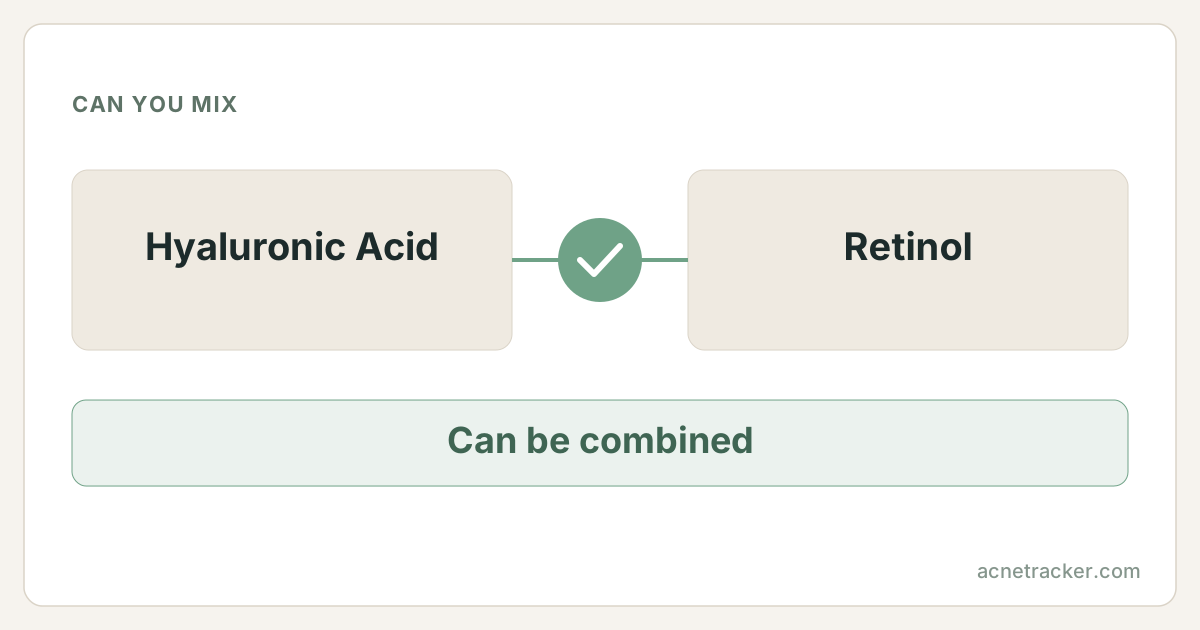
Can You Mix Hyaluronic Acid and Retinol?
Yes — hyaluronic acid is one of the best possible partners for retinol. Despite the word acid, it is a pure hydrating ingredient that does not exfoliate or clash with anything. It draws water into the skin and directly cushions the dryness, tightness and flaking that retinol tends to cause, so pairing them makes retinol far more comfortable to use without reducing its benefits.
How this pairing resolves
The two ingredients, their published numbers, and where they land together.
The numbers beside each ingredient are its published comedogenic rating and effective pH window, taken from its own profile page.
Show the numbers
| Ingredients | Metric | 0–5 |
|---|---|---|
| Hyaluronic Acid | Comedogenic rating | 0/5 |
| Hyaluronic Acid | Effective pH | no published pH |
| Retinol | Comedogenic rating | 1/5 |
| Retinol | Effective pH | 5.0–6.0 |
Why
Hyaluronic acid is a humectant, a large sugar molecule that holds many times its weight in water and binds moisture into the upper layers of skin. It has no exfoliating action, no acidic working pH to defend, and no chemistry that competes with retinol, which is why there is genuinely zero conflict here. Retinol's main downside is that it temporarily weakens the barrier and increases water loss, producing the dryness and flaking of retinization. Hyaluronic acid addresses exactly that side effect by replenishing surface hydration, keeping the skin plump and reducing the visible flaking, which in turn helps people stay consistent with their retinol long enough to see results. Applying hyaluronic acid onto slightly damp skin, then sealing with moisturizer, traps that water in. It is worth remembering that hyaluronic acid hydrates but does not itself lock moisture in, so it always needs an occlusive moisturizer over the top — especially alongside retinol, which needs that barrier support.
How to combine them
There are two great methods. The simple layering approach: cleanse, apply hyaluronic acid to slightly damp skin, then retinol, then a moisturizer to seal everything in. The gentler retinol sandwich, ideal for beginners or sensitive skin: apply hyaluronic acid and moisturizer first, then retinol, then a little more moisturizer, so the retinol sits between two hydrating layers and releases more slowly. Either way, hyaluronic acid can be used every day and both morning and night, while retinol starts at two or three nights a week. In the morning, hyaluronic acid layers happily under sunscreen. Always finish daytime with broad-spectrum SPF 30 or higher, because retinol raises sun sensitivity even though hyaluronic acid does not.
Example routine
| When | Steps |
|---|---|
| Evening (retinol nights) | Cleanser → Hyaluronic acid (damp skin) → Retinol → Moisturizer |
| Sandwich option | Hyaluronic acid + Moisturizer → Retinol → Moisturizer |
| Every morning | Cleanser → Hyaluronic acid → Moisturizer → SPF 30+ |
Warning signs
Frequently asked questions
Does hyaluronic acid make retinol less effective?
No. Hyaluronic acid only hydrates; it does not neutralise retinol or block its action. It improves comfort and consistency by reducing dryness, which usually helps you get more from your retinol.
Should I apply hyaluronic acid before or after retinol?
Usually before, onto slightly damp skin, then retinol, then moisturizer. For sensitive skin, the sandwich method — hydration and moisturizer, retinol, more moisturizer — is even gentler.
Can hyaluronic acid fix retinol flaking?
It helps a lot by replenishing surface moisture and keeping skin plump, but it works best when sealed under a moisturizer. Pair it with an occlusive cream to genuinely reduce peeling.
Is hyaluronic acid safe to keep using in pregnancy?
Yes, hyaluronic acid is widely considered safe during pregnancy. Retinol, however, is generally avoided, so if you are pregnant you can keep the hydration and drop the retinol after checking with your doctor.
Sources & further reading
There is no single study of this exact question. The guidance here is reasoned from the ingredient profiles below, each of which carries its own references:
- Hyaluronic Acid3 refs
- Retinol2 refs
Show every reference behind this page (5)
- PubChem — Hyaluronic acid compound summarycited by Hyaluronic Acid
- European Commission CosIng database — Hyaluronic Acidcited by Hyaluronic Acid
- DermNet — Moisturisers and humectantscited by Hyaluronic Acid
- Improvement of naturally aged skin with vitamin A (retinol) (PubMed)cited by Retinol
- European Commission SCCS opinion on vitamin A in cosmeticscited by Retinol
Medical disclaimer
Ingredients mentioned on this page
Find your personal acne triggers
Our free Acne Tracker lets you log breakouts, sleep, stress and diet, and shows you which factors correlate with your flare-ups.