Can You Mix Copper Peptides and Niacinamide?
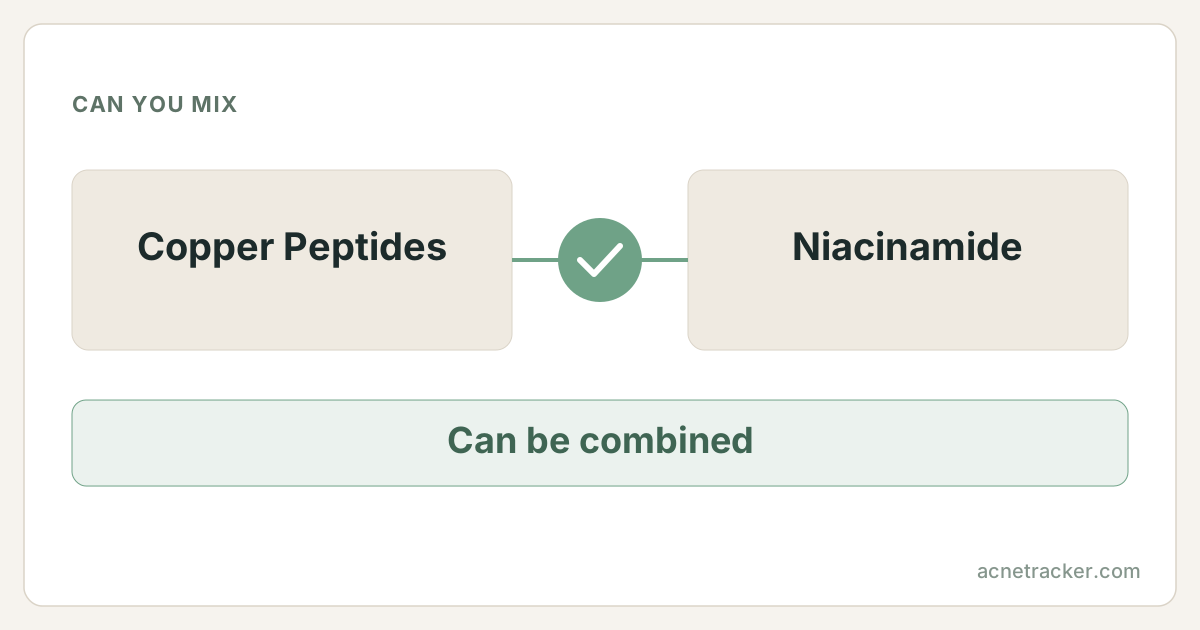
Generally yes, though this pair gets more debate than most. The popular worry is that niacinamide binds copper and deactivates copper peptides. The theoretical concern is real but usually overstated for finished products; the simplest way to sidestep it entirely is to use them at different times — copper peptides in one routine, niacinamide in the other. If you want both together, separate them by a few minutes.
How this pairing resolves
The two ingredients, their published numbers, and where they land together.
The numbers beside each ingredient are its published comedogenic rating and effective pH window, taken from its own profile page.
Show the numbers
| Ingredients | Metric | 0–5 |
|---|---|---|
| Copper Peptides | Comedogenic rating | 0/5 |
| Copper Peptides | Effective pH | no published pH |
| Niacinamide | Comedogenic rating | 0/5 |
| Niacinamide | Effective pH | 5.0–7.0 |
Why
Copper peptides are small chains of amino acids bound to a copper ion, best known as GHK-Cu, used to support wound healing signals, collagen and skin firmness. The concern with niacinamide comes from chemistry: niacinamide can act as a chelator, meaning it can bind metal ions like copper. In theory, if niacinamide grabbed the copper, it could pull it away from the peptide and blunt its activity. That is the honest basis of the do-they-deactivate-each-other question. In practice, the effect is far weaker than the internet suggests: the binding is not especially strong, finished formulas are buffered and stabilised, and brief sequential contact on skin is very different from mixing raw ingredients in a beaker. Both ingredients are also non-exfoliating and gentle, so there is no pH clash or irritation issue. The pragmatic takeaway is that heavy simultaneous layering is theoretically not ideal, but time-separating them removes any doubt while keeping the benefits of both.
How to combine them
The cleanest approach is to separate them: copper peptides in the morning and niacinamide at night, or on alternating routines. This sidesteps the chelation question completely and lets each ingredient work unimpeded. If you prefer to use both in the same session, apply one, wait several minutes for it to absorb fully, then apply the other — copper peptides first is a common choice — and seal with moisturizer. Avoid literally mixing them in your palm, which is where any deactivation would be most likely. Both are gentle and can be used daily with no adjustment period. In the morning, finish with sunscreen. If in doubt, the time-separation method gives you both benefits with none of the theoretical downside.
Example routine
| When | Steps |
|---|---|
| Morning | Cleanser → Copper peptides → Moisturizer → SPF 30+ |
| Evening | Cleanser → Niacinamide → Moisturizer |
| Same-session option | Copper peptides → wait several min → Niacinamide → Moisturizer |
Warning signs
Frequently asked questions
Do niacinamide and copper peptides really deactivate each other?
The concern is theoretical: niacinamide can bind copper, so in principle it could reduce copper peptide activity. In practice the effect is weak in finished products, and time-separating them removes any doubt.
How can I use both without any risk?
Use them at different times — copper peptides in the morning, niacinamide at night, or on alternating routines. This completely avoids the chelation question while keeping the benefits of each.
Can I layer them in the same routine?
Yes, if you avoid mixing them together. Apply one, wait several minutes for full absorption, then the other. Do not combine them in your palm, where deactivation would be most likely.
What are copper peptides used for?
Copper peptides such as GHK-Cu support skin-repair signalling, collagen and firmness. They are valued in anti-ageing routines, which is why people want to combine them with niacinamide.
Are copper peptides and niacinamide irritating together?
No. Both are gentle, non-exfoliating and work at skin-friendly pH, so there is no irritation clash. The only debate is the theoretical chelation point, easily solved by separating them.
Sources & further reading
There is no single study of this exact question. The guidance here is reasoned from the ingredient profiles below, each of which carries its own references:
- Copper Peptides2 refs
- Niacinamide2 refs
Show every reference behind this page (3)
- European Commission CosIng database — Copper Tripeptide-1cited by Copper Peptides, Niacinamide
- PubMed — The human tri-peptide GHK and tissue remodeling (J Biomater Sci Polym Ed, 2008)cited by Copper Peptides
- Niacinamide: mechanisms of action and its topical use in dermatology (PubMed)cited by Niacinamide
Medical disclaimer
Ingredients mentioned on this page
Find your personal acne triggers
Our free Acne Tracker lets you log breakouts, sleep, stress and diet, and shows you which factors correlate with your flare-ups.