Can You Mix Alpha Arbutin and Niacinamide?
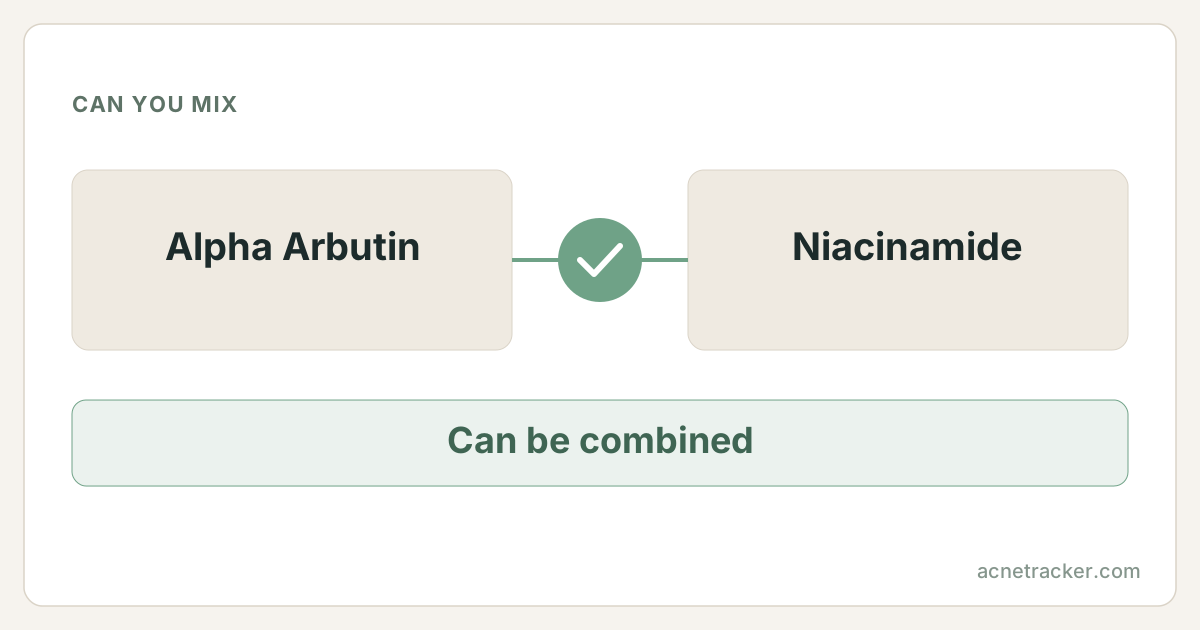
Yes — this is an excellent brightening pairing. Niacinamide and alpha arbutin both target hyperpigmentation but through different steps of the pigment process, so together they fade dark spots, melasma and post-acne marks more completely than either alone. They are gentle, pH-compatible and non-exfoliating, so you can layer them daily. Apply alpha arbutin then niacinamide, morning and night.
How this pairing resolves
The two ingredients, their published numbers, and where they land together.
The numbers beside each ingredient are its published comedogenic rating and effective pH window, taken from its own profile page.
Show the numbers
| Ingredients | Metric | 0–5 |
|---|---|---|
| Alpha Arbutin | Comedogenic rating | 0/5 |
| Alpha Arbutin | Effective pH | 4.0–6.0 |
| Niacinamide | Comedogenic rating | 0/5 |
| Niacinamide | Effective pH | 5.0–7.0 |
Why
These two attack unwanted pigment at complementary points. Alpha arbutin is a stable derivative of hydroquinone that directly inhibits tyrosinase, the key enzyme that produces melanin, slowing new pigment formation at the source. Niacinamide works further downstream: it does not block the enzyme but interrupts the transfer of finished melanosomes from pigment cells to the surface keratinocytes, so less of the pigment that is made actually reaches the visible surface. Blocking production and blocking transfer at the same time gives a broader, more effective fade than a single mechanism. Both ingredients are gentle and work at skin-friendly, mildly acidic to neutral pH, so there is no destabilisation, no pH conflict and no additive irritation to manage. Niacinamide also strengthens the barrier and calms inflammation, which helps because post-inflammatory pigmentation is driven partly by irritation. This is a reliable, low-risk combination that suits sensitive skin far better than harsher lightening routines.
How to combine them
Layer thin to thick: on clean skin apply alpha arbutin first, as it is usually the lighter, more targeted serum, then niacinamide, then moisturizer. Both can be used morning and evening every day, with no adjustment period. Because you are treating pigment, the single most important step is broad-spectrum SPF 30 or higher every morning and reapplication through the day — without it, UV keeps stimulating the melanin you are trying to fade, and results stall. Consistency over 8 to 12 weeks matters more than concentration. If you also use exfoliating acids or vitamin C, you can add them into the routine on their own schedule; alpha arbutin and niacinamide themselves need no special timing.
Example routine
| When | Steps |
|---|---|
| Morning | Cleanser → Alpha arbutin → Niacinamide → Moisturizer → SPF 30+ |
| Evening | Cleanser → Alpha arbutin → Niacinamide → Moisturizer |
| Non-negotiable | Daily SPF 30+ and reapplication, or the fading stalls |
Warning signs
Frequently asked questions
How do niacinamide and alpha arbutin fade pigment differently?
Alpha arbutin blocks tyrosinase, the enzyme that makes melanin, while niacinamide stops finished pigment transferring to surface skin cells. Targeting both steps gives a more complete fade than either alone.
Do I apply alpha arbutin or niacinamide first?
Apply alpha arbutin first, as the lighter targeted serum, then niacinamide, then moisturizer. Order is mainly about texture here, since neither needs a special pH to work.
Can I use alpha arbutin and niacinamide every day?
Yes. Both are gentle and non-exfoliating, so daily morning and evening use is ideal for steadily fading dark spots. Consistency over several weeks is what delivers results.
Why are my dark spots not fading?
The usual cause is insufficient sun protection. UV re-stimulates melanin faster than these ingredients fade it, so daily broad-spectrum SPF and reapplication are essential for any progress.
Is alpha arbutin with niacinamide safe for sensitive skin?
Yes. Both work at gentle pH and do not exfoliate, and niacinamide even calms inflammation, so this is one of the milder ways to treat hyperpigmentation on reactive skin.
Sources & further reading
There is no single study of this exact question. The guidance here is reasoned from the ingredient profiles below, each of which carries its own references:
- Alpha-Arbutin3 refs
- Niacinamide2 refs
Show every reference behind this page (4)
- European Commission CosIng database — Alpha-Arbutincited by Alpha-Arbutin, Niacinamide
- PubChem — Arbutincited by Alpha-Arbutin
- A comprehensive review of the therapeutic potential of α-arbutin (PubMed)cited by Alpha-Arbutin
- Niacinamide: mechanisms of action and its topical use in dermatology (PubMed)cited by Niacinamide
Medical disclaimer
Ingredients mentioned on this page
Find your personal acne triggers
Our free Acne Tracker lets you log breakouts, sleep, stress and diet, and shows you which factors correlate with your flare-ups.