Can You Mix Azelaic Acid and Niacinamide?
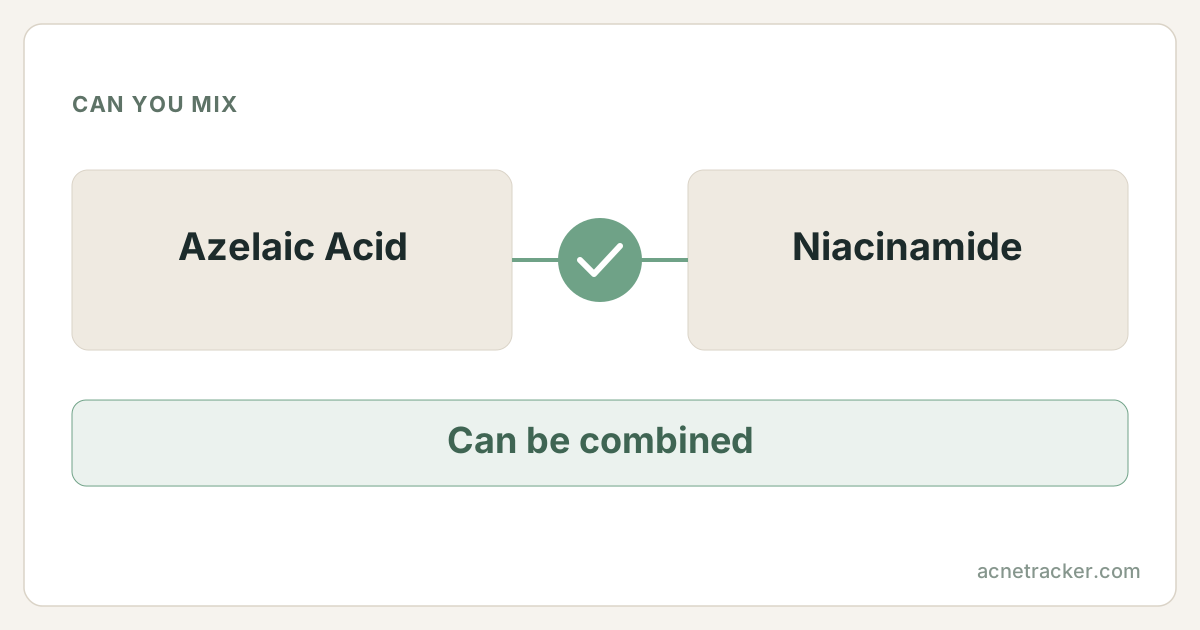
Yes. Niacinamide and azelaic acid are a genuinely complementary, low-drama pairing well suited to acne, rosacea-prone redness and post-acne dark marks. Despite its name, azelaic acid is not an exfoliating AHA or BHA and does not need a low pH to work, so it layers comfortably with niacinamide. Apply azelaic acid then niacinamide, or use them in separate routines.
How this pairing resolves
The two ingredients, their published numbers, and where they land together.
The numbers beside each ingredient are its published comedogenic rating and effective pH window, taken from its own profile page.
Show the numbers
| Ingredients | Metric | 0–5 |
|---|---|---|
| Azelaic Acid | Comedogenic rating | 0/5 |
| Azelaic Acid | Effective pH | 4.0–5.0 |
| Niacinamide | Comedogenic rating | 0/5 |
| Niacinamide | Effective pH | 5.0–7.0 |
Why
Azelaic acid is a dicarboxylic acid that behaves nothing like the exfoliating acids people worry about. It works at a mild, skin-friendly pH, gently normalises keratinisation inside the pore, has antibacterial action against acne-causing bacteria, and inhibits tyrosinase to fade hyperpigmentation. It is also anti-inflammatory, which makes it a favourite for redness and rosacea. Niacinamide overlaps on almost every one of those goals from a different direction: it calms inflammation, regulates sebum, strengthens the barrier and interrupts pigment transfer to surface cells. Because their pH ranges are compatible — both sit comfortably in mildly acidic to neutral territory — there is no destabilisation and no pH tug of war. The result is additive rather than conflicting: two anti-inflammatory, brightening, barrier-friendly actives that target breakouts and uneven tone through parallel mechanisms. For sensitive or reactive skin this is one of the gentlest effective combinations you can build.
How to combine them
Layering is straightforward. On clean, dry skin apply the thinner texture first — usually niacinamide serum — then azelaic acid, which often comes as a thicker cream or gel, and finish with moisturizer. If your azelaic acid is a lightweight serum, apply it first and niacinamide after; order is not critical here because neither depends on a special pH. Both can be used once or twice daily, morning and evening, though many people prefer azelaic acid at night and niacinamide in the morning. There is no adjustment period needed for niacinamide; azelaic acid can cause mild initial tingling, so start once daily and build up. Use broad-spectrum SPF 30 or higher every morning, especially since you are treating pigmentation.
Example routine
| When | Steps |
|---|---|
| Morning | Cleanser → Niacinamide → Moisturizer → SPF 30+ |
| Evening | Cleanser → Azelaic acid → Moisturizer |
| One-routine option | Cleanser → Niacinamide → Azelaic acid → Moisturizer |
Warning signs
Frequently asked questions
Does azelaic acid need a low pH like other acids?
No. Despite the name, azelaic acid is not an exfoliating AHA or BHA and works at a mild, skin-friendly pH. That is exactly why it layers so easily with niacinamide.
What order should I apply azelaic acid and niacinamide in?
Apply the thinner product first — usually the niacinamide serum — then the thicker azelaic acid cream, then moisturizer. If your azelaic acid is a light serum, order matters little.
Is this pairing good for rosacea-prone redness?
Yes. Both azelaic acid and niacinamide are anti-inflammatory and are often recommended for redness. Together they are one of the calmer options for reactive, flush-prone skin.
Can I use azelaic acid and niacinamide twice a day?
Generally yes, once the skin is used to azelaic acid. Many people split them — niacinamide in the morning, azelaic acid at night — but using both morning and evening is fine if tolerated.
Will they fade post-acne dark marks?
They can help. Azelaic acid inhibits the pigment enzyme tyrosinase and niacinamide slows pigment transfer, so together they target post-inflammatory marks. Daily sunscreen is essential for results.
Sources & further reading
There is no single study of this exact question. The guidance here is reasoned from the ingredient profiles below, each of which carries its own references:
- Azelaic Acid3 refs
- Niacinamide2 refs
Show every reference behind this page (4)
- PubChem — Azelaic acid compound summarycited by Azelaic Acid
- DermNet — Azelaic acidcited by Azelaic Acid
- European Commission CosIng database — Azelaic Acidcited by Azelaic Acid, Niacinamide
- Niacinamide: mechanisms of action and its topical use in dermatology (PubMed)cited by Niacinamide
Medical disclaimer
Ingredients mentioned on this page
Find your personal acne triggers
Our free Acne Tracker lets you log breakouts, sleep, stress and diet, and shows you which factors correlate with your flare-ups.