Linoleic Acid: Comedogenic Rating & Ingredient Analysis
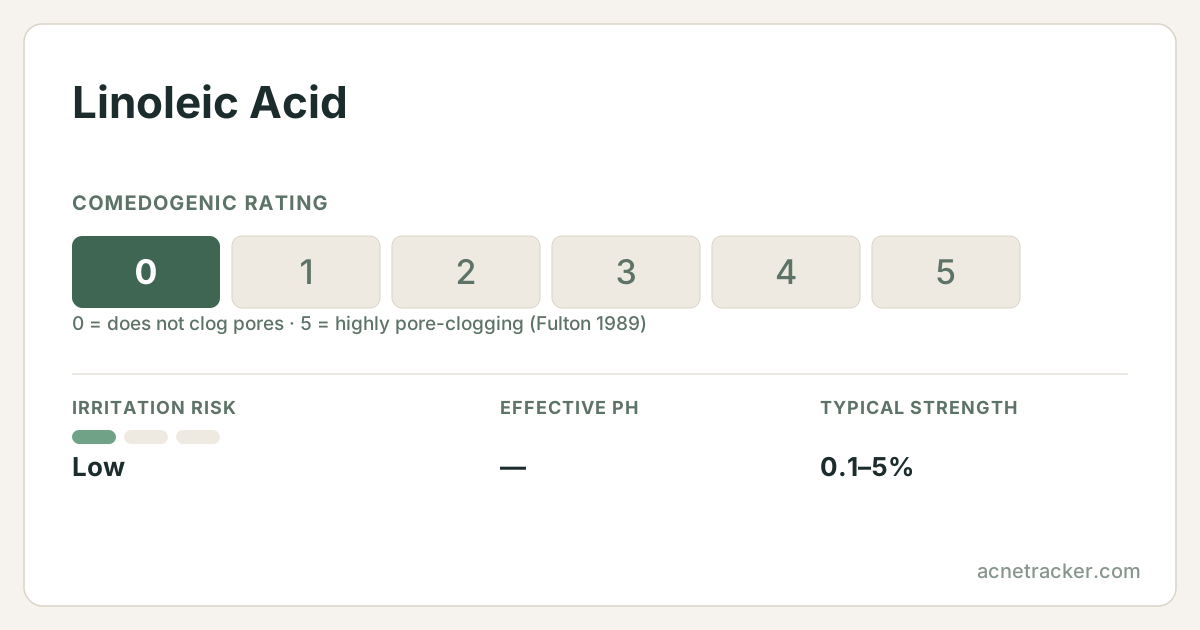
Linoleic acid is the fatty acid that acne-prone skin is most often short of. It is an essential omega-6 that the body cannot make on its own, and research on people with acne has repeatedly found that the sebum in clogged, breakout-prone skin tends to be low in linoleic acid and comparatively high in oleic acid. Because it is a normal building block of the skin barrier rather than an exfoliant or a drug, linoleic acid is gentle enough for daily use and appears both as a purified ingredient and as the dominant fatty acid in lightweight plant oils such as rosehip, hemp seed, safflower and grapeseed. For many people with congested skin it is the missing lipid that lets richer routines finally stop triggering bumps.
Quick facts
- Comedogenic rating
- our estimate — not measured
- Irritation risk
- Low
- Effective pH
- —
- Typical strength
- 0.1–5%
- Pregnancy
- Considered safe
- Suits skin types
- oilyacne-pronecombinationdrysensitive
Where this number comes from
No one has published a comedogenic rating for this ingredient. Fulton's 1989 table tested about 250 raw materials and this was not among them, and we found no later study measuring it. The figure shown is our own reasoning from the ingredient's chemistry and how it is used — treat it as an estimate, not a measurement.
Fulton read his own scale as 0-1 not significant, 2-3 borderline, 4-5 positive. The assay is the rabbit ear at 10% dilution, which the paper itself calls extremely sensitive and not fully predictive of human skin. Ratings describe the raw ingredient; concentration and formulation change real-world behaviour.
Caution profile
The four published fields on this page, on one 0–5 scale. Further from the centre means more care is needed — never that the ingredient is worse.
Derived, not measured: pore-clogging is the published comedogenic rating; irritation maps low/moderate/high to 1/3/5; pregnancy maps safe/caution/avoid to 0/3/5; skin-type limits is how many of the seven skin types this entry does NOT list. Every input is printed in words in the quick-facts card above.
Show the numbers
| Metric | 0–5 | Published field |
|---|---|---|
| Pore-clogging | 0 | 0/5 |
| Irritation | 1 | Low |
| Skin-type limits | 1.4 | 5/7 |
| Pregnancy | 0 | Considered safe |
Working pH and typical strength
Where this ingredient is formulated to sit, and at what concentration.
Both bars come from the fields above: the pH window and the typical strength range published for this ingredient. The tinted column is healthy skin's surface pH (about 4.7–5.75).
Show the numbers
| Metric | 0–5 |
|---|---|
| Typical strength | 0.1–5% |
What is it?
Chemically, linoleic acid is a polyunsaturated omega-6 fatty acid with eighteen carbons and two double bonds. In the skin it is incorporated into ceramide 1 (a key barrier lipid) and into the sebum that coats the follicle. When skin is deficient, the sebum becomes thicker and stickier, which is one plausible reason congestion and comedones form more easily. Applied topically, linoleic acid restocks these lipids, helping to normalise the lining of the pore and reduce trans-epidermal water loss. It is lightweight and non-greasy, sinks in quickly, and does not sit on the surface the way heavier, oleic-rich oils do. Note that linoleic acid oxidises when exposed to air and light, so products and oils that contain it should be reasonably fresh and well packaged.
Benefits
Suits acne-prone skin
People with acne often have sebum low in linoleic acid; topping it up with a linoleic-rich oil or serum can make skin feel less congested without the pore-clogging risk of heavier fatty acids.
Repairs the skin barrier
As a component of ceramide 1, linoleic acid helps rebuild the lipid mortar between skin cells, reducing dryness, flaking and the tightness that stronger acne actives can cause.
Calms inflammation
Linoleic acid and its metabolites have documented anti-inflammatory activity, which helps settle the redness that surrounds active blemishes and reactive, over-treated skin.
Softens without heaviness
It is an effective emollient that leaves skin smooth and supple, yet its light texture makes it comfortable for oily and combination skin that dislikes rich creams.
How to use
The simplest route is a linoleic-rich facial oil (rosehip, hemp seed, safflower, grapeseed) used as the last step at night, or a serum listing linoleic acid or these oils near the top. A few drops pressed onto slightly damp skin after your water-based serums is plenty. Because it can pair with almost anything, it layers happily over niacinamide and under a moisturiser, and it makes a good buffer on retinoid nights. Choose fresh, dark-glass packaging and store away from heat, since oxidised linoleic acid loses its benefits and can itself become irritating. Patch test any new oil for a few nights before applying all over.
Side effects
Pure linoleic acid and linoleic-rich oils are very well tolerated and rarely sting. The main issue is oxidation: old or poorly stored oils develop a rancid smell and can then irritate or, some evidence suggests, contribute to congestion, so replace anything past its prime. As with any oil, a small number of people find even light oils too occlusive; if you notice new bumps after several weeks, cut back.
Who should avoid it
There is no group that strictly must avoid linoleic acid. Those with very oily skin who dislike any oil texture may prefer to get it from a serum rather than a facial oil. If you have a known allergy to a specific seed oil, choose a different linoleic source or a purified ingredient instead.
Pairs well with
Frequently asked questions
Is linoleic acid good for acne-prone skin?
Yes. Studies show acne-prone sebum is often low in linoleic acid, and replenishing it with linoleic-rich oils or serums can reduce the feeling of congestion. It has a comedogenic rating of 0, unlike oleic acid.
What is the difference between linoleic and oleic acid?
Linoleic acid is light and generally non-comedogenic, and acne-prone skin tends to be low in it. Oleic acid is heavier, more occlusive and rated comedogenic 2, so oleic-rich oils suit dry skin more than breakout-prone skin.
Which oils are high in linoleic acid?
Rosehip, hemp seed, safflower, grapeseed, sunflower and evening primrose oils are all high in linoleic acid, which is why they are often recommended for oily and acne-prone skin.
Can I use linoleic acid every day?
Yes. It is a normal barrier lipid rather than an active drug, so daily use is fine. Just keep the product fresh, since linoleic acid oxidises over time and old oil is less effective.
Does linoleic acid clog pores?
No. Linoleic acid itself is non-comedogenic and may even help unclog congested skin. Pore-clogging complaints from facial oils usually trace back to oleic-rich formulas or to oil that has oxidised.
Where this ingredient shows up here
Counted across this database, not the web — these are the pages on this site that reason about this ingredient.
Buying guides 1
Sources & further reading
Medical disclaimer
Find your personal acne triggers
Our free Acne Tracker lets you log breakouts, sleep, stress and diet, and shows you which factors correlate with your flare-ups.