Azeloyl Glycine: Comedogenic Rating & Ingredient Analysis
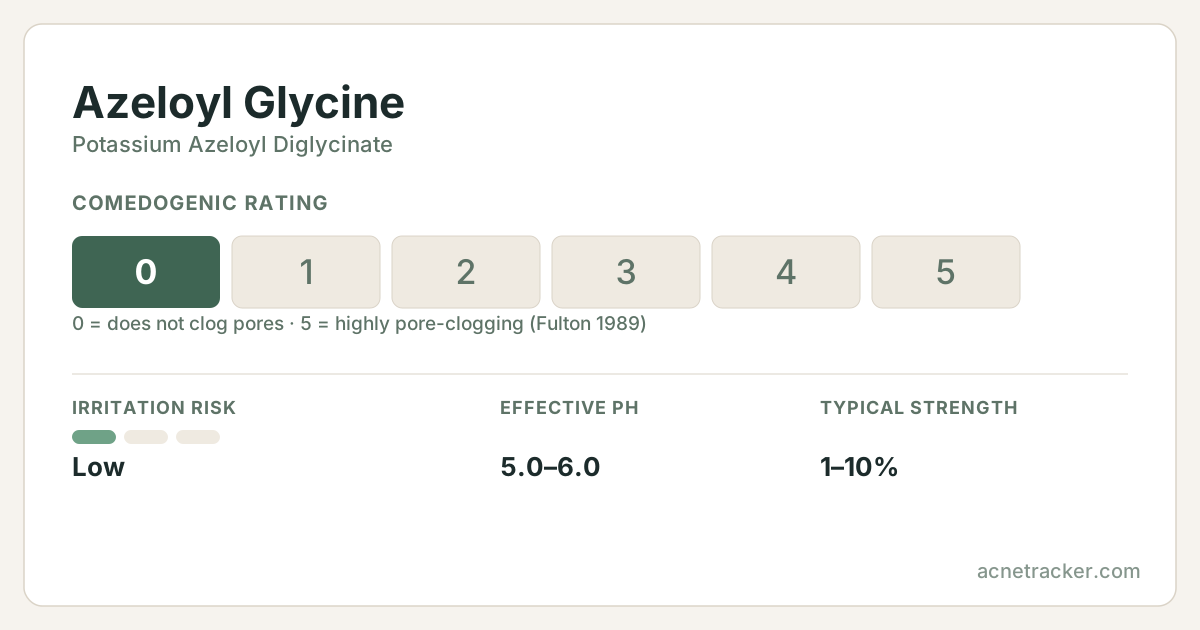
Azeloyl glycine, whose full INCI name is potassium azeloyl diglycinate and which is often abbreviated PAD, is a modern, water-soluble derivative of azelaic acid. Traditional azelaic acid is a well-regarded ingredient for acne, redness and uneven tone, but it can be tricky to formulate and a little gritty or irritating. PAD was created to solve those problems: it is easy to dissolve, non-irritating and even hydrating, while retaining a gentler version of azelaic acid's benefits for oily, blemish-prone and uneven skin. It is a comfortable, multitasking ingredient that suits people wanting azelaic-style results in a milder, more elegant form.
Quick facts
- Comedogenic rating
- our estimate — not measured
- Irritation risk
- Low
- Effective pH
- 5.0–6.0
- Typical strength
- 1–10%
- Pregnancy
- Considered safe
- Suits skin types
- oilycombinationsensitiveacne-pronenormal
Where this number comes from
No one has published a comedogenic rating for this ingredient. Fulton's 1989 table tested about 250 raw materials and this was not among them, and we found no later study measuring it. The figure shown is our own reasoning from the ingredient's chemistry and how it is used — treat it as an estimate, not a measurement.
Fulton read his own scale as 0-1 not significant, 2-3 borderline, 4-5 positive. The assay is the rabbit ear at 10% dilution, which the paper itself calls extremely sensitive and not fully predictive of human skin. Ratings describe the raw ingredient; concentration and formulation change real-world behaviour.
Caution profile
The four published fields on this page, on one 0–5 scale. Further from the centre means more care is needed — never that the ingredient is worse.
Derived, not measured: pore-clogging is the published comedogenic rating; irritation maps low/moderate/high to 1/3/5; pregnancy maps safe/caution/avoid to 0/3/5; skin-type limits is how many of the seven skin types this entry does NOT list. Every input is printed in words in the quick-facts card above.
Show the numbers
| Metric | 0–5 | Published field |
|---|---|---|
| Pore-clogging | 0 | 0/5 |
| Irritation | 1 | Low |
| Skin-type limits | 1.4 | 5/7 |
| Pregnancy | 0 | Considered safe |
Working pH and typical strength
Where this ingredient is formulated to sit, and at what concentration.
Both bars come from the fields above: the pH window and the typical strength range published for this ingredient. The tinted column is healthy skin's surface pH (about 4.7–5.75).
Show the numbers
| Metric | 0–5 |
|---|---|
| Working pH | 5.0–6.0 |
| Typical strength | 1–10% |
What is it?
Potassium azeloyl diglycinate is azelaic acid joined to two glycine amino acid molecules and turned into a potassium salt, which makes it fully water-soluble and pleasant to use. This structure gives it a mild, skin-friendly nature while keeping some of azelaic acid's activity. It is marketed for regulating sebum, helping to brighten and even the complexion, and providing a soothing, moisturising feel — an unusual combination for an active in this category. Because it is gentle, it is often used at generous concentrations of up to around 10%. It is worth noting that it is milder than pure azelaic acid, so it is better seen as a comfortable supportive active than a direct one-for-one replacement for a medical-strength azelaic treatment.
Benefits
Brightens and evens tone
As an azelaic acid derivative, azeloyl glycine helps reduce the look of uneven tone and post-acne marks, supporting a brighter, more even complexion with regular use.
Helps control oil
Azeloyl glycine is marketed for regulating sebum, making it useful for oily and combination skin that wants a less shiny, more balanced feel over time.
Soothing and hydrating
Unusually for an active in this space, azeloyl glycine has a soothing, moisturising character, so it supports comfort rather than drying the skin as it works.
Gentle and easy to use
Being water-soluble and non-irritating, it is far easier to tolerate than gritty, higher-strength azelaic acid, suiting sensitive and blemish-prone skin alike.
How to use
Use azeloyl glycine once or twice daily on clean skin, in a serum, essence or moisturiser. It is gentle enough to need no gradual introduction and works in both morning and evening routines. It layers comfortably with niacinamide for oil control and brightening, and with vitamin C for a broader tone-evening effect; it can also complement traditional azelaic acid. Because it is soothing and hydrating, it fits well alongside stronger actives without adding much irritation. As with any brightening routine, daily sunscreen is important to protect your progress and prevent new marks from forming. Use it consistently over weeks for the best results.
Side effects
Azeloyl glycine is well tolerated and rarely irritating, which is one of its main selling points compared with pure azelaic acid. Most people can use it comfortably, including those with sensitive skin. Adverse reactions are uncommon, and its soothing, hydrating nature helps keep the skin comfortable. As always, patch testing a new product for a few days is a sensible way to confirm your skin agrees with the full formula before regular use.
Who should avoid it
There is little reason for most people to avoid azeloyl glycine; it suits oily, combination, sensitive and acne-prone skin. Those needing the full strength of medical azelaic acid for stubborn conditions like rosacea or persistent acne may find it too mild and should speak to a professional. It is considered pregnancy-safe, like azelaic acid itself, which makes it a useful option during that time — though you can confirm with your doctor.
Pairs well with
Frequently asked questions
What is azeloyl glycine?
Azeloyl glycine, or potassium azeloyl diglycinate, is a water-soluble, gentle derivative of azelaic acid used for brightening, evening tone and helping control oil, with a soothing, hydrating feel.
Is azeloyl glycine as strong as azelaic acid?
No. It is a milder, more comfortable derivative that retains some azelaic benefits but is gentler. For medical-strength results on stubborn conditions, traditional azelaic acid may be needed.
Is azeloyl glycine good for oily skin?
Yes. It is marketed for regulating sebum and evening the complexion, and its non-greasy, water-soluble nature makes it comfortable for oily and combination skin.
Do azeloyl glycine and niacinamide work well together?
Yes. Azeloyl glycine and niacinamide pair well, together supporting oil control, brightening and an even tone, with a very low risk of irritation.
Is azeloyl glycine safe in pregnancy?
As an azelaic acid derivative, azeloyl glycine is generally considered pregnancy-safe, which makes it a useful brightening option during that time. Since it is one of the few brightening routes left open in those months, it is worth agreeing the plan with your own doctor rather than assuming.
Sources & further reading
Potassium azeloyl diglycinate is a water-soluble derivative of azelaic acid, and suppliers describe it as sharing azelaic acid's brightening and sebum-regulating actions. We found no independent published trial of the derivative itself, so those descriptions rest on the parent molecule's evidence and on manufacturer data rather than on studies of this ingredient.
Medical disclaimer
Find your personal acne triggers
Our free Acne Tracker lets you log breakouts, sleep, stress and diet, and shows you which factors correlate with your flare-ups.