How to Choose a Moisturizer for Acne-Prone Skin
Acne-prone skin often gets treated as if hydration were the enemy, yet the drying actives most people use for breakouts — benzoyl peroxide, retinoids, salicylic acid — work far better when a well-chosen moisturizer keeps the barrier intact. The job is to add water and light comfort without adding anything that clogs pores or feeds a breakout. That rules out heavy oils and rich butters and rules in non-comedogenic humectants and calming ingredients. This page explains the profile to look for so your moisturizer supports your acne routine rather than working against it, whichever products you already use.
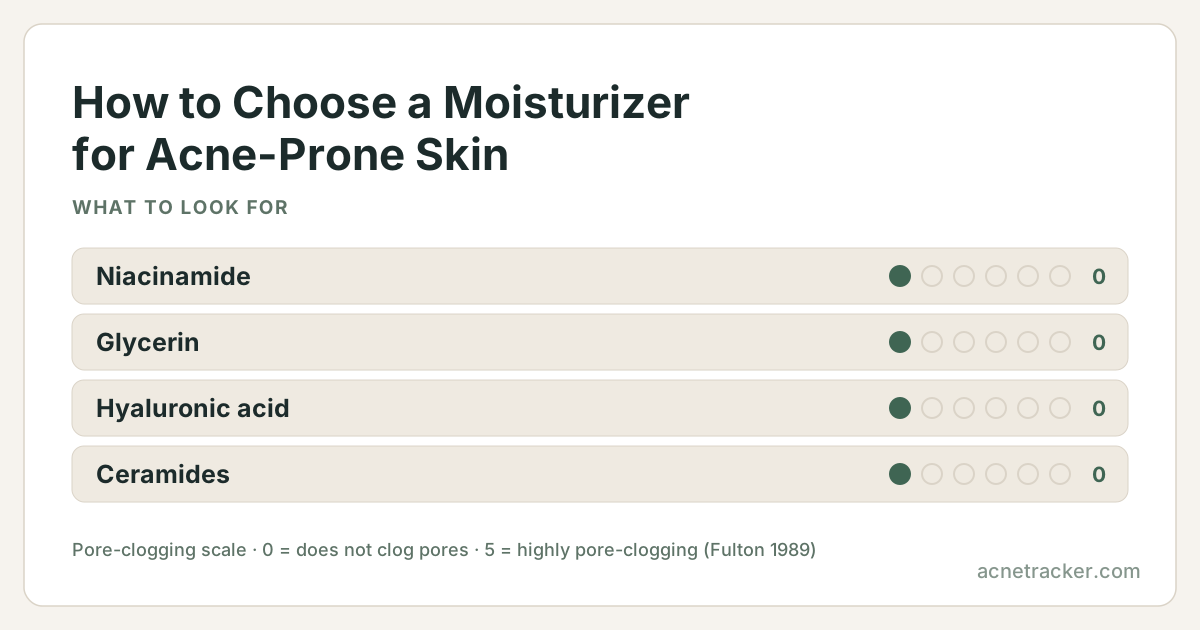
Ingredients to look for
| Ingredient | Why it matters |
|---|---|
| Niacinamide | Calms inflammation, supports the barrier and helps regulate oil, so it complements almost every acne active without adding clogging risk. |
| Glycerin | A non-comedogenic humectant that keeps skin comfortable through drying treatments without any greasy weight. |
| Hyaluronic acid | Adds water-based hydration in a light form, easing the tightness that retinoids and acids leave behind. |
| Ceramides | Rebuild the barrier that acne treatments strip, reducing the peeling and stinging that make people quit their actives. |
| Panthenol | Soothes and supports healing on skin that is both breaking out and irritated by treatment. |
Ingredients to avoid
| Ingredient | Why it matters |
|---|---|
| Coconut oil, cocoa butter and other high-comedogenic ingredients | These rate highly on pore-clogging scales and are a common cause of new breakouts on acne-prone skin. |
| Heavy mineral-oil-thick creams marketed as 'nourishing' | Their occlusive richness can trap oil and debris in acne-prone areas, tipping congested pores into pimples. |
| Added fragrance in a leave-on product | Skin already inflamed by acne and drying actives is more reactive, and fragrance is a leading irritant. |
| Isopropyl myristate and similar heavy esters | These slip agents are among the more comedogenic emollients and are best avoided when pores clog easily. |
How to choose
Prioritise texture and pore-friendliness. A light gel-cream or fluid lotion that lists 'non-comedogenic' is the practical starting point, but confirm it by scanning the top ingredients for heavy oils, cocoa butter or coconut derivatives — if they sit high, put it back. Look for barrier and calming ingredients (ceramides, niacinamide, panthenol, glycerin) rather than a long list of botanicals, which add fragrance-like irritants more often than benefit. If you use benzoyl peroxide or a retinoid, a slightly richer ceramide cream at night offsets their dryness and improves how consistently you can use them. Do not chase a moisturizer that also treats acne; let your active do that job and let the moisturizer keep the barrier steady. Persistent or cystic acne is a medical issue worth taking to a doctor or dermatologist, since prescription treatment often outperforms anything on a shelf.
How to apply
Apply after any acne treatment has absorbed, morning and evening. In the morning a light layer under sunscreen is usually enough; at night, use a slightly richer amount to counter the dryness of retinoids or peroxide. If a specific active makes your skin peel, the 'sandwich' method helps: a thin moisturizer layer, then the active, then moisturizer again buffers the sting without much loss of strength. Do not skip moisturizer on the theory that dryness clears acne — a compromised barrier tends to make breakouts worse, not better.
Frequently asked questions
Can a moisturizer cause acne?
It can if it contains comedogenic ingredients like coconut oil or heavy esters high on the list. A non-comedogenic, oil-free formula is very unlikely to clog pores and usually helps acne-prone skin tolerate its treatments.
Should I moisturize if I have active breakouts?
Yes. Skipping moisturizer while breaking out often backfires, because a dry, stripped barrier is more inflamed. A light non-comedogenic cream keeps the skin calm while your actives work.
Does acne-prone skin need an oil-free moisturizer?
Oil-free helps but is not essential — some light oils like squalane are low-comedogenic. What matters most is avoiding the high-comedogenic oils and choosing a light texture that absorbs cleanly.
Which moisturizer works best with retinoids?
A ceramide-and-niacinamide cream pairs well with retinoids because it rebuilds the barrier the retinoid disrupts, reducing peeling and letting you keep using the active consistently.
When should I see a doctor about acne?
If breakouts are painful, cystic, scarring or not improving with over-the-counter care, a doctor or dermatologist can offer prescription options that usually work better than any moisturizer choice.
Sources & further reading
There is no single study of this exact question. The guidance here is reasoned from the ingredient profiles below, each of which carries its own references:
- Niacinamide2 refs
- Glycerin3 refs
- Hyaluronic Acid3 refs
- Ceramides3 refs
- Panthenol3 refs
Show every reference behind this page (9)
- Niacinamide: mechanisms of action and its topical use in dermatology (PubMed)cited by Niacinamide
- European Commission CosIng database — Niacinamidecited by Niacinamide, Glycerin, Hyaluronic Acid, Ceramides, Panthenol
- PubChem — Glycerol compound summarycited by Glycerin
- DermNet — Moisturiserscited by Glycerin, Hyaluronic Acid
- PubChem — Hyaluronic acid compound summarycited by Hyaluronic Acid
- DermNet — Skin barrier functioncited by Ceramides
- PubChem — Ceramide compound summarycited by Ceramides
- PubChem — Panthenol compound summarycited by Panthenol
- Safety Assessment of Panthenol, Pantothenic Acid, and Derivatives as Used in Cosmetics (PubMed)cited by Panthenol
Medical disclaimer
Ingredients mentioned on this page
Find your personal acne triggers
Our free Acne Tracker lets you log breakouts, sleep, stress and diet, and shows you which factors correlate with your flare-ups.