Can You Mix Hyaluronic Acid and Bakuchiol?
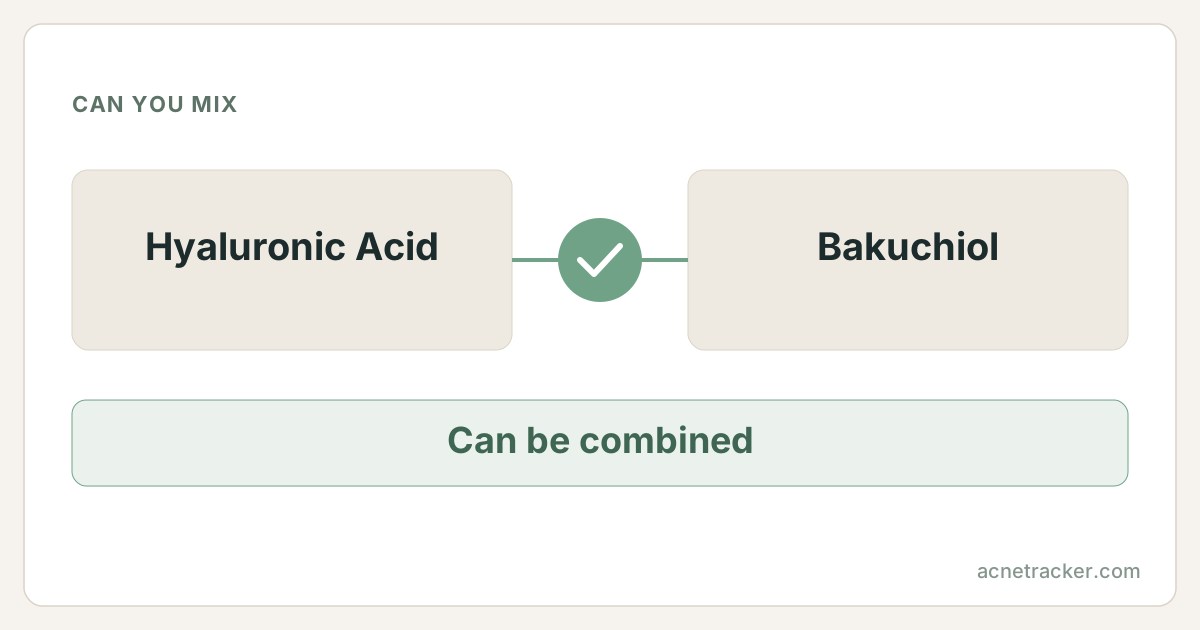
Yes, and there is nothing to manage. Bakuchiol is oil-soluble, hyaluronic acid is water-soluble, and they occupy different phases of a formula and different roles in a routine. The only rule worth remembering is sequence: water phase before oil phase, so the humectant goes on first. Bakuchiol is also mild enough that it needs no buffering, which makes this an easier pairing than any retinoid version of it.
How this pairing resolves
The two ingredients, their published numbers, and where they land together.
The numbers beside each ingredient are its published comedogenic rating and effective pH window, taken from its own profile page.
Show the numbers
| Ingredients | Metric | 0–5 |
|---|---|---|
| Hyaluronic Acid | Comedogenic rating | 0/5 |
| Hyaluronic Acid | Effective pH | no published pH |
| Bakuchiol | Comedogenic rating | 0/5 |
| Bakuchiol | Effective pH | no published pH |
Why
Bakuchiol is a meroterpene phenol from the seeds of Psoralea corylifolia. It is not a retinoid and shares no structural relationship with vitamin A, which makes its reputation as a 'natural retinol' a marketing convenience rather than a chemical description. The interest is real, though: it appears to influence some of the same gene expression pathways as retinoids do, and a randomised, double-blind twelve-week study by Dhurat and colleagues, published in the International Journal of Cosmetic Science in 2019, compared 0.5% bakuchiol twice daily with 0.5% retinol once daily and found comparable improvement in wrinkle surface area and pigmentation, with less scaling and stinging in the bakuchiol group. That is one modest trial, not a literature, and the honest position is that bakuchiol is promising with a good tolerance profile rather than proven equivalent. What matters for this pairing is its solubility. Bakuchiol needs an oil or an emulsion to carry it; a hyaluronate gel is water. They cannot be blended in the palm — you will get an unstable mess that beads up — but layered in the right order they never interact at all. There is no pH conflict, no oxidation risk between them, and no photosensitivity to design around: unlike retinol, bakuchiol is stable in light, so it can be used morning as well as night.
How to combine them
Hyaluronic acid first on damp skin, then the bakuchiol oil or cream over it, then moisturiser if the bakuchiol product is not already one. This is simply thin to thick, and it matters more than usual here: an oil-based layer underneath will block a water-based serum from ever reaching skin, and that is the one way to waste this combination. Bakuchiol needs no adjustment period for most people, which is much of its appeal — you can start twice daily rather than creeping up from two nights a week. The Dhurat trial used it twice daily, so a morning and evening application is the schedule with evidence behind it, and its photostability means the morning slot is genuinely available. Sunscreen still belongs in the routine, not because bakuchiol makes you sun-sensitive but because pigmentation and wrinkles are the things you are treating.
Example routine
| When | Steps |
|---|---|
| Morning | Cleanser → Hyaluronic acid on damp skin → Bakuchiol → Moisturiser → SPF 30+ |
| Evening | Cleanser → Hyaluronic acid on damp skin → Bakuchiol → Moisturiser |
| If bakuchiol is in an oil | Always after the hyaluronic acid — oil under a water serum blocks it |
| Do not | Mix the two in your palm — the phases separate and beads form |
Warning signs
Frequently asked questions
Is bakuchiol actually a retinol?
No. It is a meroterpene phenol with no structural relationship to vitamin A. It seems to act on some overlapping pathways, which is interesting, but 'natural retinol' is a marketing phrase and not a chemical claim.
Can I mix bakuchiol oil and hyaluronic acid serum in my hand?
No — one is oil-soluble and the other water-soluble, so they will not emulsify in your palm and you will get beading and patchy coverage. Layer them instead: humectant on damp skin, bakuchiol over it.
How strong is the evidence that bakuchiol matches retinol?
It rests largely on a single twelve-week randomised trial by Dhurat and colleagues in 2019, which found comparable wrinkle and pigment improvement with less irritation. One good study is encouraging, not conclusive — retinoids still have decades of literature behind them.
Is bakuchiol stable in daylight?
Yes — unlike retinol it does not degrade in light or increase sun sensitivity, so a morning slot is genuinely available, and the trial evidence used twice-daily application. Sunscreen still belongs in your routine for the concerns bakuchiol is aimed at.
Does hyaluronic acid help bakuchiol absorb?
Not really — it is a humectant, not a penetration enhancer, and it does not carry an oil-soluble molecule anywhere. It makes the routine feel better and supports hydration; the bakuchiol's delivery is the job of whatever oil or emulsion it is formulated in.
Sources & further reading
There is no single study of this exact question. The guidance here is reasoned from the ingredient profiles below, each of which carries its own references:
- Hyaluronic Acid3 refs
- Bakuchiol3 refs
Show every reference behind this page (6)
- PubChem — Hyaluronic acid compound summarycited by Hyaluronic Acid
- European Commission CosIng database — Hyaluronic Acidcited by Hyaluronic Acid
- DermNet — Moisturisers and humectantscited by Hyaluronic Acid
- PubChem — Bakuchiol compound summarycited by Bakuchiol
- Bakuchiol: a retinol-like functional compound (PubMed)cited by Bakuchiol
- DermNet — Cosmeceuticalscited by Bakuchiol
Medical disclaimer
Ingredients mentioned on this page
Find your personal acne triggers
Our free Acne Tracker lets you log breakouts, sleep, stress and diet, and shows you which factors correlate with your flare-ups.