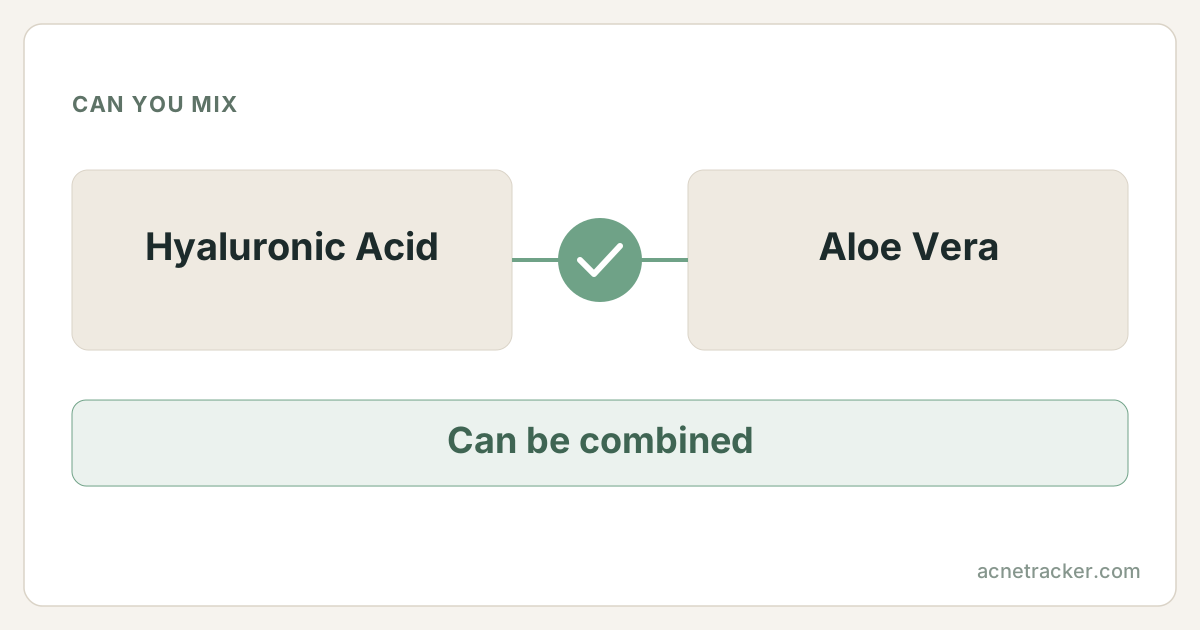
Can You Mix Hyaluronic Acid and Aloe Vera?
Yes, freely. Aloe is largely water with polysaccharides dissolved in it, and there is nothing in that for hyaluronate to react with. The catch is not the pairing but the product: many aloe gels are thickened water with denatured alcohol high on the list, and alcohol under a humectant undoes the point of the humectant. Read the INCI before you decide this is a soothing step.
How this pairing resolves
The two ingredients, their published numbers, and where they land together.
The numbers beside each ingredient are its published comedogenic rating and effective pH window, taken from its own profile page.
Show the numbers
| Ingredients | Metric | 0–5 |
|---|---|---|
| Hyaluronic Acid | Comedogenic rating | 0/5 |
| Hyaluronic Acid | Effective pH | no published pH |
| Aloe Vera | Comedogenic rating | 0/5 |
| Aloe Vera | Effective pH | no published pH |
Why
Aloe barbadensis leaf juice is roughly 98–99% water. The remainder is where the interest lies: polysaccharides, chiefly acemannan, a mannose-rich chain that behaves as a humectant and film-former, along with glycoproteins, salicylates, small amounts of vitamins and enzymes. Its best-supported use is soothing — the burn and sunburn literature is where aloe has its most consistent showing, with studies reporting faster healing of superficial burns, and there is a plausible anti-inflammatory rationale behind it. That is a real, if narrow, evidence base, and it is worth separating from the broader claims of hydration and repair that appear on the tub. Here is the honest structural point: because aloe is nearly all water, its hydrating effect is mostly the water itself, which evaporates, plus a modest polysaccharide film that stays. Hyaluronic acid is that film mechanism in concentrated, defined, measurable form. So aloe does not add a new kind of hydration to a hyaluronate serum — it adds a soothing profile and a pleasant, cooling vehicle. That is a reasonable thing to want, but it is not a second humectant worth paying much for. The pairing itself needs no management: aloe's pH sits near skin's own, it carries no oxidiser or acid that could touch a hyaluronate chain, and neither ingredient has an adjustment period.
How to combine them
Aloe is watery, so it goes on first — straight onto damp skin after cleansing — with the hyaluronic acid over it and a moisturiser to seal. Since both are essentially water plus a polysaccharide, neither of them will keep water in your skin unaided; the sealing step is what makes the sequence worth doing at all, and in dry indoor air it is not optional. Check the ingredient list before any of this. If alcohol denat. appears in the first few positions, that gel is a cooling astringent rather than a hydrator, and layering a humectant over it is working against yourself. Look also at where the aloe sits: aloe listed after the preservatives is a decorative quantity. For sunburn, where aloe has its strongest case, a plain aloe gel — cool, alcohol-free, applied generously — is the version with evidence behind it, and the hyaluronic acid is optional company.
Example routine
| When | Steps |
|---|---|
| Morning | Cleanser → Aloe gel on damp skin → Hyaluronic acid → Moisturiser → SPF 30+ |
| Evening | Cleanser → Aloe gel → Hyaluronic acid → Moisturiser |
| After sun | Plain alcohol-free aloe, generously — this is aloe's best-supported use |
| Label check | Alcohol denat. near the top = astringent, not a hydrating step |
Warning signs
Frequently asked questions
Is aloe vera a natural hyaluronic acid?
No. Aloe's hydrating fraction is acemannan and related polysaccharides — mannose-based chains, chemically distinct from hyaluronan. They behave similarly as surface humectants and film-formers, which is where the comparison comes from, but they are not the same molecule.
Can aloe vera replace my hyaluronic acid serum?
For surface hydration it can come close, since both work through a polysaccharide film. Aloe brings soothing that hyaluronic acid lacks; hyaluronic acid brings a known concentration at a known molecular weight where aloe brings roughly 99% water.
Why does my aloe gel dry my skin out?
Check for alcohol denat. near the top of the ingredient list. Many gels use it for that instant cooling, evaporating finish, and it leaves skin drier than it found it — which no humectant layered on top can fully undo.
What is aloe actually proven to do?
Soothing superficial burns and sunburn is where the evidence is most consistent, with studies reporting faster healing. Claims about deep hydration and repair are far weaker. It is a good after-sun gel and an unremarkable moisturiser.
Which goes on first, aloe or hyaluronic acid?
Aloe — it is the thinner and more watery of the two and belongs closest to clean, damp skin. Hyaluronic acid over it, then something with lipids in it, or both layers simply evaporate.
Sources & further reading
There is no single study of this exact question. The guidance here is reasoned from the ingredient profiles below, each of which carries its own references:
- Hyaluronic Acid3 refs
- Aloe Vera3 refs
Show every reference behind this page (5)
- PubChem — Hyaluronic acid compound summarycited by Hyaluronic Acid
- European Commission CosIng database — Hyaluronic Acidcited by Hyaluronic Acid, Aloe Vera
- DermNet — Moisturisers and humectantscited by Hyaluronic Acid
- PubChem — Aloe-emodin (aloe constituent)cited by Aloe Vera
- Final report on the safety assessment of AloeAndongensis Extract, Aloe Andongensis Leaf Juice,aloe Arborescens Leaf Extract, Aloe Arborescens Leaf Juice, Aloe Arborescens Leaf Protoplasts, Aloe Barbadensis Flower Extract, Aloe Barbadensis Leaf, Aloe Barbadensis Leaf Extract, Aloe Barbadensis Leaf Juice,aloe Barbadensis Leaf Polysaccharides, Aloe Barbadensis Leaf Water, Aloe Ferox Leaf Extract, Aloe Ferox Leaf Juice, and Aloe Ferox Leaf Juice Extract (PubMed)cited by Aloe Vera
Medical disclaimer
Ingredients mentioned on this page
Find your personal acne triggers
Our free Acne Tracker lets you log breakouts, sleep, stress and diet, and shows you which factors correlate with your flare-ups.