Sodium Hyaluronate: Comedogenic Rating & Ingredient Analysis
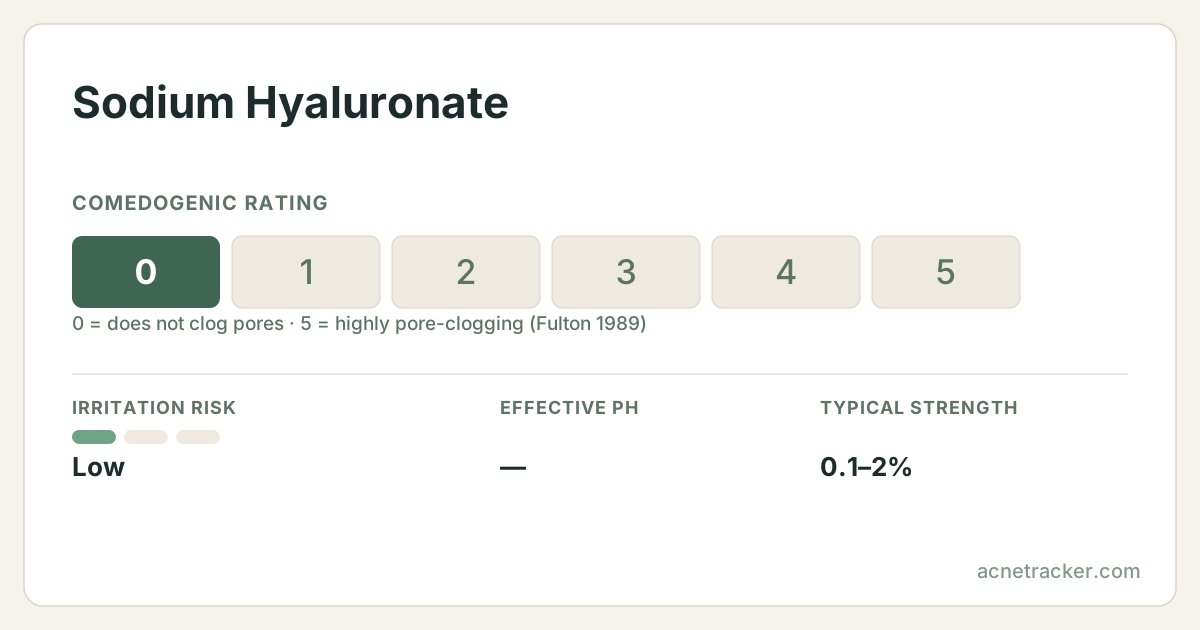
Sodium hyaluronate is the sodium salt of hyaluronic acid and the form most brands actually use when a label says hyaluronic acid. It is smaller, more stable and more readily absorbed than the parent molecule, which makes it the workhorse humectant of modern serums, essences and moisturizers. Its single job is hydration, but hydration underpins almost everything else skin needs: a well-hydrated surface looks plumper, feels softer, and copes better with irritating actives. Because it carries a rating of 0 and virtually no irritation risk, sodium hyaluronate suits every skin type, including oily and acne-prone skin that still needs water without heavy oils.
Quick facts
- Comedogenic rating
- measured (Fulton 1989)
- Irritation risk
- Low
- Effective pH
- —
- Typical strength
- 0.1–2%
- Pregnancy
- Considered safe
- Suits skin types
- oilydrycombinationsensitivenormalacne-pronemature
Where this number comes from
Read directly from Table I of Fulton's 1989 paper — the primary source, not one of the copied tables that circulate online.
Fulton read his own scale as 0-1 not significant, 2-3 borderline, 4-5 positive. The assay is the rabbit ear at 10% dilution, which the paper itself calls extremely sensitive and not fully predictive of human skin. Ratings describe the raw ingredient; concentration and formulation change real-world behaviour.
Caution profile
The four published fields on this page, on one 0–5 scale. Further from the centre means more care is needed — never that the ingredient is worse.
Derived, not measured: pore-clogging is the published comedogenic rating; irritation maps low/moderate/high to 1/3/5; pregnancy maps safe/caution/avoid to 0/3/5; skin-type limits is how many of the seven skin types this entry does NOT list. Every input is printed in words in the quick-facts card above.
Show the numbers
| Metric | 0–5 | Published field |
|---|---|---|
| Pore-clogging | 0 | 0/5 |
| Irritation | 1 | Low |
| Skin-type limits | 0 | 7/7 |
| Pregnancy | 0 | Considered safe |
Working pH and typical strength
Where this ingredient is formulated to sit, and at what concentration.
Both bars come from the fields above: the pH window and the typical strength range published for this ingredient. The tinted column is healthy skin's surface pH (about 4.7–5.75).
Show the numbers
| Metric | 0–5 |
|---|---|
| Typical strength | 0.1–2% |
What is it?
Hyaluronic acid is a long sugar chain that occurs naturally in skin, where it holds water in the dermis. In its raw acid form it is a large, sticky molecule; converting it to the sodium salt lowers the molecular weight and improves shelf stability and penetration. Manufacturers now supply it in a range of molecular weights: high-weight fractions form a moisturizing film on the surface, while low-weight and cross-linked fractions travel deeper into the upper epidermis for longer-lasting plumping. A single gram can bind hundreds of times its weight in water. It is a humectant, meaning it draws moisture from the surroundings and from deeper skin layers toward the surface, which is why sealing it with a moisturizer matters.
Benefits
Deep, multi-level hydration
Blends of different molecular weights hydrate both the surface film and the upper epidermis, so skin feels supple immediately and stays hydrated for hours rather than minutes.
Plumps fine lines temporarily
By binding water in the outer layers, sodium hyaluronate swells the skin slightly and softens the look of fine dehydration lines, giving a smoother, fresher appearance.
Weightless and non-comedogenic
It delivers moisture without oils or occlusives, making it ideal for oily and acne-prone skin that breaks out under richer creams but still needs hydration.
Buffers harsh actives
Layered with retinol or exfoliating acids, its hydration offsets the dryness those ingredients cause, improving comfort and tolerance during treatment.
How to use
Apply sodium hyaluronate to slightly damp skin after cleansing, then lock it in with a moisturizer within a minute. This order matters: as a humectant it pulls water from wherever it can, so in very dry air an unsealed layer can actually draw moisture out of deeper skin. It works morning and night and layers under sunscreen, makeup and every other active without conflict. A few drops of serum or an essence pressed into the face is plenty; more product does not mean more hydration.
Side effects
Side effects are rare. The most common complaint is a tight or dry feeling, which almost always means the layer was applied to bone-dry skin or left unsealed in low humidity — apply to damp skin and follow with a cream. True allergy is very uncommon. Pilling (product balling up) can occur if too much is layered under other products, but that is a texture nuisance, not a skin reaction.
Who should avoid it
There is no group that must avoid sodium hyaluronate. People in very dry climates should simply make sure to seal it with an occlusive moisturizer so it does not draw water from deeper layers. Anyone with a documented allergy to a specific formula should switch products rather than avoid the ingredient class.
Pairs well with
Frequently asked questions
What is the difference between sodium hyaluronate and hyaluronic acid?
Sodium hyaluronate is the salt form of hyaluronic acid. It is smaller, more stable and absorbs more easily, which is why most products marketed as hyaluronic acid actually contain sodium hyaluronate.
Does sodium hyaluronate clog pores?
No. It has a comedogenic rating of 0 and contains no oils, so it hydrates oily and acne-prone skin without contributing to clogged pores.
Should I apply it to wet or dry skin?
Apply to slightly damp skin and seal with a moisturizer. On bone-dry skin in low humidity a humectant can pull water from deeper layers, which is the usual cause of that tight feeling people report.
Can I use sodium hyaluronate every day?
Yes, morning and night. It is gentle, non-irritating and compatible with every other ingredient, so daily use is both safe and the way to see the best hydration results.
Is sodium hyaluronate safe during pregnancy?
Yes. It is a hydrating agent with no systemic activity of concern and is widely considered safe to use throughout pregnancy and breastfeeding.
Where this ingredient shows up here
Counted across this database, not the web — these are the pages on this site that reason about this ingredient.
Combination guides 3
Sources & further reading
Medical disclaimer
Find your personal acne triggers
Our free Acne Tracker lets you log breakouts, sleep, stress and diet, and shows you which factors correlate with your flare-ups.