How to Choose a Face Oil for Dehydrated Skin
Dehydrated skin is short of water; dry skin is short of oil. That distinction decides everything on this page, because it means a face oil cannot fix dehydration on its own — it contains almost no water to give. What an oil can do is stop the water you have applied from leaving, which is a real and useful job, and one that oils do better than most creams. The mistake is treating the oil as the drink rather than the lid. Get the order right and a modest oil transforms a hydrating routine; get it wrong and you seal a thirsty face shut.
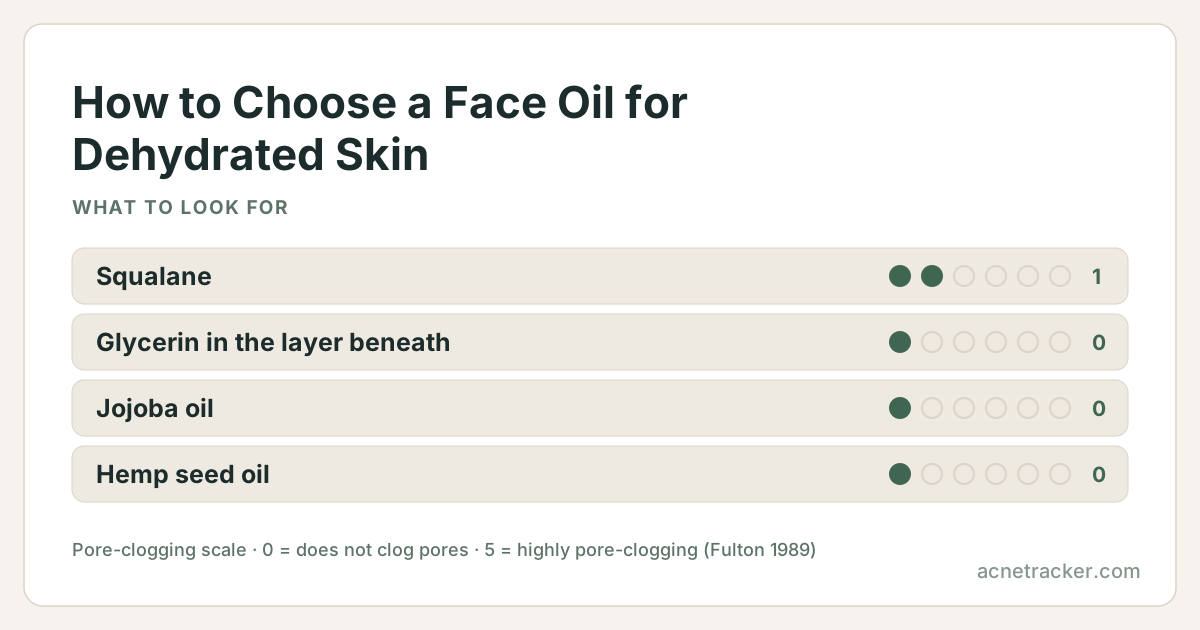
Ingredients to look for
| Ingredient | Why it matters |
|---|---|
| Squalane | Reduces water loss without heaviness, and mimics a component of your own sebum. Fulton rates it 1, so it suits dehydrated skin of any oiliness. |
| Glycerin in the layer beneath | The oil holds water in, but something has to supply it. Glycerin under the oil is the cheapest and best-evidenced way to do that. |
| Jojoba oil | Rated 0 by Fulton. Its wax ester structure forms a light film that slows transepidermal water loss without occluding the follicle. |
| Hemp seed oil | Light enough that dehydrated oily skin will actually use it, which matters more than any theoretical advantage a richer oil might have. |
| Hyaluronic acid in the layer beneath | Same logic as glycerin: a humectant serum first supplies the water, and the oil on top is what stops it evaporating within the hour. |
Ingredients to avoid
| Ingredient | Why it matters |
|---|---|
| Oil applied to bone-dry skin | With no water underneath, the oil seals in the dehydration. This single sequencing error explains most 'face oil made my skin worse' stories. |
| Oil instead of a hydrating layer | Oils contain essentially no water and almost never a humectant. Substituting one for a serum removes the only step that was adding hydration. |
| Alcohol denat. high in the formula | It accelerates evaporation from the surface — the exact process the oil is meant to slow down. |
| Hot water and long showers before applying | They strip surface lipids and leave the barrier leakier, so the oil is doing repair work that need not have been necessary. |
How to choose
Because the oil's job here is occlusion rather than nourishment, the choice is easier than usual. Pick by weight and tolerance, not by botanical prestige. If your skin is dehydrated but oily, use a light linoleic oil or squalane; if it is dehydrated and dry, you can afford something heavier because you are treating both problems at once. Then look one step earlier in the routine, which is where the actual decision lives: the oil is only as good as the humectant layer it is sealing. A serum with glycerin, hyaluronic acid, panthenol or urea underneath does the hydrating, and the oil holds it. Third, check for anything volatile in the oil — alcohol denat., high levels of essential oils — since these work against occlusion. Fourth, be sceptical of 'hydrating face oil' as a claim. Hydration means water content, and the only way an oil contributes to it is by preventing loss. That is worth doing, but it is not what the front of the bottle is implying.
How to apply
Sequence is the whole intervention. Cleanse, leave the skin damp, apply your humectant serum onto that dampness, then a moisturiser if you use one, then two to four drops of oil pressed on last. The oil goes on within a minute or so, while everything underneath is still wet — waiting until your face is dry defeats the purpose. In dry indoor air, a humidifier at night does more for dehydration than any oil, because it reduces the gradient pulling water out in the first place. Repeat morning and night if you tolerate oil under sunscreen; if it pills, keep it to evenings only.
Frequently asked questions
Can a face oil hydrate my skin?
Not directly. Oils contain no meaningful water and rarely a humectant, so they cannot add hydration. They reduce water loss, which raises hydration indirectly — but only if something underneath supplied the water first.
If my skin is dehydrated, can a face oil fix it on its own?
No, and this is the one place an oil is genuinely the wrong hero product. Dry skin lacks oil and is usually a skin type you keep for life; dehydrated skin lacks water and is a temporary condition any skin type, including very oily skin, can have. An oil contains no water and binds none — it can only slow the escape of water that is already there. On dehydrated skin an oil is the lid, never the contents: it goes over a humectant layer, not instead of one.
Should the oil go on before or after moisturiser?
After, in almost every case. The oil is the most occlusive step, so it belongs on top where it can seal the water and humectants underneath. Putting it first blocks the products that were supposed to do the work.
Why does my skin still feel tight after using face oil?
Because tightness is a water problem and the oil brought none. Add a humectant serum onto damp skin before the oil, and the tightness usually resolves within a few days.
Sources & further reading
There is no single study of this exact question. The guidance here is reasoned from the ingredient profiles below, each of which carries its own references:
- Squalane3 refs
- Glycerin3 refs
- Jojoba Oil2 refs
- Hemp Seed Oil2 refs
- Hyaluronic Acid3 refs
Show every reference behind this page (7)
- PubChem — Squalane compound summarycited by Squalane
- DermNet — Emollients and moisturiserscited by Squalane, Glycerin, Hyaluronic Acid
- European Commission CosIng database — Squalanecited by Squalane, Glycerin, Jojoba Oil, Hemp Seed Oil, Hyaluronic Acid
- PubChem — Glycerol compound summarycited by Glycerin
- Pazyar N et al. Jojoba in dermatology: a succinct review. G Ital Dermatol Venereol 2013 Dec (PubMed)cited by Jojoba Oil
- Hemp (Cannabis sativa L.) seed oil: analytical and phytochemical characterization of the unsaponifiable fraction (J. Agricultural and Food Chemistry, 2014)cited by Hemp Seed Oil
- PubChem — Hyaluronic acid compound summarycited by Hyaluronic Acid
Medical disclaimer
Ingredients mentioned on this page
Find your personal acne triggers
Our free Acne Tracker lets you log breakouts, sleep, stress and diet, and shows you which factors correlate with your flare-ups.