Capryloyl Salicylic Acid: Comedogenic Rating & Ingredient Analysis
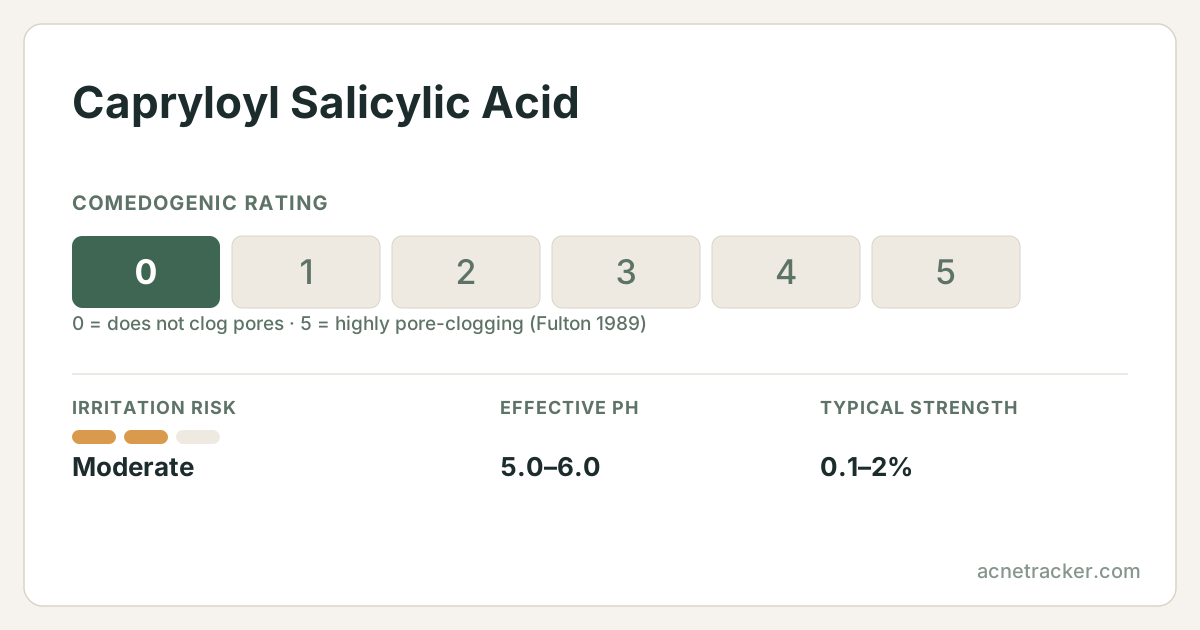
Capryloyl salicylic acid, better known as LHA or lipohydroxy acid, is a modified form of salicylic acid with a fatty (capryloyl) chain attached. That chain makes it far more oil-loving than plain salicylic acid, so it concentrates in the upper layers of the skin and inside the pore lining rather than spreading evenly. Because it works at a pH close to the skin's own, around 5.5, it exfoliates in a slower, more targeted way, loosening dead cells almost individually. It appears in leave-on serums, toners and treatment creams aimed at clogged pores, uneven texture and early signs of ageing.
Quick facts
- Comedogenic rating
- our estimate — not measured
- Irritation risk
- Moderate
- Effective pH
- 5.0–6.0
- Typical strength
- 0.1–2%
- Pregnancy
- Ask your doctor
- Suits skin types
- oilycombinationacne-pronemature
Where this number comes from
No one has published a comedogenic rating for this ingredient. Fulton's 1989 table tested about 250 raw materials and this was not among them, and we found no later study measuring it. The figure shown is our own reasoning from the ingredient's chemistry and how it is used — treat it as an estimate, not a measurement.
Fulton read his own scale as 0-1 not significant, 2-3 borderline, 4-5 positive. The assay is the rabbit ear at 10% dilution, which the paper itself calls extremely sensitive and not fully predictive of human skin. Ratings describe the raw ingredient; concentration and formulation change real-world behaviour.
Caution profile
The four published fields on this page, on one 0–5 scale. Further from the centre means more care is needed — never that the ingredient is worse.
Derived, not measured: pore-clogging is the published comedogenic rating; irritation maps low/moderate/high to 1/3/5; pregnancy maps safe/caution/avoid to 0/3/5; skin-type limits is how many of the seven skin types this entry does NOT list. Every input is printed in words in the quick-facts card above.
Show the numbers
| Metric | 0–5 | Published field |
|---|---|---|
| Pore-clogging | 0 | 0/5 |
| Irritation | 3 | Moderate |
| Skin-type limits | 2.1 | 4/7 |
| Pregnancy | 3 | Ask your doctor |
Working pH and typical strength
Where this ingredient is formulated to sit, and at what concentration.
Both bars come from the fields above: the pH window and the typical strength range published for this ingredient. The tinted column is healthy skin's surface pH (about 4.7–5.75).
Show the numbers
| Metric | 0–5 |
|---|---|
| Working pH | 5.0–6.0 |
| Typical strength | 0.1–2% |
What is it?
LHA is salicylic acid esterified with a C8 (octanoyl or capryloyl) fatty group. This lipophilic tail changes how it behaves: it has strong affinity for sebum, so it targets the follicle and the surface stratum corneum, and it is active near physiological pH instead of needing the strongly acidic environment that classic salicylic acid does. Researchers describe its exfoliation as more gradual and cell-by-cell, which can mean better-tolerated resurfacing. Alongside unclogging pores, LHA has been studied for smoothing texture and supporting a more even surface, and it carries the same mild anti-inflammatory character as other salicylates.
Benefits
Targets pores precisely
Its strong attraction to oil means LHA concentrates where clogs form — inside the follicle — dissolving the sebum-and-dead-cell mix that becomes blackheads and closed comedones.
Exfoliates gradually
Because it detaches dead cells in a slower, more individual way and works near skin pH, LHA tends to resurface with less abrupt peeling than a strong acid.
Refines texture
Consistent use smooths rough patches and helps unify the skin surface, improving how light reflects and how makeup applies over time.
Helps control shine
By keeping pores clearer and reducing the build-up of surface oil and cells, LHA leaves oily and combination skin looking less congested and less shiny.
How to use
LHA is usually found in leave-on products used in the evening. Apply to dry, cleansed skin, then follow with moisturiser, starting two to three nights a week and building up as tolerated. Avoid stacking it with retinol or other exfoliating acids in the same routine — alternate nights to keep irritation in check. Daily broad-spectrum sunscreen is essential, since any chemical exfoliation makes skin more vulnerable to UV. If your skin runs sensitive, begin with the lowest available concentration.
Side effects
Mild tingling, temporary dryness or light flaking can occur, especially early on. Overuse leads to the same over-exfoliation picture as other acids: tightness, redness and a stinging, reactive barrier. As a salicylate, it is unsuitable for anyone with an aspirin allergy. Stop and let the skin recover if you develop persistent burning, swelling or a rash.
Who should avoid it
People with a salicylate or aspirin allergy should avoid LHA. During pregnancy and breastfeeding, leave-on salicylic-acid derivatives are generally used with caution, so speak to your doctor. If your barrier is compromised, hold off on all acids until it recovers before reintroducing LHA slowly.
Pairs well with
Avoid combining with
Frequently asked questions
How is LHA different from salicylic acid?
LHA has a fatty chain that makes it more oil-loving and active near skin pH, so it targets the pore more selectively and exfoliates in a slower, cell-by-cell way that many people find easier to tolerate.
Is LHA good for blackheads?
Yes. Its affinity for sebum lets it concentrate inside the follicle and break down the plug of oil and dead cells that forms blackheads and closed comedones.
Can I use LHA every night?
Some resilient, oily skin can, but most people get good results with two to three nights a week. Reduce frequency at the first sign of tightness, flaking or stinging.
Is LHA safe in pregnancy?
As a salicylic-acid derivative used in leave-on form, it is generally treated with caution during pregnancy. Confirm with your doctor or midwife before using it.
Can I combine LHA with retinol?
Not in the same routine, especially when starting out, because both increase turnover and irritation. Alternate them on different nights once your skin is well adjusted.
Where this ingredient shows up here
Counted across this database, not the web — these are the pages on this site that reason about this ingredient.
Buying guides 1
Sources & further reading
Medical disclaimer
Find your personal acne triggers
Our free Acne Tracker lets you log breakouts, sleep, stress and diet, and shows you which factors correlate with your flare-ups.