Betaine Salicylate: Comedogenic Rating & Ingredient Analysis
Betaine salicylate is a salt formed by pairing salicylic acid with betaine, an amino-acid-derived humectant. In water it slowly releases salicylic acid, so it behaves like a beta hydroxy acid but in a softer, more buffered way. Korean skincare popularised it as a leave-on exfoliant for people who want the pore-clearing power of a BHA without the sting and dryness that a straight salicylic acid solution can bring. A common rule of thumb is that roughly 4% betaine salicylate delivers exfoliation comparable to about 1% salicylic acid, which is why product percentages look higher than you might expect.
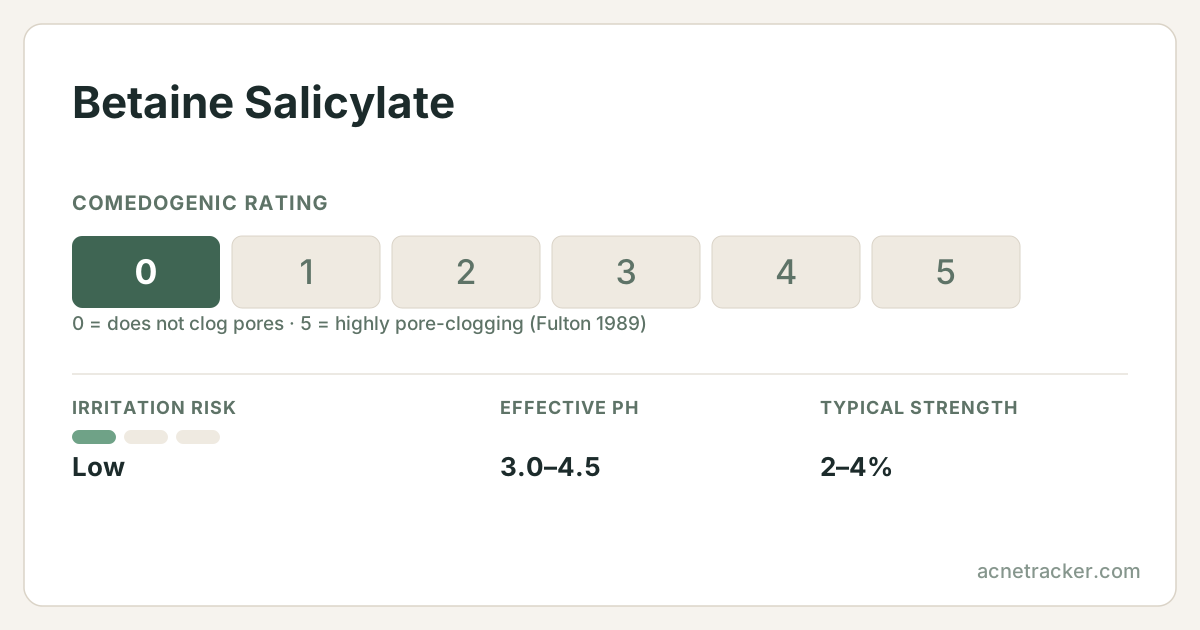
Quick facts
- Comedogenic rating
- our estimate — not measured
- Irritation risk
- Low
- Effective pH
- 3.0–4.5
- Typical strength
- 2–4%
- Pregnancy
- Ask your doctor
- Suits skin types
- oilycombinationsensitiveacne-prone
Where this number comes from
No one has published a comedogenic rating for this ingredient. Fulton's 1989 table tested about 250 raw materials and this was not among them, and we found no later study measuring it. The figure shown is our own reasoning from the ingredient's chemistry and how it is used — treat it as an estimate, not a measurement.
Fulton read his own scale as 0-1 not significant, 2-3 borderline, 4-5 positive. The assay is the rabbit ear at 10% dilution, which the paper itself calls extremely sensitive and not fully predictive of human skin. Ratings describe the raw ingredient; concentration and formulation change real-world behaviour.
Caution profile
The four published fields on this page, on one 0–5 scale. Further from the centre means more care is needed — never that the ingredient is worse.
Derived, not measured: pore-clogging is the published comedogenic rating; irritation maps low/moderate/high to 1/3/5; pregnancy maps safe/caution/avoid to 0/3/5; skin-type limits is how many of the seven skin types this entry does NOT list. Every input is printed in words in the quick-facts card above.
Show the numbers
| Metric | 0–5 | Published field |
|---|---|---|
| Pore-clogging | 0 | 0/5 |
| Irritation | 1 | Low |
| Skin-type limits | 2.1 | 4/7 |
| Pregnancy | 3 | Ask your doctor |
Working pH and typical strength
Where this ingredient is formulated to sit, and at what concentration.
Both bars come from the fields above: the pH window and the typical strength range published for this ingredient. The tinted column is healthy skin's surface pH (about 4.7–5.75).
Show the numbers
| Metric | 0–5 |
|---|---|
| Working pH | 3.0–4.5 |
| Typical strength | 2–4% |
What is it?
Chemically, betaine salicylate is the reaction product of salicylic acid and trimethylglycine (betaine). The betaine component is a well-known osmolyte and humectant that pulls water into the skin, which is thought to offset some of the drying and irritating tendencies of the salicylate portion. Because the active salicylic acid is released gradually rather than delivered all at once, users often report gentler tingling and less flaking. It is oil-compatible enough to reach into the pore lining, loosening the mix of dead cells and sebum that forms blackheads, while the humectant carrier keeps the surface more comfortable than a conventional BHA.
Benefits
Clears pores with less sting
The gradual release of salicylic acid still dissolves the plug of oil and dead cells inside the pore, but the buffered delivery means less of the burning that puts sensitive users off traditional BHA.
Balances oil without stripping
Regular use reduces surface shine and the raw material behind clogged pores, while the betaine humectant helps the skin retain water so it does not feel tight afterwards.
Smooths texture
By loosening built-up dead cells, betaine salicylate gradually refines rough, bumpy skin and improves how evenly the surface reflects light.
Suited to reactive skin
Its milder profile makes it a sensible entry point for people who found 2% salicylic acid too harsh but still want a leave-on chemical exfoliant.
How to use
Use betaine salicylate in a leave-on toner or serum, applied to dry skin after cleansing, two to three evenings a week to start. Wait a couple of minutes, then follow with a hydrating, barrier-supporting moisturiser. Do not combine it in the same routine with retinol or other exfoliating acids — alternate nights instead, or the compounded exfoliation can overwhelm the barrier. Because chemical exfoliants increase sun sensitivity, a daily broad-spectrum SPF every morning is essential. Increase frequency only if your skin stays comfortable after a few weeks.
Side effects
A mild, brief tingle on application is normal. Overuse produces the familiar signs of over-exfoliation: tightness, flaking, redness and a barrier that stings when you apply anything else. People with a salicylate (aspirin) allergy should avoid it entirely, as they would any salicylic acid product. If persistent burning or a rash appears, stop and let the skin recover.
Who should avoid it
Avoid it if you have a known salicylate or aspirin allergy. During pregnancy, leave-on BHA use is usually discouraged as a precaution, so check with your doctor first. If your barrier is already damaged from over-exfoliation, pause all acids until it heals before reintroducing this one slowly.
Pairs well with
Avoid combining with
Frequently asked questions
Is betaine salicylate the same as salicylic acid?
Not exactly. It is a salt that releases salicylic acid slowly in water, so it works as a BHA but in a gentler, more buffered way. Roughly 4% betaine salicylate is often compared to about 1% salicylic acid.
Why is the percentage so high?
Because only part of the molecule is active salicylic acid, formulas use higher percentages to reach an effective exfoliating dose. A 4% product is not four times stronger than a 1% salicylic acid product.
Can I use it with niacinamide?
Yes. Apply the betaine salicylate first on clean skin, then layer niacinamide on top. The niacinamide supports the barrier and offsets any dryness from the exfoliant.
Is it safe during pregnancy?
Leave-on BHA products are generally approached with caution during pregnancy. It is best to confirm with your doctor or midwife before using it while pregnant or breastfeeding.
How is it different from salicylic acid for sensitive skin?
The added betaine acts as a humectant and the salicylic acid is released gradually, so many people find it less drying and less stinging than a conventional salicylic acid solution at a comparable strength.
Where this ingredient shows up here
Counted across this database, not the web — these are the pages on this site that reason about this ingredient.
Buying guides 1
Sources & further reading
Medical disclaimer
Find your personal acne triggers
Our free Acne Tracker lets you log breakouts, sleep, stress and diet, and shows you which factors correlate with your flare-ups.