Can You Mix Benzoyl Peroxide and Snail Mucin?
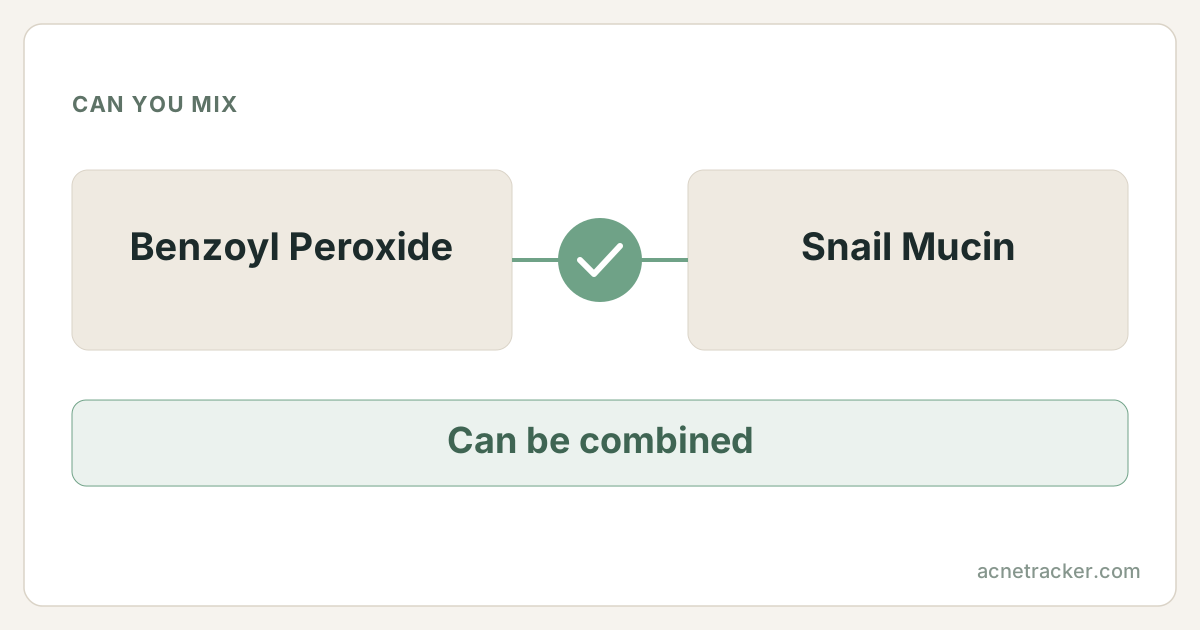
Yes. Snail secretion filtrate is mostly water, glycoproteins and glycosaminoglycans — a humectant complex rather than an active with chemistry to defend. It does not neutralise benzoyl peroxide and benzoyl peroxide has no reason to attack it. In practice it is used the way hyaluronic acid is: a hydrating layer that makes a drying acne treatment tolerable. Apply benzoyl peroxide first, snail mucin after.
How this pairing resolves
The two ingredients, their published numbers, and where they land together.
The numbers beside each ingredient are its published comedogenic rating and effective pH window, taken from its own profile page.
Show the numbers
| Ingredients | Metric | 0–5 |
|---|---|---|
| Benzoyl Peroxide | Comedogenic rating | 0/5 |
| Benzoyl Peroxide | Effective pH | no published pH |
| Snail Mucin | Comedogenic rating | 0/5 |
| Snail Mucin | Effective pH | no published pH |
Why
Snail secretion filtrate is a mixture rather than a molecule, which is both its appeal and the reason its evidence is thinner than the marketing suggests. The characterised components include glycosaminoglycans and glycoproteins that bind water, plus allantoin and glycolic acid at trace levels — the last two are frequently cited in advertising, but the amounts present in a cosmetic filtrate are far below what would exfoliate anything, so treat any claim that snail mucin resurfaces skin with scepticism. What it reliably does is hold water at the surface and leave a slightly tacky film, which suits skin that benzoyl peroxide has left tight. There is no interaction to manage: none of these components compete with benzoyl peroxide for pH, and benzoyl peroxide works down inside the follicle while the mucin sits on top of the stratum corneum. The published human research is limited — small studies and in vitro work on wound healing and hydration, not the kind of evidence base that benzoyl peroxide itself has. It is a comfort ingredient with a real hydrating function, and that is a perfectly good reason to use it, as long as you are not expecting it to treat the acne.
How to combine them
Treatment first, hydration second. Cleanse, dry the skin, apply benzoyl peroxide to the spots, let it absorb fully, then pat snail mucin essence over the whole face and finish with a moisturiser to seal it. The reverse order — mucin first as a buffer — is an option for skin that is stinging, and it will reduce the sting, but it also puts a film between the treatment and the follicle. Choose it knowingly. Snail mucin needs no adjustment period and can run twice daily, including on the evenings you skip benzoyl peroxide. It layers well under sunscreen but is tacky, so give it a minute. One practical caution: if you have a shellfish or mollusc allergy, or you react to a lot of cosmetic ingredients, patch test — reactions are uncommon but not unheard of, and the filtrate is a biological mixture rather than a defined compound.
Example routine
| When | Steps |
|---|---|
| Evening | Cleanser → Benzoyl peroxide 2.5% on spots → absorb → Snail mucin essence → Moisturiser |
| Morning | Rinse → Snail mucin essence → Moisturiser → SPF 30+ |
| Off nights | Cleanser → Snail mucin → Moisturiser (recovery) |
| Stinging skin | Snail mucin first as a buffer → Benzoyl peroxide on top (less sting, less delivery) |
Warning signs
Frequently asked questions
Does snail mucin cancel out benzoyl peroxide?
No. Its glycoproteins and glycosaminoglycans are water-binding molecules with no pH requirement and no reaction with peroxides. Applied after the treatment absorbs, it sits above where benzoyl peroxide is working.
Does snail mucin actually treat acne?
The evidence supports hydration and a role in wound healing, mostly from small or in vitro studies. It is not an acne treatment — it makes a drying treatment easier to keep using, which is a different and still useful job.
Is the glycolic acid in snail mucin exfoliating my skin?
The glycolic acid present in a cosmetic snail filtrate is at trace levels, far below exfoliating concentrations. Marketing leans on it, but you should not count on any resurfacing effect from it.
Should snail mucin go before or after benzoyl peroxide?
After, as a default — treatment on clean dry skin, hydration on top. Using it first as a buffer is a legitimate trick for stinging skin, but expect it to reduce how much benzoyl peroxide reaches the follicle.
Sources & further reading
There is no single study of this exact question. The guidance here is reasoned from the ingredient profiles below, each of which carries its own references:
- Benzoyl Peroxide3 refs
- Snail Mucin2 refs
Show every reference behind this page (5)
- PubChem — Benzoyl peroxide compound summarycited by Benzoyl Peroxide
- DermNet — Benzoyl peroxidecited by Benzoyl Peroxide
- FDA — Drugs (OTC acne products)cited by Benzoyl Peroxide
- European Commission CosIng — Snail Secretion Filtratecited by Snail Mucin
- DermNet — Moisturisers and skin barriercited by Snail Mucin
Medical disclaimer
Ingredients mentioned on this page
Find your personal acne triggers
Our free Acne Tracker lets you log breakouts, sleep, stress and diet, and shows you which factors correlate with your flare-ups.