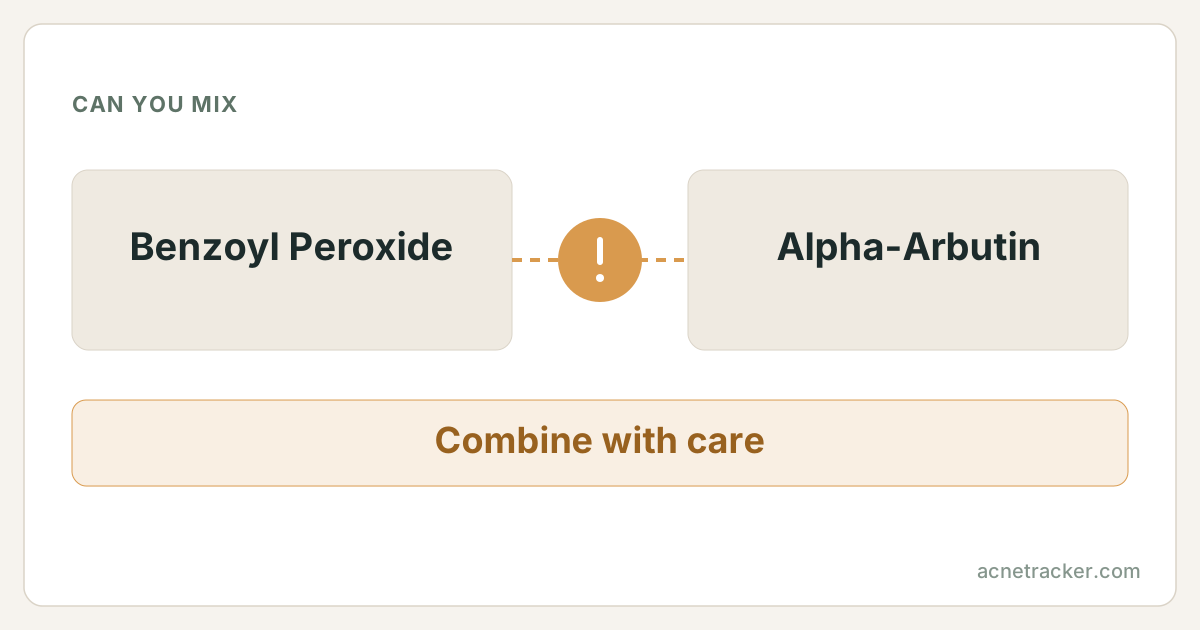
Can You Mix Benzoyl Peroxide and Alpha-Arbutin?
Use them at different times of day rather than layered. Alpha-arbutin is a stabilised glycoside that slowly releases hydroquinone, and hydroquinone is well known to discolour temporarily when it meets benzoyl peroxide. Whether that happens with arbutin specifically is not established — the glycoside is far more stable. Splitting them, arbutin in the morning and benzoyl peroxide at night, removes the question entirely.
How this pairing resolves
The two ingredients, their published numbers, and where they land together.
The numbers beside each ingredient are its published comedogenic rating and effective pH window, taken from its own profile page.
Show the numbers
| Ingredients | Metric | 0–5 |
|---|---|---|
| Benzoyl Peroxide | Comedogenic rating | 0/5 |
| Benzoyl Peroxide | Effective pH | no published pH |
| Alpha-Arbutin | Comedogenic rating | 0/5 |
| Alpha-Arbutin | Effective pH | 4.0–6.0 |
Why
Alpha-arbutin is hydroquinone with a glucose molecule attached at the alpha position. The sugar acts as a lock: the compound is stable in the bottle and on the skin surface, and skin enzymes cleave it gradually, releasing small amounts of free hydroquinone which inhibits tyrosinase and slows melanin production. That slow release is the entire safety and gentleness argument for arbutin over hydroquinone itself. It is also the reason for caution here. Hydroquinone is a phenol and oxidises readily — that is why hydroquinone creams brown in the tube — and dermatology has long recognised that hydroquinone applied with benzoyl peroxide can produce transient orange-brown staining of the skin, an oxidation product rather than any injury. Benzoyl peroxide is exactly the oxidiser that drives this. What is genuinely unknown is how much this transfers to alpha-arbutin, because the glucoside is protected and the free hydroquinone released is minimal and continuous rather than applied in bulk. Nobody has published a proper answer, so the honest position is that the theoretical risk is low but not zero, and the cost of avoiding it is close to nothing.
How to combine them
Split by time of day. Alpha-arbutin in the morning after cleansing, then moisturiser and sunscreen — sunscreen is the important part, because a tyrosinase inhibitor achieves nothing while UV keeps telling the melanocytes to produce. Benzoyl peroxide in the evening on inflamed spots, then moisturiser. This split also happens to put each ingredient where it works best: arbutin defends against daytime pigment triggers, benzoyl peroxide gets the long overnight contact it needs. If you insist on one routine, apply benzoyl peroxide only to lesions and arbutin to the marks, keeping them physically apart on the face, and watch for any orange tinge on the treated skin — if it appears, wash it off and go back to the split. Alpha-arbutin is measured in months: expect three to four before marks visibly lift.
Example routine
| When | Steps |
|---|---|
| Morning | Cleanser → Alpha-arbutin 2% → Moisturiser → SPF 30+ (essential for pigment work) |
| Evening | Cleanser → Benzoyl peroxide 2.5% on spots only → Moisturiser |
| If in one routine | Keep them on separate areas: benzoyl peroxide on lesions, arbutin on marks |
| Timeframe | Judge pigment results at 3–4 months, not weeks |
Warning signs
Frequently asked questions
Does benzoyl peroxide really stain skin with arbutin?
The staining is documented for hydroquinone, which benzoyl peroxide oxidises into a coloured product. Alpha-arbutin is a protected glycoside that releases hydroquinone slowly, so the risk is likely much lower — but it has not been formally studied.
Which order works if I use both at night?
Splitting them across morning and evening is the better answer. If you must combine, apply them to different parts of the face rather than stacking them on the same skin, and stop if any orange tinge appears.
Will alpha-arbutin fade the marks benzoyl peroxide leaves?
Benzoyl peroxide does not cause marks — the inflammation of the spot does. Alpha-arbutin inhibits tyrosinase, so it works on that pigment, over months. Daily sunscreen contributes at least as much as the serum.
Is alpha-arbutin safer than hydroquinone?
It is the milder, cosmetically available option, releasing hydroquinone gradually rather than delivering it directly, and it is not subject to the same restrictions. Prescription hydroquinone decisions belong with a dermatologist.
Sources & further reading
There is no single study of this exact question. The guidance here is reasoned from the ingredient profiles below, each of which carries its own references:
- Benzoyl Peroxide3 refs
- Alpha-Arbutin3 refs
Show every reference behind this page (6)
- PubChem — Benzoyl peroxide compound summarycited by Benzoyl Peroxide
- DermNet — Benzoyl peroxidecited by Benzoyl Peroxide
- FDA — Drugs (OTC acne products)cited by Benzoyl Peroxide
- European Commission CosIng database — Alpha-Arbutincited by Alpha-Arbutin
- PubChem — Arbutincited by Alpha-Arbutin
- A comprehensive review of the therapeutic potential of α-arbutin (PubMed)cited by Alpha-Arbutin
Medical disclaimer
Ingredients mentioned on this page
Find your personal acne triggers
Our free Acne Tracker lets you log breakouts, sleep, stress and diet, and shows you which factors correlate with your flare-ups.