Squalane: Comedogenic Rating & Ingredient Analysis
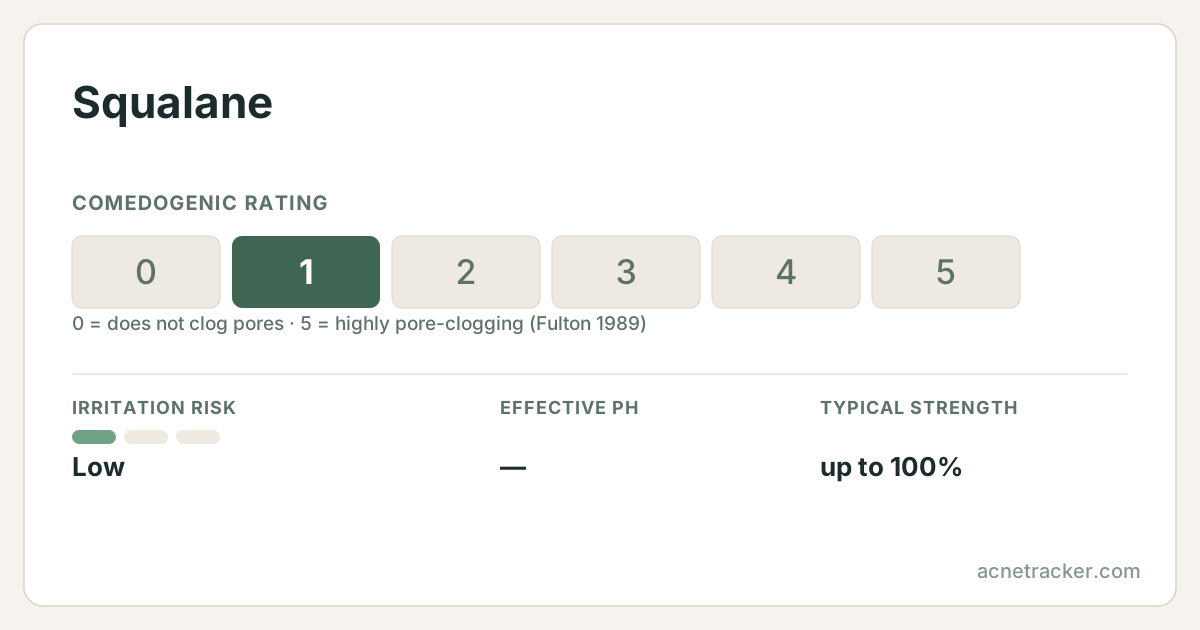
Squalane is a lightweight, exceptionally stable oil that has quietly become one of the most popular facial oils in skincare. It is the shelf-stable version of squalene, a lipid your own skin produces as part of its natural surface oil, which is why squalane feels so at home on the face — it mimics something the skin already knows. Unlike heavier plant oils it absorbs quickly and leaves a soft, non-greasy finish, and unlike its parent molecule squalene it does not go rancid, so it stays fresh in the bottle for a long time. It suits an unusually wide range of skin, from very dry to sensitive to, cautiously, oily and acne-prone, and it can be used pure at 100% or as an ingredient blended into serums and creams.
Quick facts
- Comedogenic rating
- measured (Fulton 1989)
- Irritation risk
- Low
- Effective pH
- —
- Typical strength
- up to 100%
- Pregnancy
- Considered safe
- Suits skin types
- drysensitivenormalcombinationmatureacne-prone
Where this number comes from
Read directly from Table I of Fulton's 1989 paper — the primary source, not one of the copied tables that circulate online.
Fulton read his own scale as 0-1 not significant, 2-3 borderline, 4-5 positive. The assay is the rabbit ear at 10% dilution, which the paper itself calls extremely sensitive and not fully predictive of human skin. Ratings describe the raw ingredient; concentration and formulation change real-world behaviour.
Caution profile
The four published fields on this page, on one 0–5 scale. Further from the centre means more care is needed — never that the ingredient is worse.
Derived, not measured: pore-clogging is the published comedogenic rating; irritation maps low/moderate/high to 1/3/5; pregnancy maps safe/caution/avoid to 0/3/5; skin-type limits is how many of the seven skin types this entry does NOT list. Every input is printed in words in the quick-facts card above.
Show the numbers
| Metric | 0–5 | Published field |
|---|---|---|
| Pore-clogging | 1 | 1/5 |
| Irritation | 1 | Low |
| Skin-type limits | 0.7 | 6/7 |
| Pregnancy | 0 | Considered safe |
Working pH and typical strength
Where this ingredient is formulated to sit, and at what concentration.
Both bars come from the fields above: the pH window and the typical strength range published for this ingredient. The tinted column is healthy skin's surface pH (about 4.7–5.75).
Show the numbers
| Metric | 0–5 |
|---|---|
| Typical strength | up to 100% |
What is it?
Squalane is made by hydrogenating squalene — adding hydrogen to the naturally occurring lipid so that its reactive double bonds are removed. That small chemical change makes a big practical difference: raw squalene oxidizes quickly and turns rancid, while squalane is stable, long-lasting and non-irritating. It functions as an emollient and a light occlusive, meaning it smooths the surface by filling the gaps between skin cells and forms a breathable layer that slows water loss without the heavy, suffocating feel of a mineral oil or a rich butter. Originally sourced from shark liver, the squalane in modern skincare is overwhelmingly plant-derived, most often from sugarcane or olives, which is more sustainable and identical on the skin. Because it echoes the skin's own sebum, it integrates smoothly and rarely disrupts the barrier.
Benefits
Softens without greasiness
Squalane is a fast-absorbing emollient that fills the gaps between skin cells, leaving the surface smooth and supple with a dry, weightless finish that even oilier skin can tolerate.
Slows water loss
As a light occlusive it forms a breathable seal that reduces trans-epidermal water loss, helping the skin stay hydrated when layered over a humectant serum.
Mimics the skin's own oil
Because squalane is closely related to squalene in your natural sebum, it feels compatible and non-disruptive, making it a gentle choice for sensitive and barrier-compromised skin.
Buffers strong actives
A layer of squalane helps counter the dryness and flaking from retinol and exfoliating acids, letting you keep using them comfortably without adding pore-clogging heaviness.
How to use
Squalane is versatile: use a few drops of pure squalane oil as the last step of your routine to seal in moisture, or reach for a serum or cream that lists it among the ingredients. It works morning and night and layers under sunscreen and makeup without pilling. For best results apply it over a water-based serum or damp skin so it seals hydration in rather than sitting on dry skin alone. It is an ideal companion to retinol and acids, softening their side effects; add a drop to your moisturizer or apply it afterward on nights those actives leave skin tight.
Side effects
Squalane is one of the least irritating oils available and side effects are uncommon. Its comedogenic rating is low, but any facial oil applied too generously on very oily, acne-prone skin can feel heavy and, in rare cases, contribute to congestion, so moderation matters for that skin type. Genuine allergy is rare. If you use pure squalane, a couple of drops is plenty; more does not absorb better and simply leaves a slick film on the surface.
Who should avoid it
There are very few reasons to avoid squalane, as it suits even sensitive and reactive skin. Extremely oily or congestion-prone skin should use it sparingly and may prefer it blended into a light serum rather than as a pure oil. As with any product, patch test if you have reacted to facial oils before, and choose plant-derived squalane if sustainability or sourcing matters to you.
Pairs well with
Frequently asked questions
Is squalane good for oily or acne-prone skin?
Yes, in moderation. Squalane has a low comedogenic rating and a light, dry finish that mimics the skin's own oil, so most acne-prone users tolerate it well. Use just a few drops rather than a heavy layer.
What is the difference between squalene and squalane?
Squalene is the natural, unstable lipid in your skin's sebum that oxidizes quickly. Squalane is the hydrogenated, shelf-stable version used in skincare — the same molecule made non-reactive so it lasts and does not go rancid.
Can I use squalane with retinol?
Yes, they pair very well. Squalane softens the dryness and flaking retinol can cause, so applying it over or mixed into your moisturizer makes a retinol routine more comfortable without reducing its effect.
Does squalane hydrate the skin?
Indirectly. Squalane is an emollient and light occlusive rather than a humectant, so it does not add water but seals in the moisture already there. It works best layered over a water-based serum or damp skin.
Is squalane safe during pregnancy?
Yes. Squalane is considered safe to use during pregnancy and breastfeeding and is a gentle way to keep skin soft and comfortable. Check with your doctor about your full routine if unsure.
Where this ingredient shows up here
Counted across this database, not the web — these are the pages on this site that reason about this ingredient.
Combination guides 5
Condition pages 5
Sources & further reading
Medical disclaimer
Find your personal acne triggers
Our free Acne Tracker lets you log breakouts, sleep, stress and diet, and shows you which factors correlate with your flare-ups.